
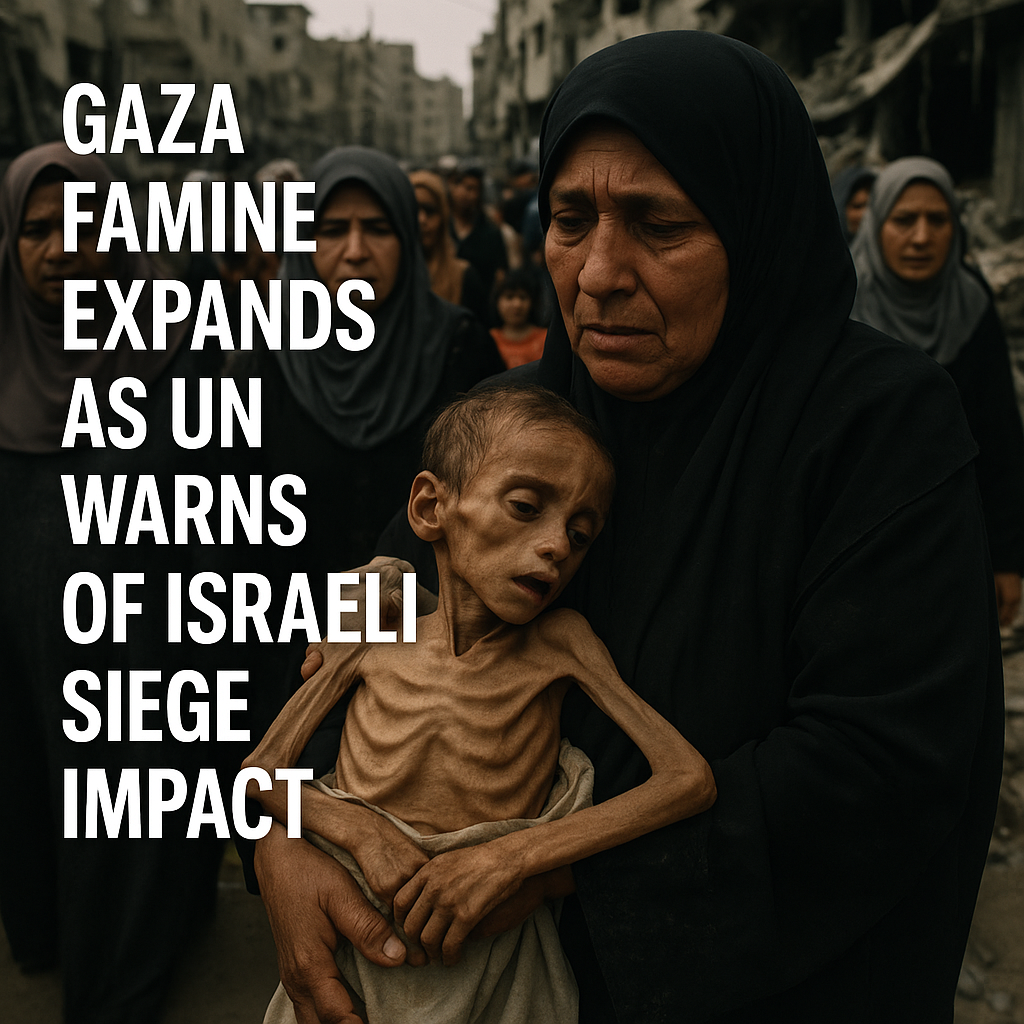
Gaza Famine Expands as UN Warns of Israeli Siege Impact

Gaza Famine Expands as UN Warns of Israeli Siege Impact
The crisis in Gaza has escalated dramatically, as the United Nations recently warned that the famine in the region is deepening. Aid groups have sounded the alarm about the severe impact of the ongoing Israeli siege, which has exacerbated the humanitarian disaster. This article explores the complexities surrounding the Gaza famine, drawing insights from diverse sources while providing a balanced perspective on the issue.

The Severity of the Humanitarian Crisis
Reports indicate that the humanitarian situation in Gaza has deteriorated to alarming levels. According to Al Jazeera, the UN has described the current famine as unprecedented, with food shortages affecting millions of lives.


Key Statistics and Insights
– Food Insecurity: The UN estimates that around 1.9 million people in Gaza face severe food insecurity. The blockade has restricted the flow of essential goods, hampering aid efforts.
– Medical Supplies Scarcity: Alongside the food crisis, hospitals are reportedly running out of medical supplies, which compounds the challenges faced by the population.


This narrative is echoed by aid organizations which indicate that the siege not only restricts food but also essential medical and humanitarian assistance. A report from Sky News suggests that restrictions on movement and importation have led to skyrocketing prices for basic food items. Many families are forced to make impossible choices about how to allocate limited resources.
Contrasting Perspectives
In analyzing the situation, it’s essential to recognize the complexity of viewpoints surrounding the Israeli siege and its implications. Some argue that the Israeli government enforces the blockade as a security measure against Hamas, which they classify as a terrorist organization responsible for attacks on Israeli citizens. Proponents of this view believe that security considerations must be balanced against humanitarian needs.
Conversely, human rights organizations, as highlighted by Al Jazeera, contend that the blockade constitutes collective punishment against the civilian population, violating international law. They assert that the humanitarian needs of millions should take precedence over security concerns, advocating for an immediate lifting of the siege to allow critical aid to flow into Gaza.
The Role of International Aid
International aid has been a crucial lifeline for those affected by the crisis. Aid groups are mobilizing to deliver food, water, and medical supplies, but the restrictions imposed by the blockade have severely limited their capacity to provide necessary support.
Challenges Faced by Aid Groups:
– Restricted Access: Many aid organizations are finding it difficult to gain access to those in need due to border restrictions.
– Funding Issues: Aid efforts are often hampered by funding shortages, as international donors grapple with the impacts of global economic uncertainties.
Despite these hurdles, various NGOs continue advocating for increased international awareness and pressure on political leaders to address the crisis. The hope is that through diplomacy and international cooperation, a more lasting solution can be reached.
Potential International Responses
The international community has expressed concerns over the unfolding humanitarian disaster. Some nations and organizations have called for a ceasefire and immediate humanitarian access to Gaza. However, responses from key political leaders have been varied, complicating the path forward.
– Call for Humanitarian Corridors: Proposals have emerged advocating for humanitarian corridors that would enable the delivery of aid without compromising security.
– Political Pressure: Countries are encouraged to utilize diplomatic channels to mediate discussions between Israel and Palestinian authorities to reach a sustainable agreement.
Conclusion: Navigating a Complex Crisis
The expanding famine in Gaza is a profound humanitarian issue, shaped by a complex interplay of political, social, and economic factors. The evidence from various sources underscores the urgent need for action to address food insecurity and improve living conditions.
While security considerations are undeniably important, the humanitarian needs of Gaza’s population must also be prioritized. As the UN and various NGOs advocate for immediate assistance, the world must grapple with the urgent and nuanced nature of this crisis, recognizing that the path to resolution will require concerted effort from multiple stakeholders.
In summary, the situation in Gaza calls for a combined response that balances security with humanitarian imperatives, urging us to consider not just the immediate needs, but also the underlying issues that continue to perpetuate this cycle of suffering. The quest for a stable and equitable resolution remains a formidable challenge, yet it is essential for the wellbeing of millions facing the prospect of famine and despair.















