
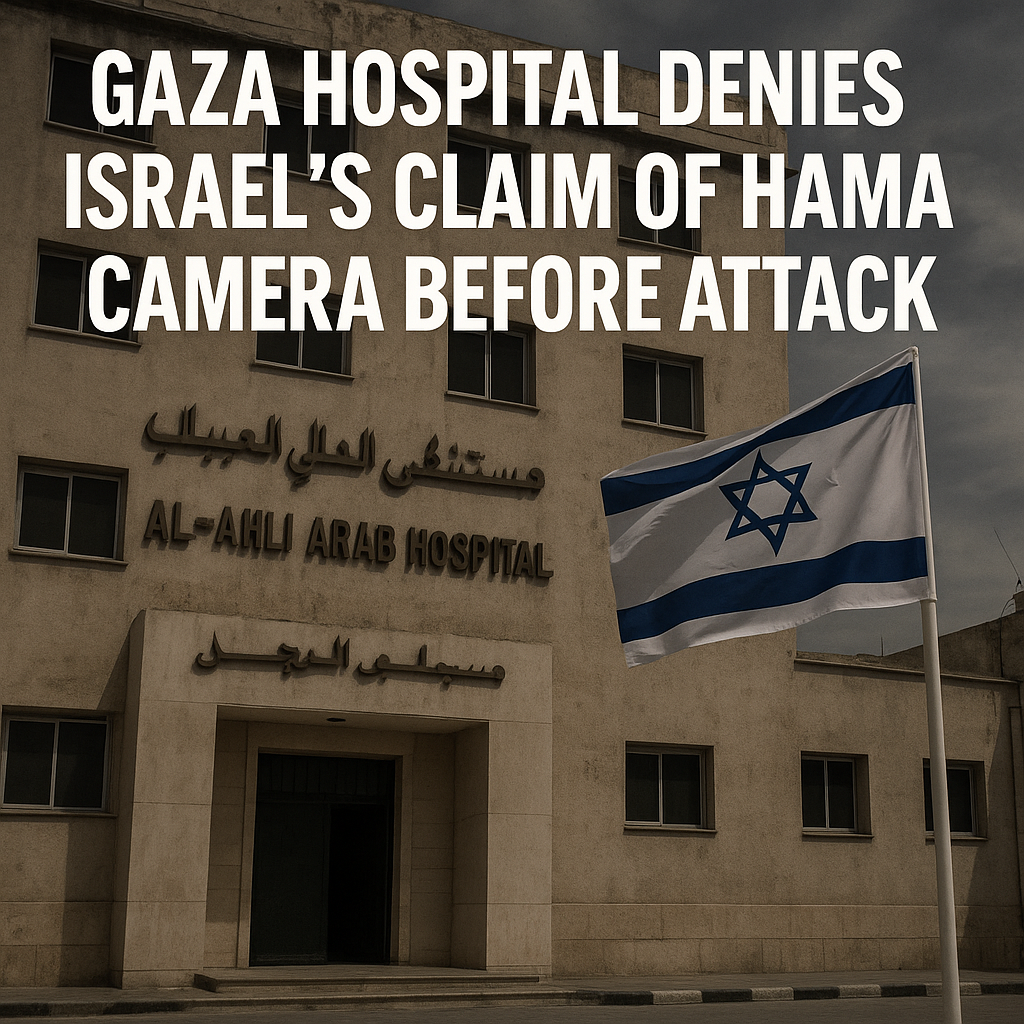
Gaza Hospital Denies Israel’s Claim of Hamas Camera Before Attack

Gaza Hospital Denies Israel’s Claim of Hamas Camera Before Attack
Recent tensions in Gaza have drawn widespread international attention, particularly a significant incident involving a hospital that has denied Israeli accusations of a Hamas camera being present prior to a deadly attack. This event has reignited discussions surrounding the conflict in the region, the validity of intelligence reports, and the humanitarian implications of military actions.

Competing Narratives: The Hospital’s Response
According to reports from Sky News, Gaza’s Al-Ahli hospital has publicly refuted Israeli assertions that a Hamas surveillance camera was active just before an airstrike hit, resulting in numerous civilian casualties. Hospital representatives strongly maintain that no such device was in operation and criticize the claims as an attempt to justify military actions against civilians.


Citing the hospital’s director, the Sky News report notes, “This is not only false; it’s an attempt to shift blame.” This viewpoint underscores the hospital’s frustrations regarding the ongoing conflict and the humanitarian crisis that has unfolded.


Contrastingly, sources like Al Jazeera highlight that Israeli officials assert that their military had intelligence indicating Hamas was using the hospital to coordinate attacks. They argue that maintaining a security presence in such locations is part of the group’s strategy, which blurs the lines of warfare and civilian safety. This assertion reflects a broader narrative in which military operations are justified through a framework of national security.
Humanitarian Concerns and Military Justifications
While military actions are often framed within the context of national security, the humanitarian implications cannot be overlooked. Reports from various outlets emphasize that the ongoing violence has led to considerable civilian suffering, exacerbating the preexisting crisis in the Gaza Strip.
– Civilian Impact: According to data from humanitarian organizations, the death toll has risen dramatically in recent months. Hospitals, already operating beyond capacity, are overwhelmed by casualties, which complicate their ability to treat patients effectively.
– International Response: Countries and organizations have called for investigations into the incidents, urging all parties to prioritize civilian safety and adhere to international humanitarian law.
The tension between military objectives and the humanitarian crisis was further illustrated when the hospital’s administration pointed out the precarious situation in which civilians find themselves. They perceive the ongoing airstrikes not as a means of confronting militants but as a direct threat to innocent lives. This sentiment echoes a larger call from international actors who advocate for peaceful resolutions over military engagements.
Weighing Evidence and Sentiments
The conflicting narratives surrounding the Gaza hospital incident epitomize the complex nature of reporting in areas of active military conflict. On one side, Israeli officials provide surveillance intelligence as a rationale for their attacks, while on the other, local authorities vehemently deny the presence of hostile activity at civilian locations.
– Intelligence vs. Accountability: The challenge lies in discerning genuine intelligence versus propaganda. Skepticism about military claims remains throughout the international community, often rooted in historical precedent where claims have been found dubious.
– Polarization of Perspectives: As most news outlets report, the situation tends to polarize opinions. Supporters of Israel argue that military action is necessary for national security, while critics see such actions as disproportionate and harmful to civilians.
These contrasting viewpoints highlight the difficulty of achieving a nuanced understanding of the situation. It remains crucial to approach this topic with an awareness of the embedded biases and the overarching narrative of conflict that prevails.
An Unfolding Conflict
As new information emerges, the narrative continues to shift. The dialogue surrounding the incident at the Gaza hospital illustrates the larger complexities of the Israeli-Palestinian conflict, where military actions and humanitarian crises intertwine. While Israeli officials maintain that their military operations are a necessity for sustaining security against Hamas, Palestinian authorities and international observers raise grave concerns regarding the resulting civilian suffering and humanitarian degradation.
In contemplating next steps, the international community finds itself at a crossroads. With humanitarian crises escalating, calls for accountability and investigations into military actions are likely to intensify. The resolution of this conflict will require balancing national security with the imperative of safeguarding civilian lives—an intricate challenge that demands attention to not just the facts but the deeply human stories behind them.
As the situation develops, ongoing dialogue and transparency become critical. The path forward must prioritize de-escalation and humanitarian aid, allowing the voices of those affected to shape a more peaceful future.















