
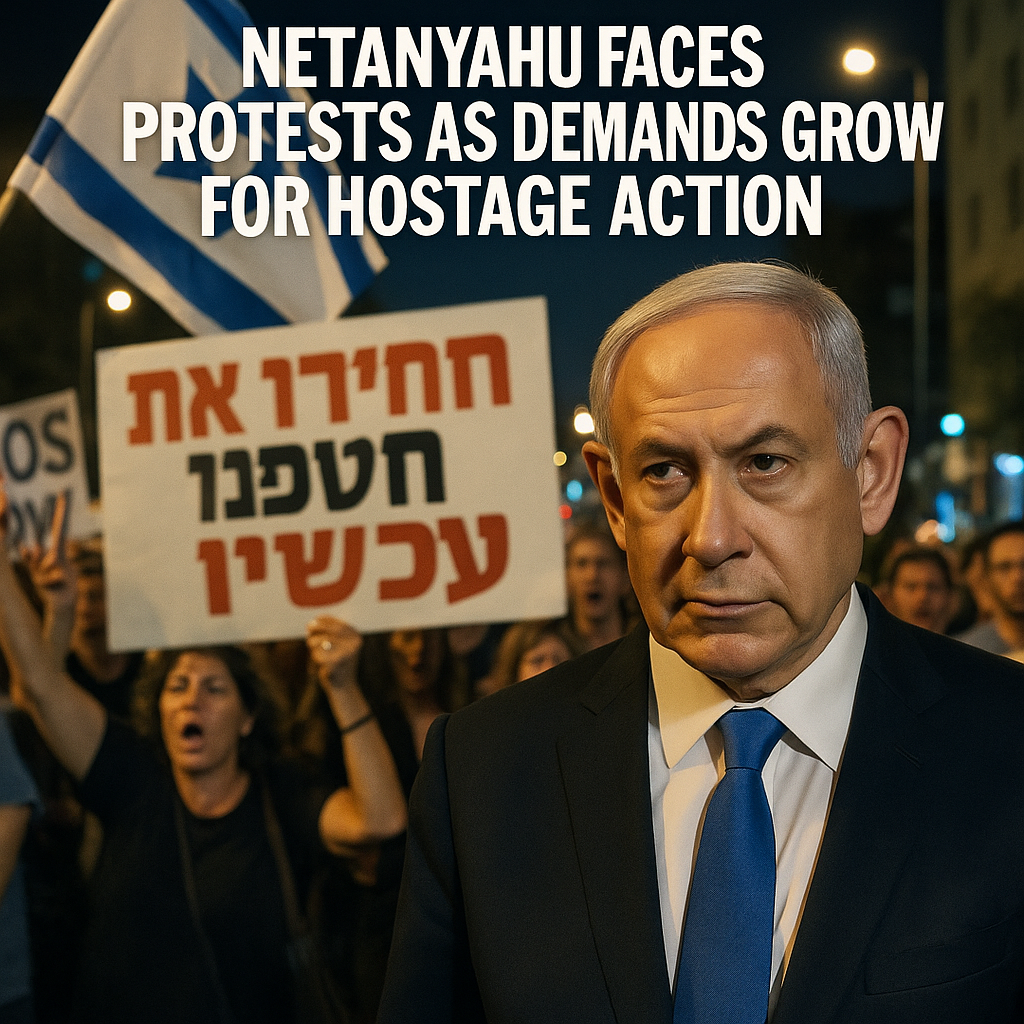
Netanyahu Faces Protests as Demands Grow for Hostage Action

Netanyahu Faces Protests as Demands Grow for Hostage Action
As the situation in Israel intensifies, Prime Minister Benjamin Netanyahu faces mounting pressure from the public to take decisive action in retrieving hostages. The protests, which have surged over the past few weeks, reflect a deep-seated concern among citizens for the safety of those captured amid ongoing conflict. This growing unrest not only underscores the emotional turbulence experienced by families affected but also highlights the broader implications for Israeli politics and security policy.

Public Sentiment: A Call for Action
The protests echo a unified sentiment among Israelis: they want immediate and effective measures to secure the release of hostages being held in Gaza. Demonstrators have gathered in various locations, calling on Netanyahu to commit fully to ensuring that every available resource is utilized to bring home their loved ones.


Diverse Perspectives on the Hostage Crisis
Sources reveal conflicting opinions about Netanyahu’s strategies in handling the hostage situation. According to an article from Sky News, many protesters argue that the Prime Minister is not doing enough to engage with local and international partners to secure the hostages’ release. “We need him to do whatever it takes,” one protester was quoted, emphasizing the emotional weight behind their demands. This grassroots movement echoes a widespread belief that direct action is a moral imperative for the government.


In contrast, Al Jazeera provides insight into the complexities of such negotiations, noting that while public sentiment may call for aggressive action, the realities of hostage diplomacy require a more delicate approach. The article suggests that Netanyahu is navigating a treacherous path where immediate force could exacerbate tensions and jeopardize lives. They highlight that past incidents show that overly aggressive tactics could lead to further violence, raising concerns about the potential fallout from a heavy-handed response.
The Political Landscape: Implications of Protest
The current protests not only reflect immediate public concerns but also carry significant weight in Netanyahu’s political landscape. Historically, the Israeli populace has shown resilience and tenacity in the face of adversity. However, dissatisfaction with political leaders can rapidly translate into a loss of support.
Navigating Tensions with Gaza
Reuters reports that while the Israeli government grapples with these demands, regional tensions continue to simmer. The situation is further complicated by the ongoing conflict in Gaza, which has historically influenced public opinion and governmental responses in Israel. Netanyahu’s administration must balance the urgency of public sentiment with the intricacies of negotiations with Hamas, the group that holds the hostages.
Politically, the Prime Minister’s handling of the situation could have repercussions beyond immediate protest actions. If the demands of the protesters are perceived as being ignored, it could lead to diminished trust in his leadership and a call for accountability. Meanwhile, any failure to secure hostages might also incite criticism from coalition partners, who may leverage public sentiment to influence Netanyahu’s policy directions.
Weighing Risks and Rewards
What emerges from contrasting viewpoints is a nuanced debate: while the public calls for aggressive action, the realities of hostage situations often require a strategic, patient approach. As Netanyahu continues to grapple with these pressures, the plight of hostages remains a sensitive and precarious issue.
The public’s desire for immediate action must be balanced against the potential risks that a more adversarial approach could entail. It raises questions about how a government can effectively respond to the emotional and political consequences of such a crisis. The protests solidify the importance of accountability in leadership, highlighting the intricate dance between being a compassionate leader and a strategic political figure.
Conclusion: A Balancing Act
In summary, the protests demanding action for the release of hostages encapsulate a significant moment in Israeli politics, revealing the layered complexities of public sentiment and policy decision-making. Netanyahu faces the dual challenge of responding to urgent public demands while carefully navigating the geopolitical landscape surrounding hostages in Gaza. As this situation unfolds, the implications for both national unity and international relations remain to be seen. The Prime Minister’s actions—or lack thereof—could set a precedent for how hostages are treated in future conflicts, making this current crisis a pivotal moment in Israel’s ongoing narrative.
The conversations surrounding these protests and the hostage situation will likely continue, as citizens await decisive action from their leaders, balanced against the need for careful diplomacy.















