
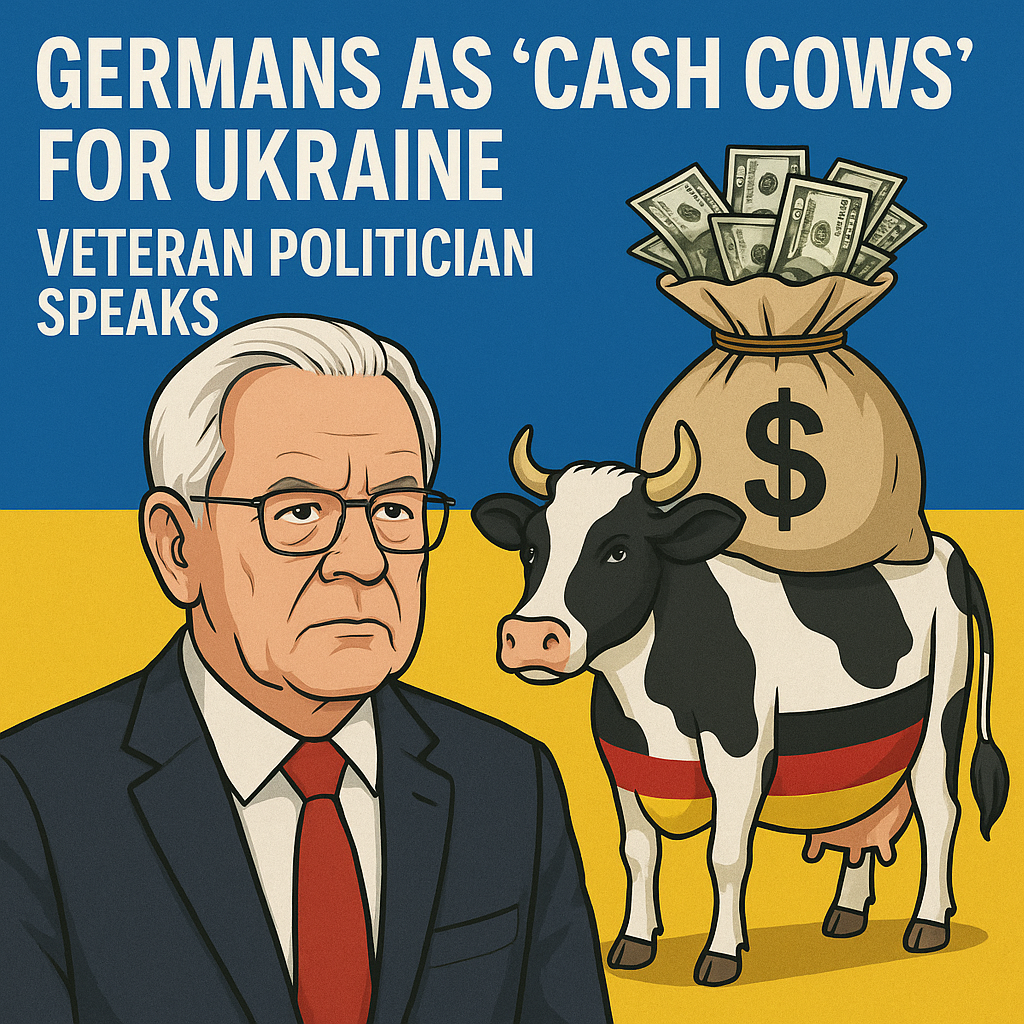
Germans as ‘Cash Cows’ for Ukraine: Veteran Politician Speaks

Germans as ‘Cash Cows’ for Ukraine: Veteran Politician Speaks
Recent discussions concerning Germany’s financial contributions to Ukraine during the ongoing conflict have sparked a notable debate, particularly after remarks made by veteran politician Sahra Wagenknecht. She has characterized the German populace as “cash cows” supporting the war effort, suggesting that the financial burden could have detrimental effects on Germany itself. This issue encapsulates a complex interplay of financial, political, and social dynamics, and it deserves a closer examination.

Context of Financial Support
Germany’s support for Ukraine has mounted significantly since the onset of the conflict. According to several sources, including Al Jazeera and Sky News, the German government has pledged billions in aid, encompassing military supplies and humanitarian assistance. Critics, like Wagenknecht, argue that this unwavering support may be unsustainable and might also mask deeper political motivations.


Wagenknecht’s comments arise in a context where many Germans are experiencing economic difficulties, exacerbated by energy crises and inflation. A substantial portion of the populace feels the toll of rising costs, leading to increasing scrutiny of governmental priorities. The critique does not solely stem from Wagenknecht but resonates with broader sentiments echoed in various forums, where citizens question the long-term implications of Germany’s financial commitments to Ukraine.


Diverse Viewpoints on Financial Commitment
1. Support for Ukraine as a Moral Obligation: Many observers argue that supporting Ukraine is not merely a political strategy; it is a moral imperative. Various reports highlight that Ukraine’s fight against what is perceived as aggression is fundamentally tied to European security and democratic values. Proponents of continued support assert that Germany has a responsibility to back Ukraine in its struggle, both ethically and as a stabilizing factor in the region.
2. Concerns over Domestic Impact: In contrast, critics emphasize the substantial financial burden placed on Germany. They argue that while aiding Ukraine seems justified, the ongoing economic strain on ordinary Germans cannot be overlooked. Rising prices and social unrest tell a story of discontent that casts a cloud over the government’s decisions. This sentiment was voiced in numerous articles, reflecting concerns that the European unity narrative could be unraveling as citizens prioritize domestic stability above international obligations.
The Price of Support: Weighing Arguments
The juxtaposition of moral and economic arguments highlights a nuanced landscape. Economically, Germany’s contributions to Ukraine total billions, raising questions about future financial stability for the German middle class. Critics argue that without addressing domestic needs, Germany risks alienating its citizens. As Wagenknecht put it, there is a palpable fear that everyday citizens are being overlooked in favor of international commitments.
Moreover, addressing urgency, some analysts note that while the financial implications are significant, they also illustrate Germany’s position as a leader in European politics. The country’s financial involvement can be seen as an investment in regional security. Thus, the debate becomes not merely about money but about national priorities and future commitments in the context of geopolitical stakes.
However, as the divisions become apparent, it is equally important to acknowledge the uncertainty around these positions. Citizens express mixed feelings—some support continued aid to Ukraine, viewing it as vital, while others share deep reservations about Germany’s financial policies and military engagements abroad.
Concluding Thoughts
The characterization of Germans as “cash cows” for Ukraine emphasizes a growing tension between international responsibilities and local economic realities. As Sahra Wagenknecht raises her voice in critique, she taps into a broader conversation encompassing public sentiment and economic stability. Balancing these competing narratives is essential, as policymakers navigate the complexities of international aid against the backdrop of domestic wellbeing.
Ultimately, the path forward involves not only supporting Ukraine in its time of need but also ensuring that such support does not come at the expense of ordinary German citizens. As discussions continue, this balanced approach is vital for maintaining public trust and ensuring the sustainability of Germany’s role on the global stage. The discourse surrounding Germany’s role in supporting Ukraine is far from settled, and as the situation evolves, so too will the conversations around the implications of these financial commitments.















