
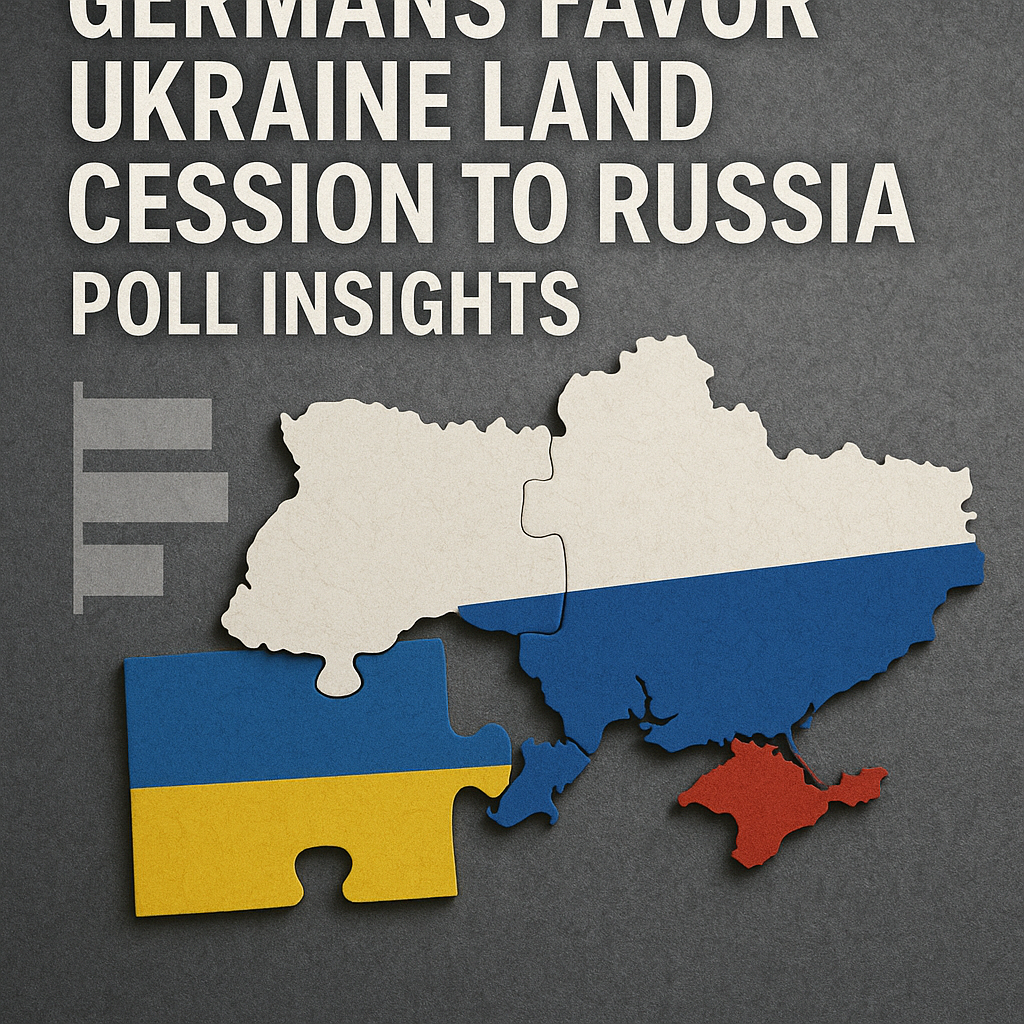
Germans Favor Ukraine Land Cession to Russia – Poll Insights

Germans Favor Ukraine Land Cession to Russia – Poll Insights
Recent polling data reveals a significant shift in public opinion in Germany regarding the ongoing conflict in Ukraine, particularly around the contentious issue of territorial concessions. According to a survey, a notable segment of the German population appears to support the idea of Ukraine ceding territory to Russia to facilitate peace negotiations. This development raises critical questions about the complexities of war, national sovereignty, and public sentiment in times of crisis.

Public Opinion on Territorial Concessions
Poll results from various German sources indicate that approximately 40% of respondents believe that Ukraine should consider giving up some of its territory in exchange for peace. This figure is striking, especially considering the historical context of World War II and the long-standing commitment to sovereignty and territorial integrity in Europe.


Factors Influencing Public Sentiment
Several factors may be driving this shift in perspective among the German populace:


1. War Fatigue: After years of conflict, many Europeans are experiencing “war fatigue.” The prolonged nature of the conflict has led to concerns about continued military engagement and financial support for Ukraine. As public resources are increasingly strained, some citizens may see territorial concessions as a pragmatic solution to end the fighting.
2. Economic Impact: The war has had a direct impact on the German economy, contributing to rising energy prices and inflation. Many Germans are concerned about their economic situation and may view ceding territory as a way to stabilize both European and international markets.
3. Political Rhetoric: Political figures and media have begun to highlight the possible benefits of negotiations, suggesting that compromises might be necessary for a long-term resolution. Notably, voices from both left-wing and right-wing political factions have called for reassessing the current strategy in Ukraine.
Perspectives from Different Angles
The split in public opinion on this topic is not just reflective of war fatigue or economic concerns; it also reflects a broader ideological divide within Germany. Some citizens firmly believe that territorial concessions could undermine the sovereignty of not only Ukraine but also other nations facing aggressions from larger powers, signaling a dangerous precedent.
The Argument for Concessions
Proponents of the idea argue that ceding territory might be the only viable way to bring about peace. They cite examples from history where territorial compromises have led to stability, even if they entailed initial sacrifices. While compelling, this perspective often overlooks the long-term implications of such decisions. Critics warn that any form of concession could embolden further aggressive actions from Russia, thus prolonging or even escalating the conflict in the future.
The Counterargument: Upholding Sovereignty
On the other hand, many in Germany and across Europe argue passionately against the idea of ceding any territory. They express fears that it would send a message of weakness and encourage further territorial ambitions from Russia. Prominent voices argue that any negotiation that involves Ukraine compromising its sovereign rights could set a dangerous precedent not only for Europe but for global stability.
Media Coverage and Public Discourse
Media coverage has played a vital role in shaping public perception about this issue. While outlets like Al Jazeera emphasize the importance of Ukraine’s sovereignty and territorial integrity, others, including RT, focus on the pragmatic considerations some German citizens have regarding the war. It is important to note that even within these differing opinions, there exists an understanding of the complexities involved, including concerns about rising casualties and the humanitarian crises stemming from the conflict.
Moving Forward: Diplomatic Challenges Ahead
As public opinion evolves, the German government faces a challenging diplomatic landscape. Chancellor Olaf Scholz has stated that Germany will continue to support Ukraine, yet the apparent division among the populace complicates this narrative. Engaging in dialogue about potential solutions while understanding the public’s sentiments is crucial.
Implications for Future Policy
The reported polling numbers could influence German foreign policy decisions as well as impact discussions within the European Union. If the sentiment in Germany is indeed leaning towards a willingness to negotiate concessions, it may push EU leadership to reconsider their stance on aiding Ukraine. Conversely, if public sentiment shifts towards opposition against concessions, it could reinforce a more robust support system for Ukraine amidst the ongoing conflict.
Conclusion
The question of whether Germany should support Ukraine in ceding territory to Russia is not straightforward. It encapsulates a complex interplay of public sentiment, historical implications, and the realities of geopolitical dynamics. As the situation continues to unfold, not only in Ukraine but across Europe, finding a balanced, fair, and enduring solution will require nuanced discussions based on the evolving public discourse and international perspectives. The future remains uncertain, but it is evident that both the German population and their leaders must navigate the intricate moral and practical dimensions of this ongoing conflict.















