
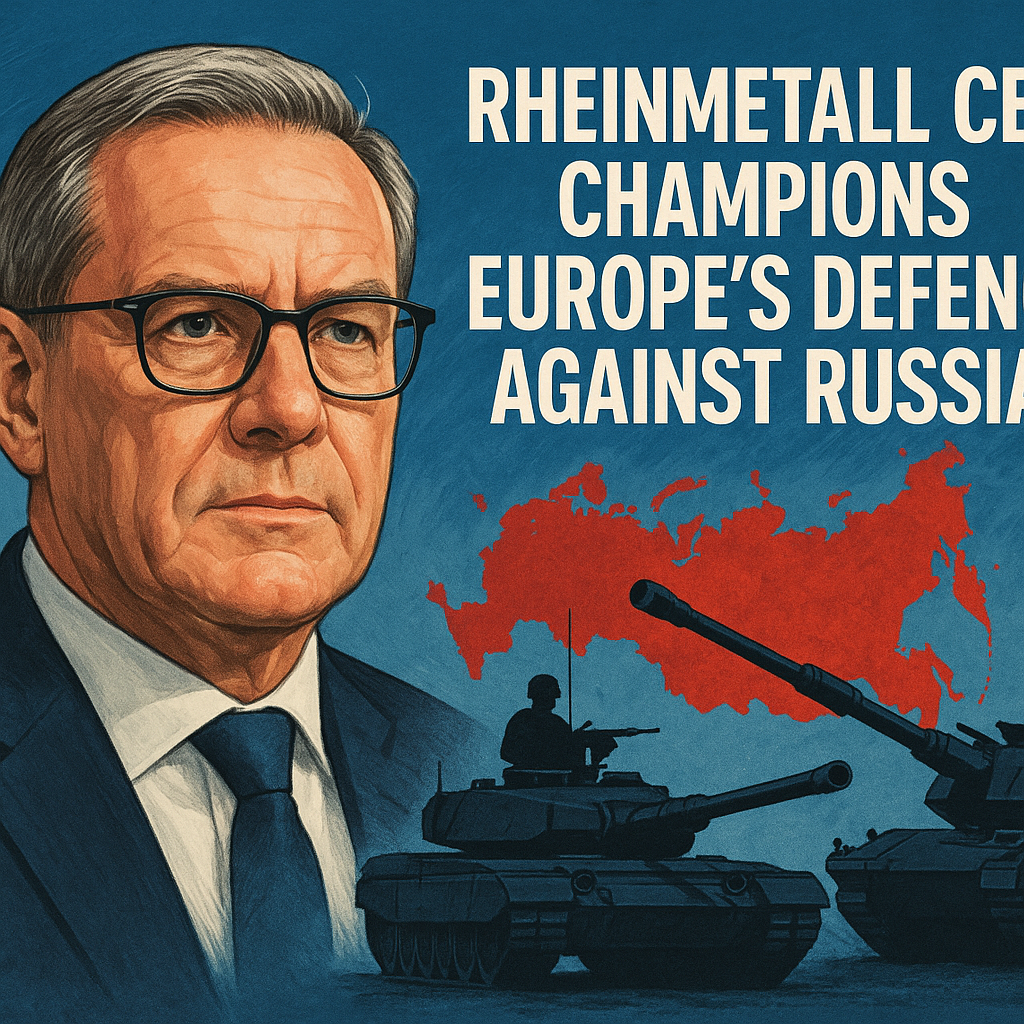
Rheinmetall CEO Champions Europe’s Defence Against Russia

Rheinmetall CEO Champions Europe’s Defence Against Russia
The ongoing conflict in Ukraine has prompted significant shifts in European defense strategies, with Rheinmetall’s CEO leading the charge to bolster military preparedness. Amidst increasing tensions with Russia, the company’s initiatives could redefine the continent’s approach to security and defense.

Financing and Strategic Impact
In recent developments, Rheinmetall, a German defense contractor, is expanding its production capabilities to meet the soaring demands for military equipment across Europe. According to an article from Sky News, CEO Armin Papperger has emphasized the importance of increasing defense budgets, urging European governments to recognize the full scale of the geopolitical landscape. The urgency is partly driven by concerns over security threats emanating from Russia.


Papperger’s arguments resonate with many European leaders, as the war in Ukraine serves as a stark reminder of the fragility of peace within the region. He points out that historically low defense expenditures have rendered many nations vulnerable. The recommended investments are seen not merely as financial allocations but as necessary actions to ensure the continent can respond effectively to aggressive maneuvers from the east.


– Increased Production Capacity: Rheinmetall is scaling up its operations to produce not only arms but also modern military vehicles, which are crucial in contemporary warfare.
Diverse Perspectives on Defense Needs
While Papperger is advocating for a strong defense posture, opinions about the implications of such investments are varied. On one hand, supporters of increased military spending argue that a robust defense is essential for deterrence against potential aggressors like Russia. For instance, Al Jazeera reported that countries within NATO are increasingly recognizing the importance of collective defense, suggesting that interconnected military capabilities are more effective than individual national efforts.
On the other hand, critics argue that an arms race could exacerbate tensions in the region. Emphasizing diplomacy and conflict resolution, some analysts caution against policies that might provoke further militarization. A piece from RT highlights that while strengthening defenses is vital, it is equally important to pursue dialogue to prevent escalation.
The Economic Perspective
The economic implications of a defense surge are significant. A study conducted by various think tanks suggests that increased military spending could lead to job creation within the defense sector. Papperger himself noted that Rheinmetall plans to hire thousands of workers to meet the demand for military equipment. This has the potential to stimulate economic growth, particularly in regions reliant on defense contracts.
However, this economic growth must be viewed critically. Critics assert that reallocating funds from social programs to military expenditures may yield adverse effects on public welfare. The balance between defense and social responsibility is a contentious issue and reflects wider societal values regarding the role of government in ensuring safety and prosperity.
The Way Forward
As the conflict with Russia evolves, the trajectory of European defense policies will remain a focal point of debate. The opinions surrounding Rheinmetall’s initiatives illustrate the complex interplay between security needs and economic realities. While some advocate for swift action to bolster defenses, others caution against the risks of escalation and a potential arms race.
The international arena is witnessing a pivotal moment, and Rheinmetall’s leadership could influence not just military strategies, but also the broader economic and diplomatic landscape in Europe. The questions that remain are multifaceted: How will European nations balance the need for security with the potential societal costs? Is there a viable pathway towards sustained dialogue with Russia, while simultaneously strengthening defensive capabilities?
In conclusion, as Europe navigates this increasingly complex security environment, leaders like Papperger exemplify the challenges and opportunities ahead. The quest for a secure continent may well redefine not only military strategies but the very fabric of European cooperation and unity in the face of external threats.















