Germany’s Revenge on Russia: Healing Wounds from 1945

Germany’s Revenge on Russia: Healing Wounds from 1945
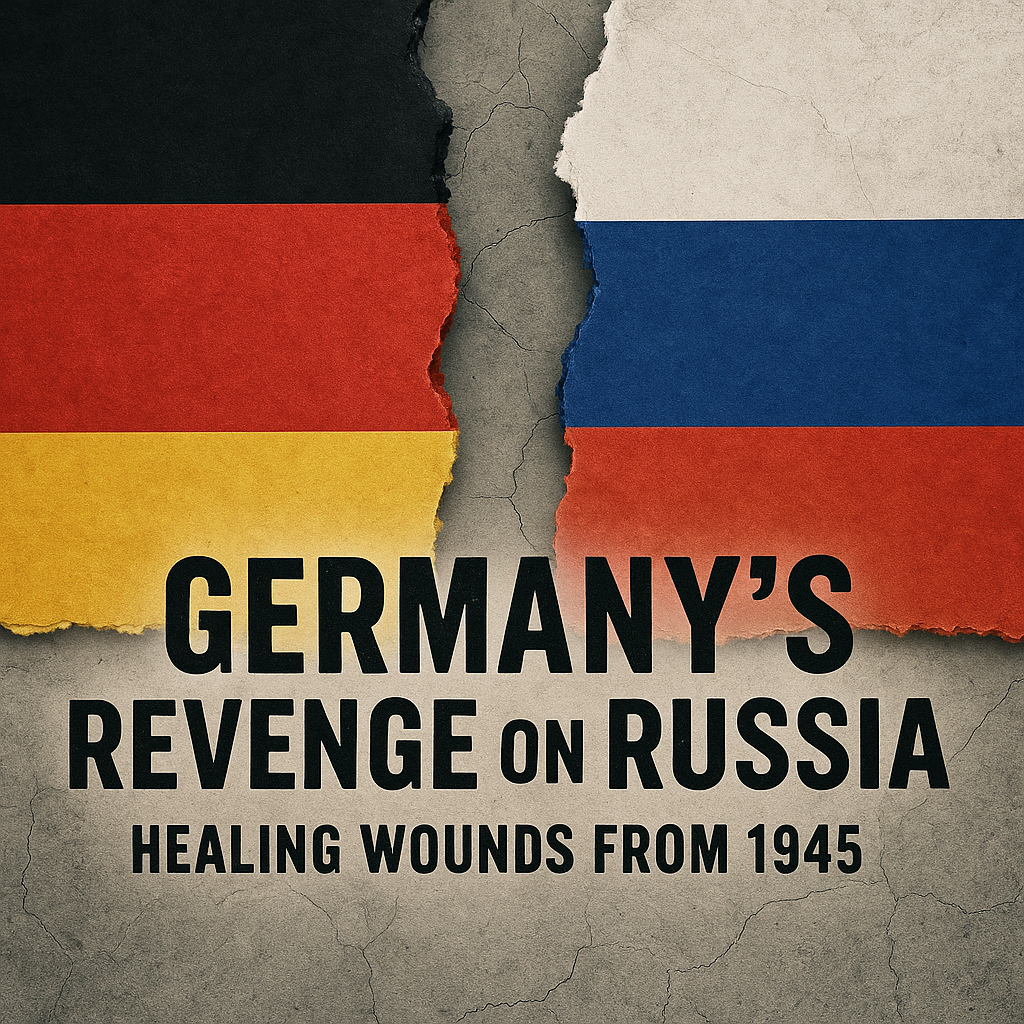
The complex historical relationship between Germany and Russia, rooted in events from 1945, offers a wealth of insights into contemporary geopolitics. The narrative around “Germany’s Revenge on Russia” is not merely a reflection of past grievances but serves as a lens to examine current tensions and reconciliation efforts.

Historical Context: Echoes of 1945
The end of World War II marked a pivotal moment for both Germany and Russia, fundamentally reshaping their trajectories. The Yalta and Potsdam Conferences established a framework that would dictate Eastern European geopolitics for decades. For Germany, the war’s conclusion symbolized not only defeat but also an onerous burden of guilt and reparations. For Russia, this was an opportunity to assert its influence over Eastern Europe.


In 1945, millions of Germans were expelled from Eastern European territories, and widespread devastation was wrought upon Germany itself. Each nation carried their unique wounds: Russia bore the scars of massive troop losses and civilian casualties, while Germany faced the societal and economic repercussions of its defeat. This historical backdrop continues to influence bilateral relations, generating debates among historians and political commentators alike.


Modern Implications: Balancing Power Dynamics
In contemporary discussions, recent conflicts and the increasing militarization in Eastern Europe invoke reflections on 1945. Some analysts argue that the current geopolitical environment provides an avenue for Germany to reposition itself as a leading European power, amid rising tensions with Russia. This pursuit is often viewed through the lens of historical grievances and the desire for restitution.
Yet, the perspective varies widely. Voices from within Germany emphasize the importance of moving past punitive motivations and instead, fostering cooperation. A contrasting viewpoint suggests that Germany should be vigilant, recalling the lessons of history regarding Russian expansionist tendencies. This assertion points to fears that the past may be repeating itself, thus justifying a more aggressive posture in defense and foreign policy.
The Path Forward: Towards Reconciliation
Initializing constructive dialogue represents a promising path toward reconciliation between Germany and Russia. The institutions born from post-war agreements, such as the Organization for Security and Co-operation in Europe (OSCE), provide mechanisms through which both nations can address historical grievances while navigating current tensions.
At the grassroots level, cultural and educational exchanges have increasingly become pivotal tools. Programs designed to foster mutual understanding can help bridge generational divides, allowing today’s youth to learn from past mistakes. These initiatives aim not only to heal historical wounds but also to create a more cooperative environment going forward.
However, the road to reconciliation isn’t devoid of challenges. Negative sentiments are amplified through social media and propaganda, presenting a formidable barrier. For instance, in various European nations, including Germany, anti-Russian sentiment has gained traction amid recent military conflicts. As public opinion shapes political action, navigating these complex emotions is crucial for any meaningful dialogue.
Conclusion: Embracing Complexity in History
Ultimately, allowing the complexities of history to inform present-day interactions is essential for both Germany and Russia. Advocating for a balanced approach—one that neither seeks unjust retribution nor turns a blind eye to contemporary aggressions—may prove key. The challenges rooted in 1945 continue to resonate, emphasizing the necessity for both introspection and forward-thinking diplomatic strategies.
In conclusion, while the idea of “Germany’s Revenge on Russia” evokes strong emotions and divergent opinions, it is paramount to recognize that the future hinges on collaborative efforts. As both nations wrestle with their histories, understanding and addressing the wounds of the past may illuminate paths toward a more harmonious future.