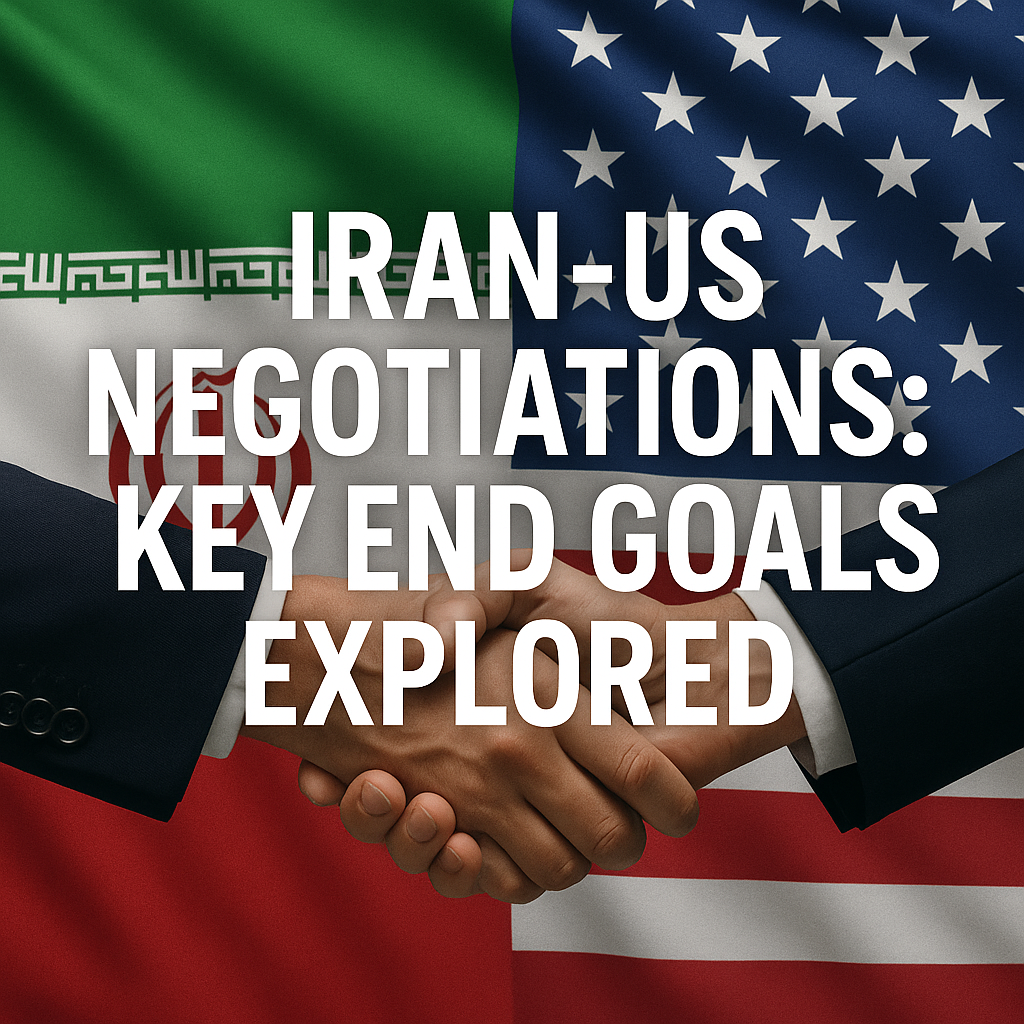
Iran-US Negotiations: Key End Goals Explored

Understanding the Key End Goals of Iran-U.S. Negotiations
The Iran-U.S. negotiations have become a focal point for understanding geopolitical dynamics in the Middle East. Amid escalating tensions and complex history, these discussions carry significant stakes not just for both nations but for global stability as well. This article aims to delve into the primary objectives that both Iran and the United States seek to achieve through these negotiations.

Navigating Historical Tensions
To grasp the goals of the current negotiations, it’s essential to recognize the underlying historical context. The Iran-U.S. relationship has been fraught with complexity for decades, marked by the 1979 Iranian Revolution, decades of sanctions, and ongoing disputes surrounding Iran’s nuclear program.


Iran’s Stance: Sovereignty and Economic Relief


Iran’s main objective in these negotiations is the preservation of its sovereignty and the lifting of economic sanctions that have severely impacted its economy. With over 30 years of sanctions in various forms, Iran sees negotiations as a pathway to regain its economic footing and reintegrate into the global market.
Additionally, Iran aims to solidify its regional influence, asserting its role as a dominant player in the Middle East. This involves negotiating terms that protect its interests in neighboring countries, such as Iraq and Syria, where it has significant strategic alliances. Iranian officials emphasize that they will not compromise their regional goals for economic incentives alone, indicating a complex balancing act of national pride and economic necessity.
U.S. Goals: Stability and Non-Proliferation
On the flip side, the U.S. approach is often defined by its broader goals of nuclear non-proliferation and regional stability. The Biden administration, inheriting the fraught legacy of previous administrations, seeks to curtail Iran’s nuclear capabilities while addressing concerns related to missile development and regional proxy conflicts.
For the U.S., a successful negotiation would ideally involve a comprehensive agreement that not only limits Iran’s nuclear program but also addresses its activities in the region. The U.S. continues to advocate for a multi-faceted approach, as stated by a senior official, who emphasized the need for “robust verification mechanisms” to ensure compliance. This reflects a broader U.S. strategy of engaging in multi-lateral discussions, involving allies like Israel and Gulf states, to create a united front on Iran-related issues.
Points of Consensus and Divergence
The negotiations have seen moments of both consensus and stark divergence. Consensus is often realized on the need for beneficial trade relationships; lifting sanctions could offer Iran much-needed access to international markets and allow the U.S. to re-engage economically. This was a significant talking point in recent meetings, where both sides recognized the potential for mutual benefit.
Conversely, divergence remains significant, especially regarding the details of nuclear compliance and the extent of economic relief. Reports indicate that while the U.S. is willing to consider phased sanctions relief, Iran insists on immediate and substantial lifting of restrictions as a prerequisite for limiting its nuclear program. As articulated in recent commentary, “without immediate relief, Iran sees no incentive to comply with long-term commitments.”
Looking Ahead: The Double-Edged Sword of Negotiations
The road ahead for Iran-U.S. negotiations is fraught with uncertainty. While both nations recognize the importance of finding common ground, the intricacies of their respective national agendas often complicate progress.
Experts suggest that any successful negotiation must balance the need for Iran to regain its economic stability without compromising U.S. security interests. This requires a nuanced understanding of each nation’s internal pressures and external alliances. As one analyst pointed out, “both sides must be prepared to make concessions and accept a new reality.”
The stakes are particularly high, given the regional implications of these negotiations. Destabilizing factors, such as ongoing conflicts in Yemen and increasing tensions with Israel, add layers of complexity that negotiators must navigate carefully.
In conclusion, while Iran and the U.S. pursue contrasting goals within their negotiations, both sides must confront the multifaceted challenges that lie ahead. The future of these dialogues hinges on the ability to strike a balance between national interests and regional stability—factors that will continue to shape the geopolitics of the Middle East for years to come.