
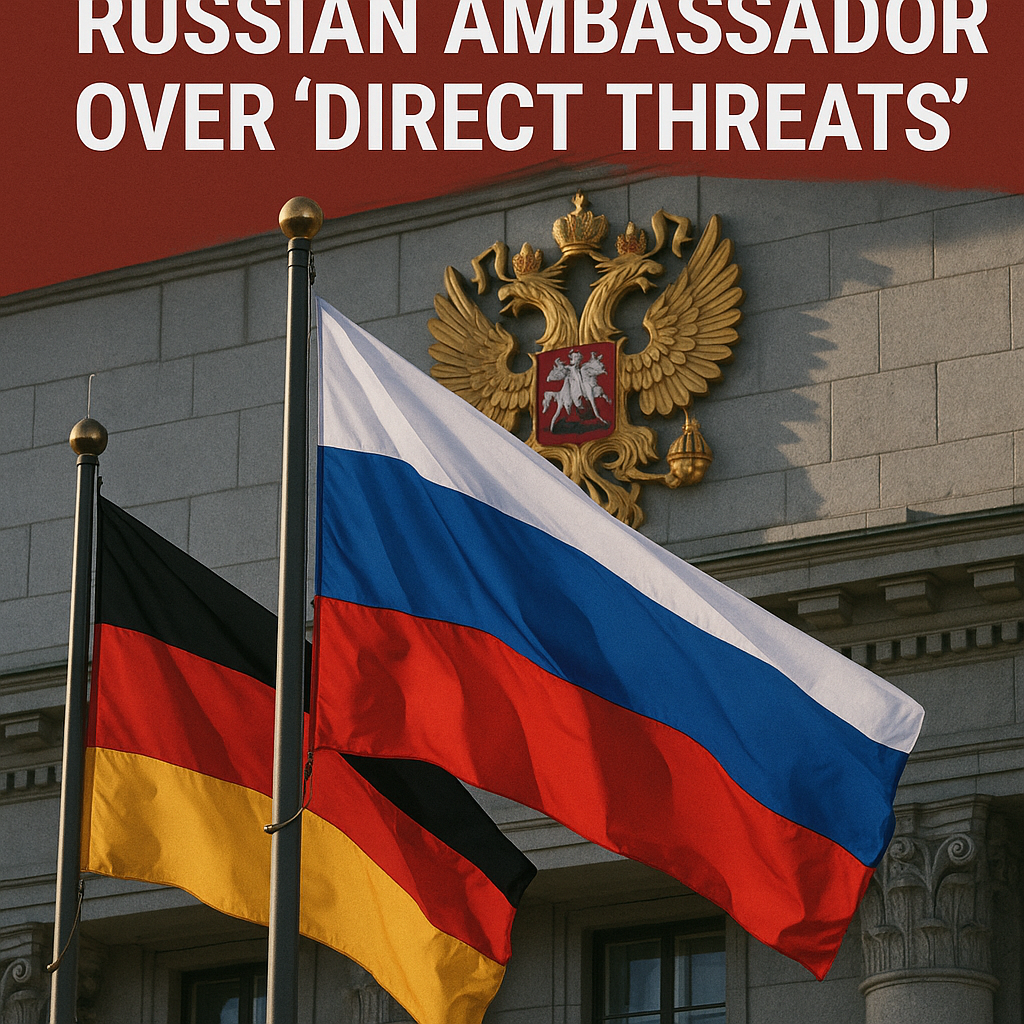
Germany Summons Russian Ambassador Over Direct Threats

Germany Summons Russian Ambassador Over Direct Threats
Germany’s decision to summon the Russian ambassador due to direct threats made by Russian officials reflects the increasing tensions between the two nations. This diplomatic move has ignited discussions concerning the implications for international relations, security, and the evolving geopolitical landscape.

Rising Tensions: Understanding the Context
In recent months, diplomatic conversations have been overshadowed by escalatory rhetoric. Germany’s action came after comments from Russian officials, which were interpreted as warnings that went beyond the bounds of diplomatic discourse. While specific details of the threats have not been elaborated extensively in the media, it is clear that they have raised concerns about regional stability and the potential for increased militarization.


A report from Al Jazeera highlights that the Russian ambassador was summoned in response to comments from high-ranking officials claiming that Germany’s support for Ukraine could have severe consequences, framing it as a provocation. This has served to stir an anxious atmosphere across Europe, where nations remain wary of Moscow’s military assertiveness.


Assessing the Implications
The decision to summon the ambassador is not just about the threats themselves; it underscores how Germany, as a key player in the European Union and NATO, views its role in countering Russian aggression. As tensions in Eastern Europe escalate, the shift in Germany’s foreign policy—traditionally characterized by a more measured approach towards Russia—shows a pivot towards a firmer stance.
The potential repercussions of this diplomatic standoff could be significant. A report from RT emphasizes that Russia has condemned Germany’s reaction as overly aggressive and a misinterpretation of the comments made by its officials. From Moscow’s perspective, this incident could further solidify their narrative of the West as antagonistic to Russian interests, justifying their own military posturing.
Voices from Both Sides
The contrasting narratives highlight the divide in perceptions. Proponents of a tougher stance argue that Germany’s actions are necessary to maintain regional security and demonstrate solidarity with Ukraine. In this context, Germany’s Summit meeting with fellow EU leaders signifies a united front against perceived threats from the east. Advocates feel that this is a crucial moment for Europe to assert its sovereignty and independence in the face of Russian aggression.
Conversely, critics argue that escalating rhetoric might only serve to heighten tensions further, with the risk of miscommunication leading to unintended consequences. As one analyst noted in a Sky News report, diplomatic channels must remain open to prevent misunderstandings that could spiral into a larger conflict. This sentiment resonates widely among diplomacy experts who worry that a hardline posture may diminish the chances for dialogue.
Navigating a Complex Landscape
As both sides brace for the repercussions of this diplomatic showdown, it’s essential to consider the broader context of international relations. The exchange of threats between Germany and Russia sheds light on a multifaceted dynamic involving not just the two nations but also the interests of the United States and NATO allies, who are keenly observing this situation.
Additionally, public opinion in Germany and across Europe is another key factor. Many citizens are conflicted; while there is significant support for Ukraine amid the ongoing conflict, there are concerns regarding the potential for escalation into broader military confrontations. Here, the balance between advocacy for human rights, the protection of national sovereignty, and the risks of military engagement make for a complex environment of opinions.
Conclusion: An Open Question
In summary, Germany’s summoning of the Russian ambassador signals a crucial moment in the ongoing dialogue (or lack thereof) between Russia and European nations. While some view the action as a necessary stance against aggressive threats, others caution against the dangers of escalating tensions. The wide array of viewpoints underscores the complexity of international diplomacy, particularly amid an evolving geopolitical landscape marked by uncertainty and heightened risks.
As the situation unfolds, the international community watches closely, aware that the consequences of this diplomatic engagement—or disengagement—could have far-reaching implications for peace and stability in Europe and beyond.















