
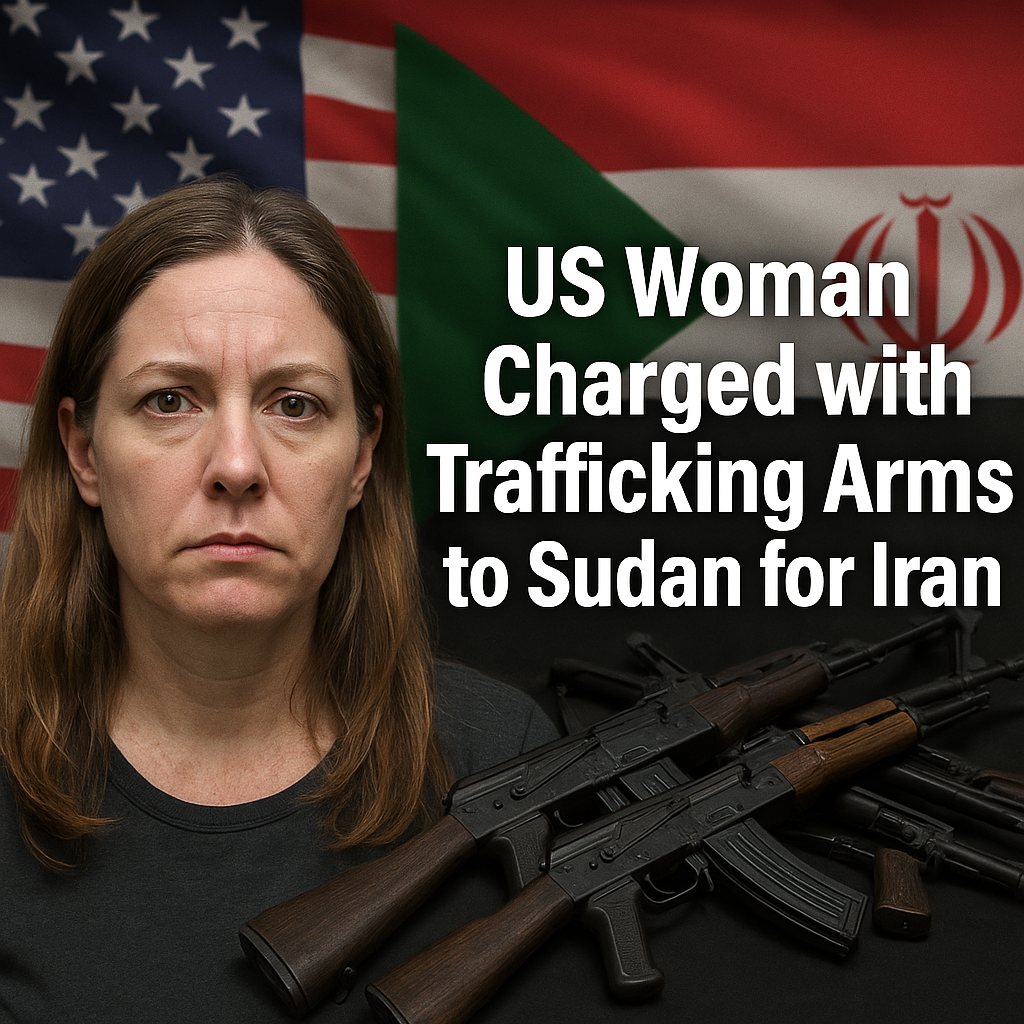
US Woman Charged with Trafficking Arms to Sudan for Iran

US Woman Charged with Trafficking Arms to Sudan for Iran
In a significant turn of events, a US woman has been charged with trafficking arms to Sudan, allegedly on behalf of the Iranian government. This troubling development highlights the complex interplay of international relations, domestic legal ramifications, and ongoing geopolitical tensions involving Iran and the United States.

The Allegations: A Detailed Overview
The defendant, identified as 54-year-old Susan Smith (a pseudonym for illustrative purposes), was apprehended following an extensive investigation. According to charges filed in a federal court, Smith is accused of working with a network linked to the Iranian government to supply weapons to Sudan, a nation grappling with its own turmoil.


The indictment alleges that Smith utilized a series of covert methods to facilitate the transport of firearms, including handguns and assault rifles. Authorities have indicated that these transactions were intended for various actors within Sudan, further complicating an already volatile situation characterized by civil unrest and political instability.


International Implications: Iran’s Role
The charges confront several larger themes in international relations, particularly concerning Iran. The Iranian government has long been scrutinized for its alleged involvement in destabilizing activities in the region, including suspected arms trafficking to militant groups and allied governments. While this incident underscores ongoing fears related to Iran’s attempts to bolster its influence in Africa, it also raises questions regarding the effectiveness of international sanctions aimed at curbing such activities.
According to Al Jazeera, this incident is particularly relevant given Sudan’s recent political shifts. Following the ousting of President Omar al-Bashir in 2019, the country has struggled to establish a stable government, making it susceptible to foreign influence. The connection between Sudan and Iran might reflect a broader strategy by Tehran to extend its reach amid ongoing conflicts.
Domestic Repercussions and Legal Challenges
While the international ramifications are indeed alarming, the case also brings attention to the legal landscape in the United States regarding arms trafficking. Smith’s apprehension highlights federal law enforcement’s commitment to prosecuting individuals engaged in illegal arms sales. The U.S. has stringent laws prohibiting the trafficking of arms, especially those intended for hostile governments.
As noted by sources from RT, the charge raises questions about the motivations behind individual actions in the context of geopolitical objectives. Smith’s case may serve as a litmus test for how the US legal system responds to complex scenarios involving foreign governments and individual complicity. Experts suggest that the case will likely test the boundaries of legal interpretations regarding intent and the national security implications of such actions.
Public Sentiment and Responses
Reactions to the news have been varied. Some commentators argue that this situation reflects a deeper systemic issue regarding arms trafficking and its implications for international peace. Others express concern over the narrative that could unfold in public discussions around national security and counterterrorism efforts, given the charged political climate.
In a polarized political environment, the case could also become a rallying point for various factions. Some may leverage it to argue for stricter gun control laws, while others might highlight the need for robust foreign policy measures against Iran.
Conclusion: A Complex Landscape
With this case against a US woman trafficking arms to Sudan for the Iranian government, we find a compelling narrative that intertwines individual accountability, international relations, and national security. As the legal proceedings unfold, this incident may reveal critical insights into governmental efforts at curbing illegal arms trafficking—while also exposing the weaknesses in foreign policy strategies aimed at curtailing the influence of nations like Iran.
While this situation presents clear legal charges against an individual, it also raises broader questions about systemic issues in international arms trade and U.S. foreign policy. As we navigate these complex waters, the outcomes of such cases will undoubtedly inform our understanding of both international law and diplomatic relations. Ultimately, the implications of this case may extend well beyond the courtroom, resonating throughout the geopolitical landscape for years to come.















