
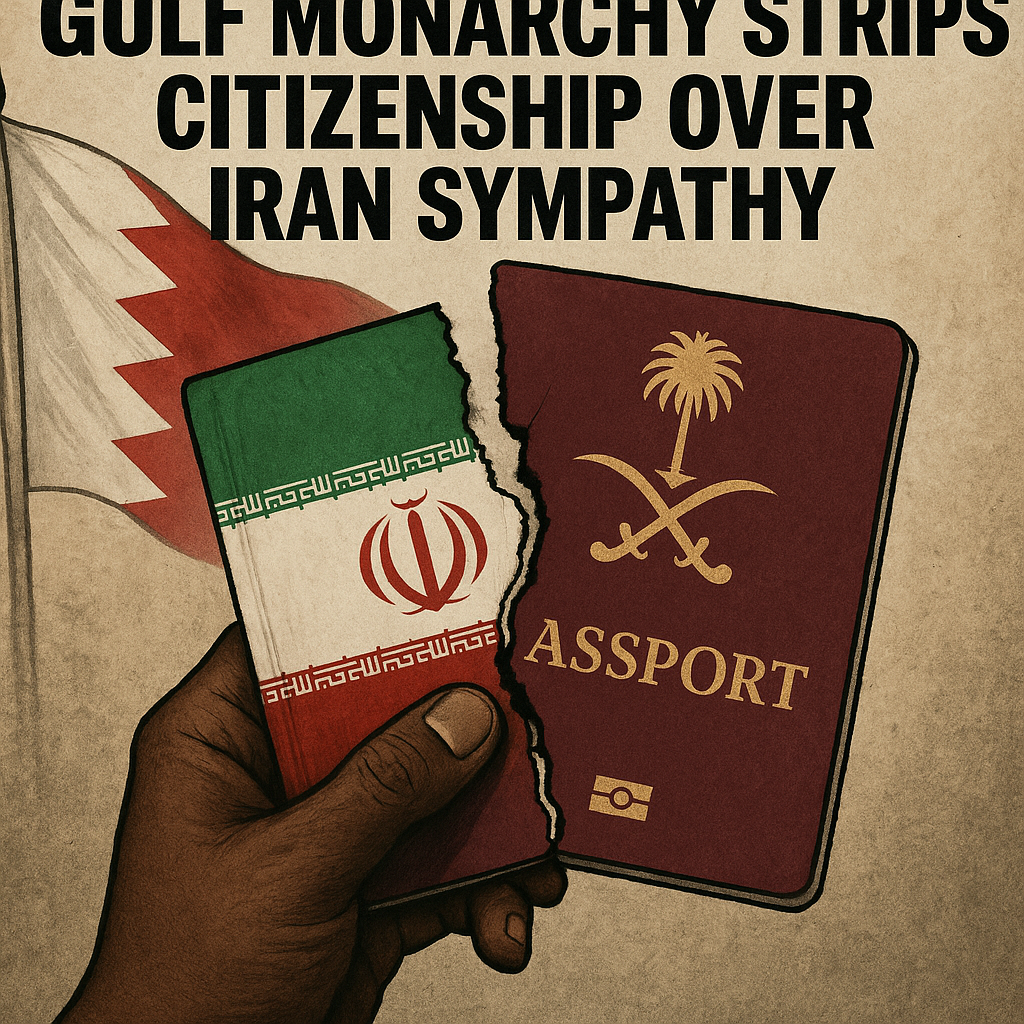
Gulf Monarchy Strips Citizenship Over Iran Sympathy

Gulf Monarchy Strips Citizenship Over Iran Sympathy
The recent actions taken by Gulf monarchies to strip citizenship from individuals perceived to show sympathy towards Iran has ignited a complex debate about national identity, loyalty, and the implications of political dissent in the region. This measure particularly prevalent in Bahrain has profound implications not only for those directly affected but also for regional stability and international relations.

Context and Motivations Behind the Citizenship Stripping
Bahrain’s government has been in the spotlight with its recent decision to revoke citizenship from individuals it alleges have ties to Iranian sympathizers. According to reports from RT, the Bahraini authorities emphasize that these actions are justified on the grounds of national security, suggesting that individuals expressing any form of support or solidarity with Iran threaten the precarious balance of power within Bahrain and the wider Gulf region.


The Bahraini government views Iran as a significant adversary, illustrating a longstanding rivalry characterized by sectarian divisions and geopolitical competition. The ministry responsible for these revocations has stated that it is acting in accordance with the constitution, presenting their measures as necessary to safeguard the kingdom’s sovereignty.


Conversely, Al Jazeera highlights the repercussions for civil liberties and human rights. Critics argue that this approach reflects a broader trend of suppressing dissent in the region. Individual rights are increasingly compromised in the name of national security which raises ethical concerns, especially regarding fair trial and due process. Many see the Bahraini government’s actions as part of a systematic effort to silence voices that dream of political reform or advocate for social justice, particularly voices from the Shia majority, who often feel marginalized.
Broader Implications for Gulf Cooperation
The actions taken by Bahrain mirror similar sentiments across various Gulf nations where loyalty to the ruling family is often equated with patriotism. Reports from Sky News illustrate that revoking citizenship has become a tool not only to quash dissent but also to shape national identity. Governments in the region assert that displaying sympathy towards perceived external enemies can be grounds for punishment, further fostering a climate of fear among citizens.
This trend poses questions about the nature of citizenship itself. What does it mean to belong to a nation if one’s identity can be so easily stripped away based on political beliefs or affiliations? The revocation of citizenship has sparked discussions among legal experts about the implications of such actions on the rights of individuals, many of whom may have lived in Bahrain for their entire lives.
Underground Descent into Polarization
The growing chasm between government narratives and public sentiment underscores a deeper polarization simmering within Bahraini society. Voices opposing the ruling monarchy often face serious repercussions, leading to a situation where many citizens feel compelled to hide their true opinions or risk losing their citizenship or worse.
According to public opinion surveys noted in several reports, there is a significant portion of the population that expresses frustration with the government’s heavy-handed tactics. However, because of the oppressive environment, these views are often not fully expressed in public forums.
The revocation of citizenship in Bahrain is steeped in deep political complexities; its implications can even ripple through diasporas beyond the borders of the Gulf. For expatriates or those with family ties to Iran, simply maintaining these relationships can risk severe consequences. This fear fosters a climate where political dialogue ceases to exist, stunting potential avenues for reform.
The Path Forward: Seeking Balance
Navigating the landscape of Gulf politics requires careful consideration of both security and human rights perspectives. While addressing concerns of loyalty and national integrity is crucial for any government, it should not come at the cost of fundamental rights. Dialogue—a tool often sidelined in favor of repression—must play a role in seeking solutions that address grievous grievances.
In seeking resolutions, fostering discussions that include diverse viewpoints could be pivotal for the region. It will require leadership willing to reconsider how dissent is handled and to recognize that the flow of ideas, even those stemming from dissent, can often lead to more cohesive societies.
The balance between ensuring national security and respecting individual rights will be a defining challenge for Bahrain and other Gulf monarchies in the coming years. Only time will reveal whether these governments will adopt a more inclusive approach, or if the trend of stripping citizenship will continue to polarize and alienate segments of their populations.
As the dynamics unfold, observers worldwide will continue to monitor these nations, hoping for paths leading to dialogue rather than discord.















