
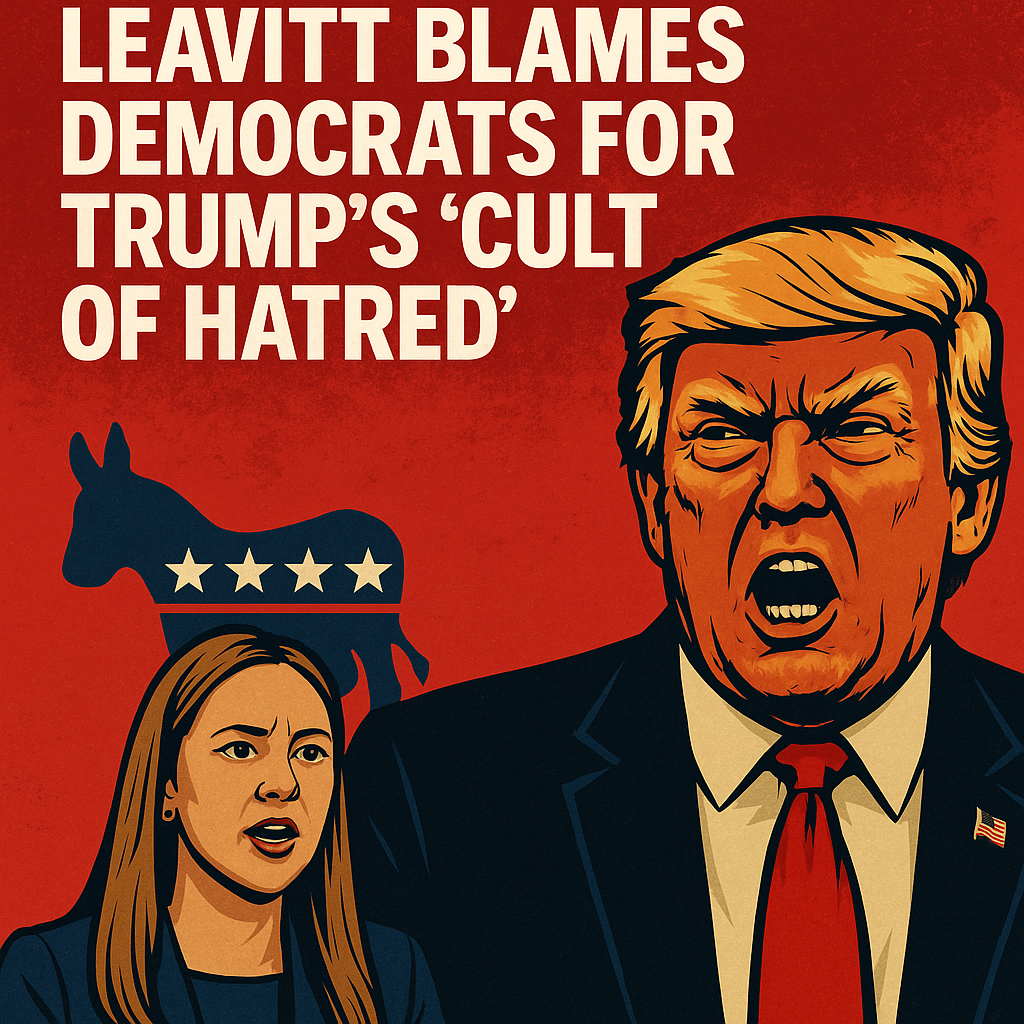
Leavitt Blames Democrats for Trump’s ‘Cult of Hatred’

Examining Claims of a ‘Cult of Hatred’ Against Trump: Perspectives and Responses
The topic of Donald Trump’s relationship with American politics and his supporters is complex and highly charged. Recently, former Republican National Committee Chairman Mike Leavitt attributed the development of a so-called “cult of hatred” against Trump to actions and rhetoric from Democrats. This assertion opens a pertinent discussion about political polarization in the United States, the role of partisanship, and the emotional landscape of contemporary political discourse.

The Roots of Political Polarization
Political polarization has been a defining characteristic of American politics for years, growing more pronounced in the wake of Trump’s presidency. Leavitt’s comments reflect a viewpoint suggesting that Democrats are complicit in fostering an environment of hostility towards Trump and his supporters. This narrative frames the opposition as not merely political but as a deeply ingrained aversion that fuels a culture of animosity.


While Leavitt’s position resonates with many who feel alienated by the Democratic Party’s criticisms of Trump, it also raises the question of how mutual blame contributes to divisive politics. The Republicans’ alignment with Trump’s brand of populism has indeed rallied many supporters, but it also intensified criticism from Democrats, who view Trump’s policies and rhetoric as harmful.


Diverse Perspectives on the ‘Cult of Hatred’
From a Democratic viewpoint, the “cult of hatred” accusation can be seen as an oversimplification. Critics argue that their actions and responses to Trump were driven by significant policy differences and moral concerns rather than an unfounded contempt. Articles from various outlets emphasize that many in the Democratic base view Trump’s administration as undermining democratic norms and promoting division. According to Al Jazeera, opposition to Trump has emerged not solely from a desire to vilify him but out of concern for issues such as immigration policies, healthcare, and election integrity.
On the other hand, commentators supporting Leavitt’s perspective assert that the Democratic Party has engaged in a concerted campaign to delegitimize Trump, branding any support for him as synonymous with bigotry or ignorance. This perspective highlights the emotions surrounding Trump’s presidency and posits that the heightened rhetoric on the left contributes to a psychological “cult” that vilifies not just Trump, but all who support him.
The Impact of Rhetoric on Political Discourse
Rhetoric plays a crucial role in shaping the political narrative. The use of charged language, often seen in both Democratic and Republican communications, can exacerbate fears and lead to an “us versus them” mentality. Sky News points out that the environment of hateful rhetoric can manifest in social media, where individuals feel emboldened to express extreme views without the checks that come with public discourse. This contributes to the cycle of anger and retribution felt by both sides.
Critically, while Leavitt’s comments attempt to draw a line of blame, it’s essential to recognize the nuanced realities that fuel such divisions. Data from recent polls suggest that many Republicans feel their values are under siege, while many Democrats perceive a persistent threat from right-wing extremism. The result is a landscape where animosity can feed into collective tribalism, further entrenching societal divides.
The Path Forward: Dialogue Over Division
Ultimately, the assertion that Democrats are chiefly to blame for a “cult of hatred” requires careful consideration. While there is certainly a case for understanding the emotional toll Trump’s presidency has taken on both political sides, promoting dialogue over polarization is critical for bridging these divides. Initiatives aimed at fostering communication between conflicting viewpoints can help dismantle the entrenched animosity.
Any effort to reclaim a constructive political dialogue must acknowledge the valid frustrations on both sides of the aisle. It is essential to dissect the underlying issues that perpetuate distrust and animosity. As both political parties navigate this complex landscape, a commitment to more empathetic discussions may pave the way for a more unified approach to governance and social cohesion.
—
In conclusion, Leavitt’s criticisms of Democrats may reflect the sentiments of many Americans feeling alienated in today’s polarized environment. Still, the broader narrative is more nuanced. Ignoring the complexity of public sentiments and the valid concerns on both sides may risk exacerbating cultural rifts. Ultimately, fostering a political environment conducive to collaboration and understanding could provide a longer-lasting solution to the divisions many Americans currently confront.















