
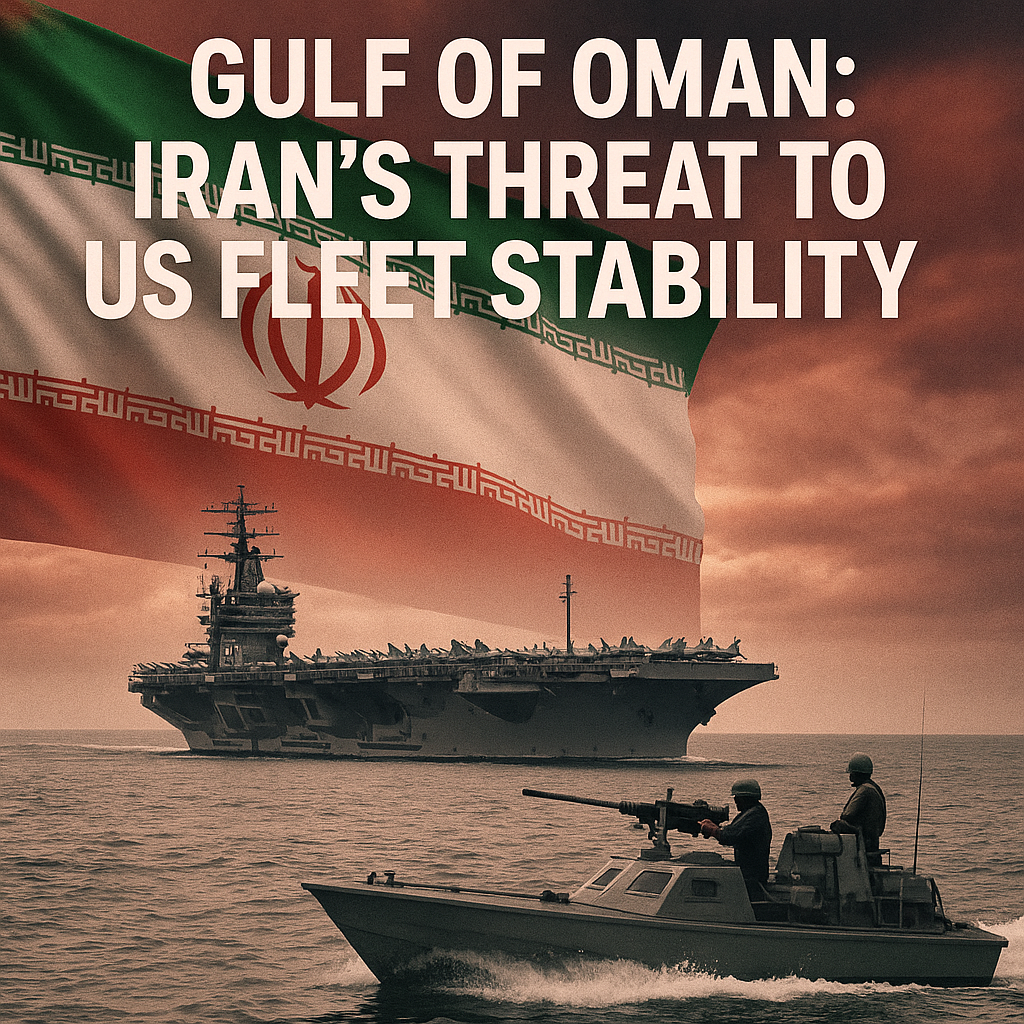
Gulf of Oman: Iran’s Threat to US Fleet Stability

Gulf of Oman: Iran’s Threat to US Fleet Stability
The Gulf of Oman has become a focal point in the rising tensions between Iran and the United States, particularly concerning the stability of the US fleet operating in the region. Various reports highlight that Iran has been undertaking aggressive military maneuvers that could jeopardize maritime security, raising alarms about potential confrontations.

Evolving Military Posture
In recent developments, Iran has reportedly bolstered its naval capabilities in the Gulf of Oman, a strategic maritime corridor pivotal for global trade. This move has been interpreted as an attempt to instill fear and assert dominance over potential adversaries, particularly the US Navy, which maintains a significant presence in the region. According to Iranian officials, their military exercises are designed to protect their territorial waters, echoing long-standing rhetoric about national security.


Conversely, the United States remains vigilant, claiming that such military posturing is not merely defensive but overtly aggressive. Reports from various sources indicate that US naval escorts have increased in the Gulf of Oman, particularly in light of recent incidents involving Iranian fast boats shadowing American warships. The US Navy has described these encounters as provocative, underscoring fears of potential miscalculations that could lead to escalation.


Responses from Both Sides
The contrasting narratives surrounding this issue illustrate a broader geopolitical struggle. On one hand, Iran perceives its actions as necessary to ensure sovereignty and deter foreign intervention. Iranian leaders have voiced that their military drills send a message to the US about respecting regional boundaries. This perspective is critical in understanding Iran’s historical context, where foreign powers have often been viewed as interlopers.
On the other hand, the United States argues that Iranian threats undermine regional security and disrupt vital shipping routes. The US maintains that its fleet’s presence is crucial not only for national interests but also for global markets reliant on the free passage of goods through the Strait of Hormuz.
Potential Implications
The ongoing tensions can have far-reaching implications:
– Economic Stability: Disruptions in the Gulf of Oman could lead to spikes in oil prices, affecting global markets.
– Regional Alliances: The situation also risks destabilizing relationships with key allies in the Middle East, who may feel compelled to take sides.
– Military Engagement: Continued provocative actions may lead to unintended clashes, dragging both nations into a deeper conflict.
The Fragility of Diplomacy
Despite an atmosphere charged with hostility, some diplomatic channels remain open. Past dialogues aimed at nuclear de-escalation serve as reminders that engagement is possible, though seemingly distant amid current tensions. Experts suggest that establishing clear communication lines could be vital in preventing missteps that might escalate into military confrontations.
However, optimism is tempered by the underlying mistrust between both nations. The lack of a cohesive strategy to de-escalate tensions complicates the prospect of a peaceful resolution. Some analysts argue that without significant concessions on either side, the cycle of provocation may continue unabated.
Conclusion
The Gulf of Oman stands at the crossroads of Iranian assertiveness and US military presence. As both nations navigate this precarious landscape, the balance between deterrence and provocation remains delicately poised. The evolving situation serves as a reminder of the intricate geopolitical chess game underway, with broader implications not just for regional actors, but for global security at large. Addressing these tensions will require nuanced diplomacy, mutual understanding, and, perhaps most importantly, a willingness to engage even amid distrust.















