
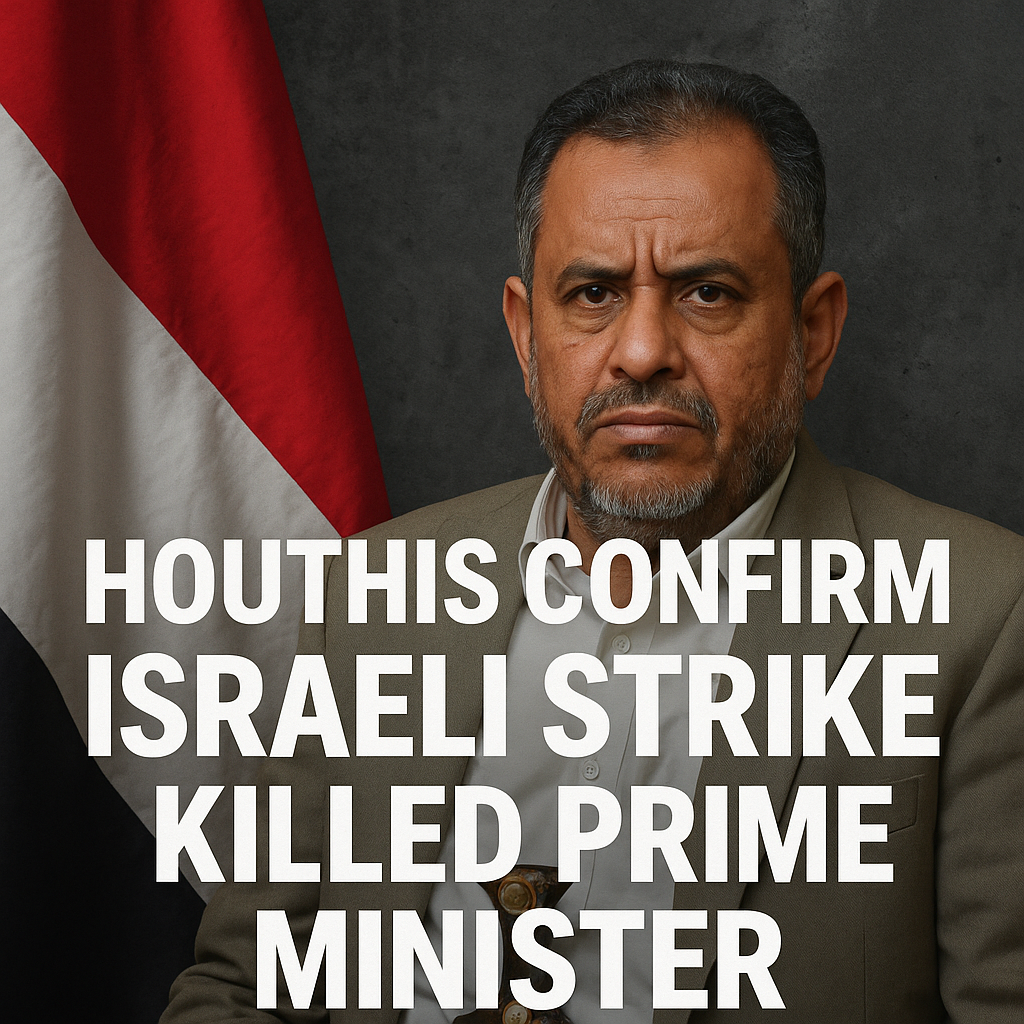
Houthis Confirm Israeli Strike Killed Prime Minister

Houthis Confirm Israeli Strike Killed Prime Minister
The recent confirmation by Yemen’s Houthi movement that an Israeli airstrike killed their Prime Minister has sent shockwaves throughout the region and beyond. This incident has not only escalated tensions in an already volatile area but has also ignited widespread debate about the implications for both regional stability and international politics.

Contextual Background
To understand the significance of this event, it is essential to examine the ongoing conflict in Yemen. Since 2014, Yemen has been embroiled in a complex civil war involving multiple factions, including the Houthis, a Shia Muslim group backed by Iran, and the internationally recognized government supported by Saudi Arabia and its allies. The airstrike reportedly targeted a Houthi convoy in Sanaa, killing the group’s Prime Minister, who had been instrumental in their governance amid the ongoing war.


This airstrike marks a rare direct military action by Israel in Yemen, a country that has historically been more focused on its conflicts with neighboring states like Iran and Syria. The Houthis have often declared their animosity towards Israel and have been vocal supporters of Palestinian rights. Therefore, this incident could be seen as part of a broader Israeli strategy to weaken Iranian influence in the region.


Diverging Perspectives on the Strike
While the Houthis have confirmed the airstrike, various regional players have differing interpretations of its implications.
1. Houthi Position: The Houthis have framed the strike as an act of aggression, one that could further unify their cause against foreign intervention in Yemen. In a statement, a Houthi spokesperson referred to the strike as “a declaration of war,” which may bolster their narrative of resisting external forces. Such framing could rally local and international support for their cause as they position themselves as defenders of Yemen.
2. Israeli Justification: From the Israeli perspective, the airstrike can be justified as a preemptive measure against perceived threats posed by Iranian-backed groups. Israel has a long-standing policy of preventing military entrenchment by Iran in neighboring countries, viewing the Houthis’ military capabilities—often bolstered by Iranian technology—as a potential threat. This incident could be framed within a broader Israeli doctrine of preemptive strikes against adversaries that threaten its national security.
3. International Response: The global community’s reaction has been varied, with calls for restraint emerging from several quarters. Countries like the United States have historically supported Israel’s right to defend itself, yet some policymakers are voicing concerns about the potential regional fallout from such unilateral military actions. Middle Eastern nations, particularly those involved in the Yemeni conflict, view the strike through a lens colored by their own vested interests, further complicating the diplomatic landscape.
Broader Implications and Future Considerations
The killing of the Houthi Prime Minister could lead to a significant escalation in violence. Several analysts argue this action may provoke retaliatory measures from the Houthis against Israeli interests, potentially extending the conflict beyond Yemen. This could also prompt Iran to increase its support for the Houthis, thereby reshuffling alliances and hostilities in the region.
Moreover, this event raises vital questions regarding the efficacy of international diplomacy in mediating the Yemen crisis. The failure of peace talks, often interrupted by escalations such as this one, suggests that a comprehensive resolution to the conflict remains elusive.
Additionally, the strike signals a potential shift in the balance of power in the Middle East. As Israel continues to engage in military strategies aimed at minimizing Iranian influence, the resulting geopolitical shifts may alter longstanding alliances and rivalries.
Conclusion
The confirmation of the Israeli strike that killed a key Houthi leader offers a stark reminder of the fragility of peace in the region. It illustrates the complex layers of conflict involving local, regional, and international stakeholders. As the dynamics unfold, all eyes will be on Yemen to see how this tragic incident will reshape the landscape, not just for the Houthis, but for the broader Middle East. Stakeholders must navigate carefully to avoid a deeper conflict that could have ramifications felt well beyond Yemen’s borders.
While the situation is still developing, the responses—whether they manifest as increased hostilities or renewed diplomatic efforts—will undoubtedly play a critical role in shaping the future of the region.















