
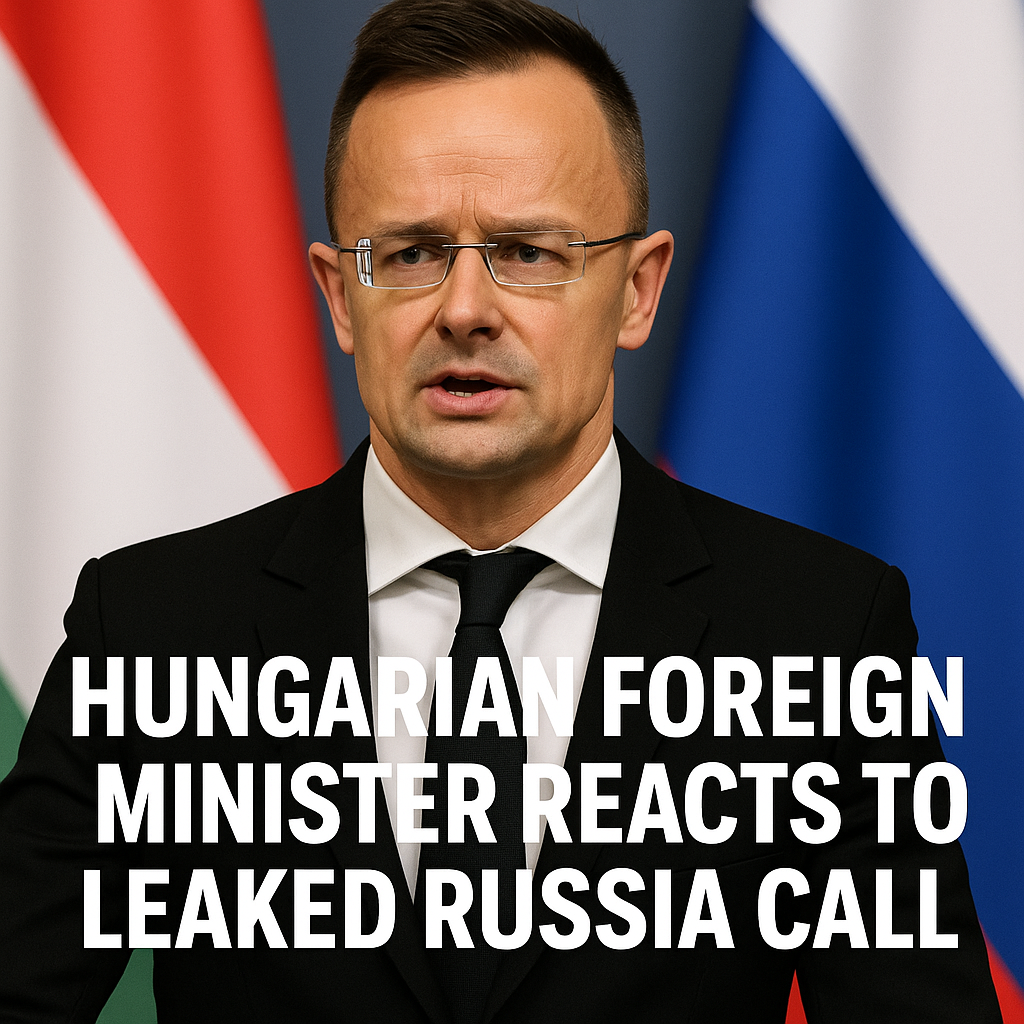
Hungarian Foreign Minister Reacts to Leaked Russia Call

Hungarian Foreign Minister Reacts to Leaked Russia Call
The recent leak of a phone call involving Russian Foreign Minister Sergei Lavrov has sparked significant reactions across Europe, with Hungarian officials, including Foreign Minister Péter Szijjártó, offering notable responses. This situation reflects a delicate balance in Hungary’s foreign policy stance amidst rising tensions between Eastern and Western powers.

Context of the Leak
The leaked call, reportedly showcasing Lavrov’s remarks on NATO and Western countries’ influence in Eastern Europe, has ignited discussions not only in Hungary but also across the European Union. The recording allegedly features candid comments that could be interpreted as revealing Russia’s strategic viewpoints regarding its neighbors.


Hungary, a member of NATO and the EU, has occasionally found itself in a complex position due to its historically close ties with Russia, contrasting with its commitments to Western alliances. This duality raises questions about national sovereignty, energy security, and the broader implications for European stability.


Hungarian Foreign Minister’s Stance
Péter Szijjártó’s reaction emphasizes Hungary’s perspective on maintaining diplomatic relations and national interest. He stated that while Hungary does not condone the geopolitical maneuvers of Russia, the nation remains committed to a pragmatic approach in foreign affairs. “Dialogue should continue,” Szijjártó remarked, highlighting the importance of communication even amid tensions.
This position underlines Hungary’s need for Russian energy resources, which form a crucial part of its energy strategy. As European nations strive to wean off Russian energy post-invasion of Ukraine, Hungary’s dependence complicates its diplomatic narrative.
However, Hungary’s approach is not without criticism. Many Western allies view Szijjártó’s comments as undermining EU solidarity against aggressive Russian policies. Critics fear that Hungary’s softer stance could encourage Russia’s assertive tactics in the region.
The Broader European Implications
The implications of the leaked call extend beyond Hungary’s borders. It sheds light on the varied responses from EU member states concerning Russia’s actions. For example, countries in Central and Eastern Europe, closer geographically and historically to Russia, tend to adopt a more cautious stance compared to their Western counterparts.
The conversation surrounding the leak illustrates the geopolitical rift within the EU, where nations are grappling with their historical connections to Russia while striving to align with collective European security policies. The tension between engaging Russia for pragmatic reasons and adhering to a united front against perceived aggression illustrates the complexity of European diplomatic relations today.
Differing Perspectives
Opinions diverge significantly regarding the handling of Russia’s geopolitical maneuvers. Some EU leaders advocate for a more aggressive stance, calling for stricter sanctions and isolation of Russia in diplomatic forums. Others suggest that engagement is paramount to mitigate risks and prevent escalation into more severe conflicts.
While Szijjártó’s comments reflect a preference for continued dialogue, other European leaders express concern that such a stance may embolden Russia. The duality of seeking dialogue while presenting a united front against aggression represents a formidable diplomatic challenge.
Balancing Act for Hungary
As Hungary navigates this intricate landscape, its position as a member of NATO and the EU will be tested continually. The leaked call serves as a reminder of the nuanced tensions that exist both within the EU and among its external relations. Szijjártó’s assertions hint at Hungary’s challenges in balancing national interests with broader alliances, especially as the geopolitical landscape shifts.
Moreover, Hungary’s unique geographical and historical context emphasizes its precarious position. As the EU continues to formulate its response to Russian actions, Hungary must tread carefully between maintaining critical energy ties with Russia and adhering to the collective preferences of its Western allies.
Conclusion
In summary, the Hungarian Foreign Minister’s reaction to the leaked Russia call illustrates the complexities of European diplomacy in an era marked by shifting alliances and geopolitical tensions. While maintaining a dialogue with Russia may serve Hungary’s interests, it also risks alienating its allies within the EU. As this situation unfolds, the delicate balance of power in Europe will undoubtedly continue to evolve, shaped by historical ties, energy dependencies, and the shifting sands of international relations.















