
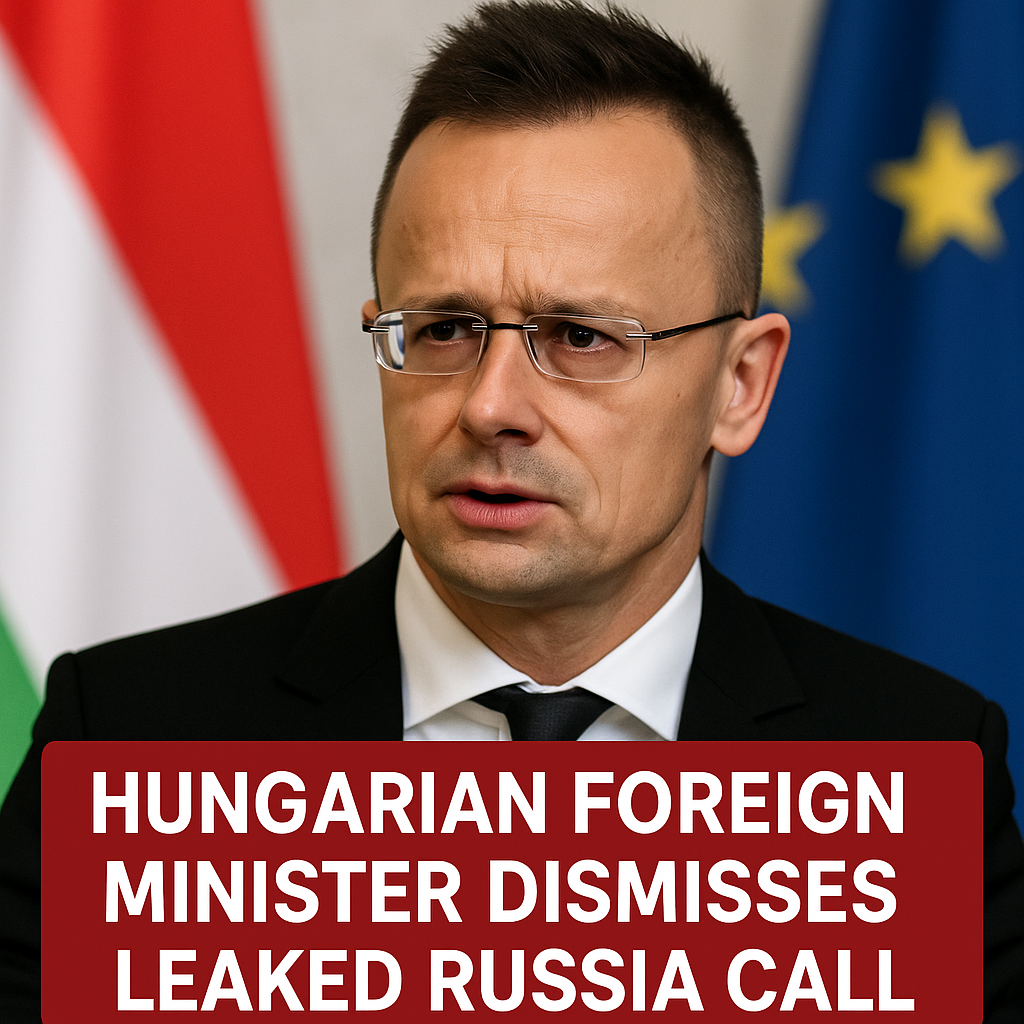
Hungarian Foreign Minister Dismisses Leaked Russia Call

Hungarian Foreign Minister Dismisses Leaked Russia Call
The diplomatic landscape is often fraught with tension, especially as geopolitical relationships shift. Recently, Hungarian Foreign Minister Péter Szijjártó dismissed a leaked phone call purportedly between Russian President Vladimir Putin and Hungarian officials, labeling it as unsubstantiated and misleading. This situation highlights the complexity of Hungary’s position within European and NATO frameworks while illustrating the broader implications of misinformation in international relations.

Context of the Leak
The leaked call reportedly involved discussions about Hungary’s stance on the Russian invasion of Ukraine and suggested a degree of cooperation between Budapest and Moscow that some critics find troubling. According to the leak, Hungary appeared to be aligning itself closely with Russian interests, particularly in areas like energy and economic partnership.


In a response to these claims, Szijjártó emphasized that Hungary’s foreign policy centers on national interests. He stated, “Every country has the right to pursue its own agenda, and Hungary will continue to engage with all parties to ensure its energy security.” This reflects a growing sentiment among some Eastern European nations that are navigating the delicate balance between pragmatism and alliance loyalty.


Divergence in Perspectives
This incident has drawn varied reactions from different corners of the geopolitical spectrum.
1. Support for Hungary’s Position
Supporters argue that Hungary has historically sought to maintain a neutral stance in international conflicts. They contend that this approach allows Budapest to broker beneficial agreements, especially regarding energy supplies—crucial given Europe’s dependency on external gas supplies. In this light, Szijjártó’s dismissal of the leak could be framed as a sound strategy to protect national interests without making controversial political statements.
2. Criticism from the West
Conversely, critics within NATO and the EU have expressed concerns about Hungary’s perceived closeness to Russia, particularly amidst widespread condemnation of the invasion of Ukraine. The leak, they argue, could indicate that Hungary is not fully aligned with Western perspectives, which has raised alarms about unity within NATO. This criticism is exacerbated by Hungary’s track records of vetoing EU sanctions on Russia, further positioning Budapest as an outlier among its allies.
Additionally, Al Jazeera cites a broader fear that Hungary’s approach could embolden other nations with similar inclinations, undermining collective Western responses to Russian aggression. This highlights an important narrative: the tension between national interests and collective security.
The Question of Misinformation
The nature of the leaked information itself is also deserving of scrutiny. While Szijjártó dismissed the call as a product of misinformation, this raises questions about the reliability of raw intelligence in today’s digital age. In a rapidly evolving media landscape, statements made in confidence can be easily misconstrued or weaponized for political gain.
The fact that the leaked call’s content is now subject to interpretation underscores the volatile nature of political communication. It suggests that countries may need to adopt more rigorous checks against misinformation, not only to protect their national sovereignty but to maintain stability in international relations.
Navigating National Interests
As geopolitical lines continue to blur, Hungary’s actions exemplify the broader struggle many nations face: balancing national interests against alliance obligations. The Hungarian government’s independent stance may resonate with a portion of the population, particularly those who prioritize energy security and economic collaboration over political alignment.
However, Hungary’s leadership must also consider the long-term implications of its strategies. Engaging diplomatically with Russia while remaining an EU member could create fissures within the alliance, particularly as member states push for a unified stance on Russian aggression.
Ultimately, while Szijjártó’s dismissal may prevent immediate fallout, it does not negate the underlying tensions regarding Hungary’s foreign policy direction. As nations negotiate their identities on the global stage, the challenge will be finding a path that honors both national sovereignty and collective obligations.
Conclusion
The leaked call regarding Hungary’s relationship with Russia is more than just a diplomatic squabble; it is emblematic of the struggles many nations face in this increasingly polarized world. While domestic policy considerations often take precedence, the implications of such actions ripple outward, challenging alliances and shaping international perceptions.
As the situation evolves, Hungary’s ability to not only navigate but articulate its foreign policy will be crucial—not only for its own national interests, but as a signal to other nations navigating similar complexities.















