
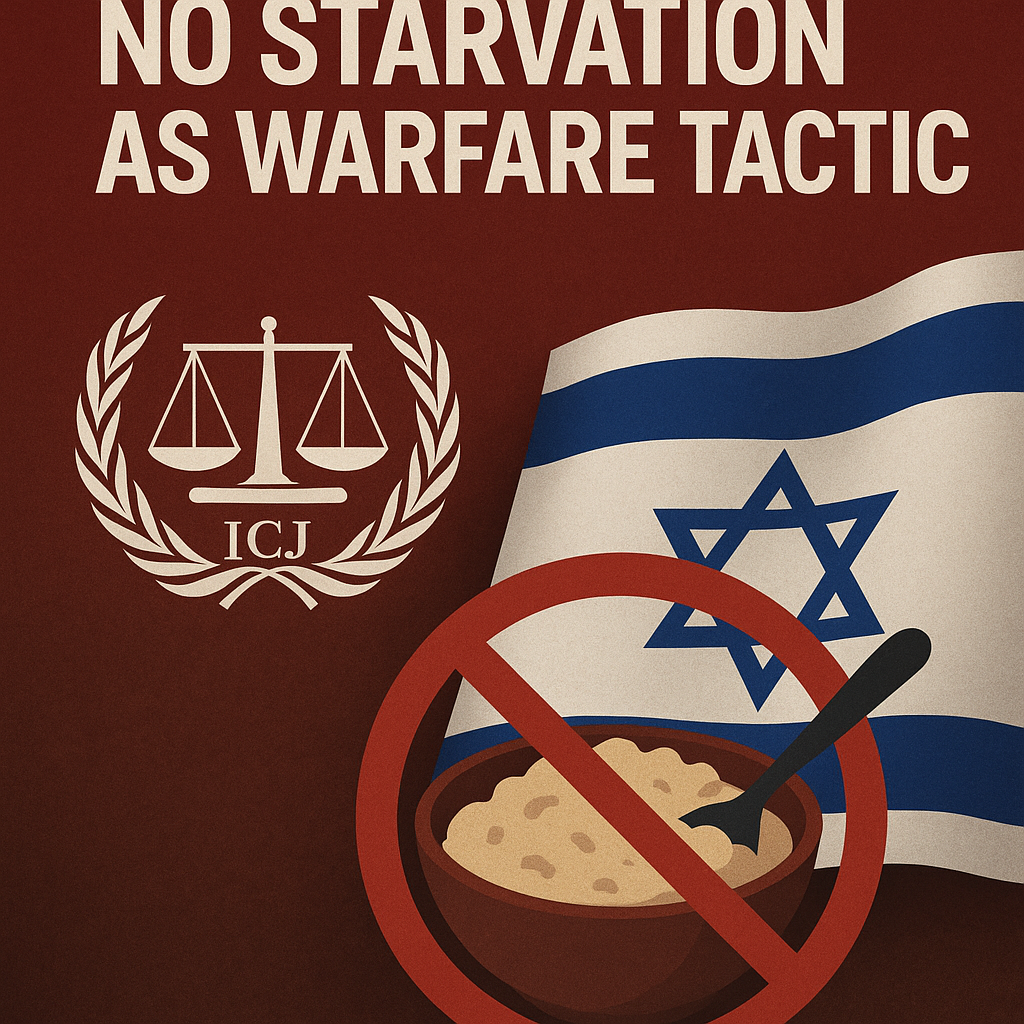
ICJ Warns Israel: No Starvation as Warfare Tactic

ICJ Warns Israel: No Starvation as Warfare Tactic
In a recent ruling, the International Court of Justice (ICJ) admonished Israel regarding its military strategies, specifically addressing the use of starvation as a warfare tactic. The ICJ’s warning comes at a time when global conversations around humanitarian law and the ethics of warfare have reached a fever pitch, drawing reactions from various sectors of the international community.

The Context of the ICJ’s Ruling
The warning from the ICJ arises out of ongoing military operations in the region that have prompted allegations of unlawful practices, including the blockade and restrictions that contribute to food shortages in affected areas. According to reports, this situation is particularly dire in the Palestinian territories. Human rights organizations and various governments have voiced concerns, claiming that leveraging starvation to achieve military objectives violates established international humanitarian laws.


For example, a statement from the ICJ highlighted that “the deliberate infliction of starvation on civilians” is a violation of international law, underscoring the necessity for Israel to adjust its actions during military operations. This ruling not only draws attention to the humanitarian implications but also emphasizes legal accountability for nations engaged in conflict.


Diverging Perspectives on the ICJ’s Warning
While many view the ICJ’s ruling as a vital reinforcement of human rights protections, others argue that the court’s effectiveness in enforcing its decisions is limited. Proponents of the ICJ’s stance assert that the legal framework provided by international humanitarian law is crucial for maintaining ethical warfare practices. Organizations like Human Rights Watch have celebrated the ICJ’s intervention, stating it marks a significant step in holding nations accountable for their military choices.
Conversely, some political analysts warn that the ICJ’s declarations may not hold significant weight in the ongoing conflict. A critique from certain quarters suggests that Israel, amidst its security concerns, might prioritize military strategy over legal advice, viewing such rulings as politically motivated rather than binding. This viewpoint illustrates the complexities of international law—particularly in cases where national security and defense are at stake.
Implications for International Humanitarian Law
The implications of the ICJ’s stance extend beyond just this single case. It poses a broader inquiry into how nations engage in warfare and the legal repercussions that follow. The philosophy underpinning international humanitarian law is grounded in the principles of humanity, necessity, proportionality, and distinction.
– Humanity: Ensures the humane treatment of civilians.
– Necessity: Advocates for the legitimacy of using force only when necessary.
– Proportionality: Requires that any military action has a proportional response concerning military advantage versus civilian harm.
– Distinction: Calls for a clear distinction between combatants and non-combatants.
In light of these principles, the ICJ’s caution against using starvation underscores the persistent need for dialogue about global humanitarian norms and their enforcement. If a nation disregards these rules, it could face condemnation not only from judicial bodies but also from the court of public opinion.
Global Reactions and Future Outlook
International responses to the ICJ’s warning have been mixed, ranging from support by human rights advocates to skepticism from geopolitical analysts. Multiple nations have issued statements reaffirming the need to adhere to international humanitarian law, illustrating a collective diplomatic effort to discourage tactics that inflict long-term distress upon civilian populations.
Furthermore, experts speculate that this ruling could set precedents in how future military conflicts are monitored and judged. As the ICJ gains more visibility, its influence might embolden other international bodies to take a stand on related issues of wartime conduct.
Looking ahead, the challenge remains for the ICJ and similar organizations to ensure adherence to these rulings. Effective enforcement mechanisms are vital to bridge the gap between legal affirmations and real-world practices. As the conflict persists, the ongoing dialogue about the balance between military necessity and humanitarian considerations will be crucial.
Conclusion
The ICJ’s warning to Israel about using starvation as a tactic in warfare serves as both a legal condemnation and a moral reminder of the obligation to uphold humanitarian principles. As this dialogue continues, the true measure of its effectiveness will depend on the willingness of nations to embrace these legal standards put forth by the international community. The complexity surrounding warfare ethics and national security remains an ever-present challenge, highlighting the need for ongoing dialogue and commitment to humanitarian laws.















