
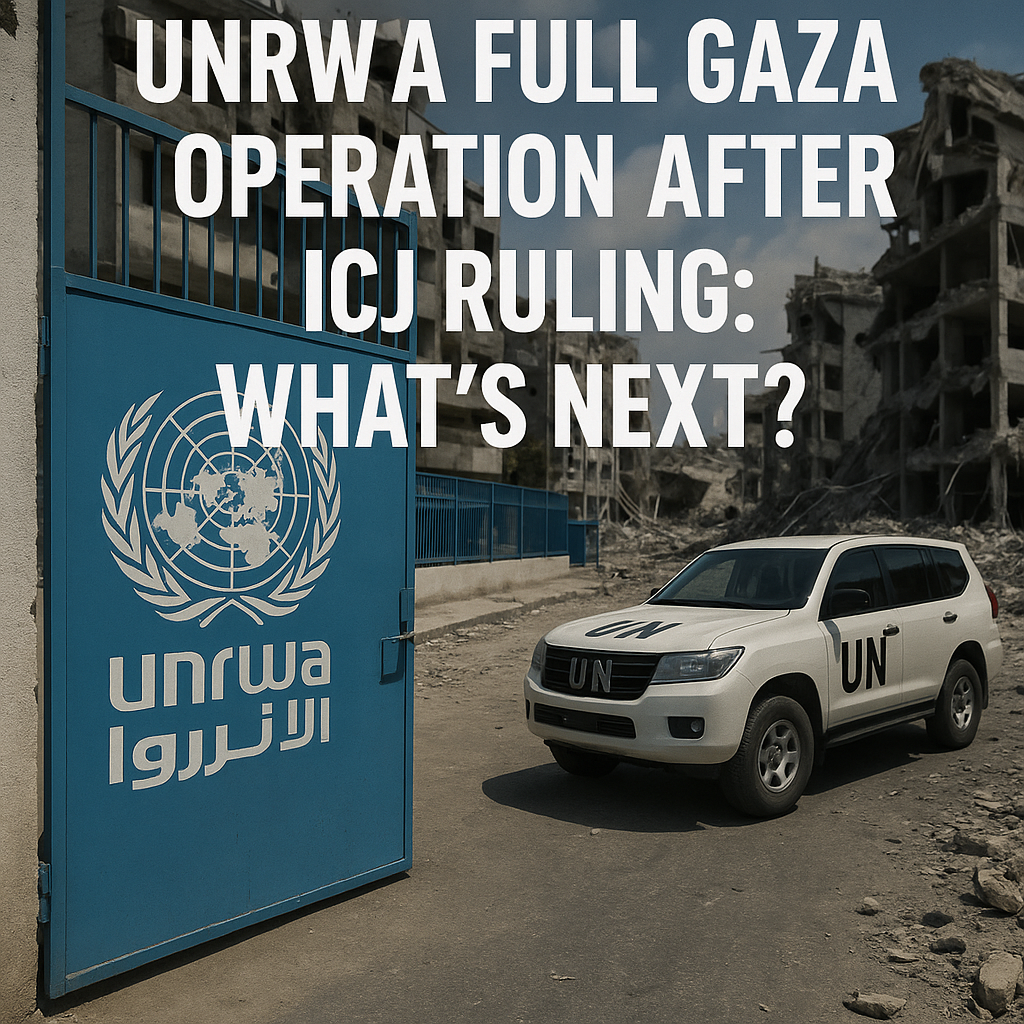
UNRWA Full Gaza Operations After ICJ Ruling: What’s Next?

UNRWA Full Gaza Operations After ICJ Ruling: What’s Next?
The recent ruling by the International Court of Justice (ICJ) has sparked renewed discussion about the future of operations by the United Nations Relief and Works Agency for Palestine Refugees in the Near East (UNRWA) in Gaza. This decision comes amidst a complex backdrop of humanitarian crises, legal debates, and geopolitical tensions.

Understanding the ICJ’s Ruling
The ICJ’s ruling addresses various allegations against UNRWA, particularly concerning its operations in Gaza. The court’s decision emphasizes the need for respect for international law and humanitarian principles. According to reports, the ICJ found that while UNRWA has faced criticism regarding its governance and impact, it plays an essential role in providing humanitarian assistance to a vulnerable population.


Divergent Perspectives on UNRWA’s Role
The ruling has elicited mixed responses.


1. Support for UNRWA: Proponents argue that UNRWA is vital for the stability of Gaza. They highlight its role in delivering essential services such as education and healthcare to millions of Palestinian refugees. An article from Al Jazeera underscores that without UNRWA, the humanitarian situation would rapidly deteriorate, leading to heightened instability in the region.
2. Criticism and Calls for Reform: Conversely, some critics argue that UNRWA must undergo significant reform to address systemic issues. RT reflects these sentiments, suggesting that the agency has been criticized for its management practices and alleged biases. Calls for transparency have grown louder, advocating that reforms could enhance operational efficacy while improving the agency’s image amidst international scrutiny.
The Humanitarian Perspective: Challenges Ahead
While the ICJ ruling is a step toward legitimizing UNRWA’s mission in Gaza, the agency faces formidable challenges.
Operational Limitations
UNRWA’s ability to resume full operations in Gaza is heavily contingent on the political environment and security considerations. While support from international bodies may increase, humanitarian agencies often grapple with barriers to accessing conflict zones.
– Security Concerns: Continuous military actions have raised significant concerns about the safety of UNRWA personnel and the refugees they aim to help. The ongoing conflict complicates their mission to provide essential services.
– Funding Challenges: Despite the ICJ ruling, financial support remains precarious. As noted by Sky News, UNRWA has experienced budget shortfalls that hinder its operational capacity. The consistency of funding from member states and international donors will determine the agency’s ability to meet the growing humanitarian needs.
The Broader Geopolitical Context
The role of UNRWA cannot be discussed in isolation from the larger Israeli-Palestinian conflict.
– Political Dynamics: The ICJ ruling may have implications for peace negotiations. Some analysts suggest that it could either encourage dialogue between parties or further entrench divisions, depending on how it is received by stakeholders involved in the conflict.
– International Response: Reactions from various countries to the ICJ ruling reflect a spectrum of support and opposition influenced by their own political agendas. This adds a layer of complexity to how humanitarian actions are perceived globally.
What’s Next for UNRWA?
As the dust settles following the ICJ’s decision, the question becomes: what is the path forward?
Potential Pathways
1. Increased Engagement: UNRWA may take this opportunity to engage more deeply with international stakeholders. By advocating for reforms and emphasizing its humanitarian mission, it can work to regain trust and financial support.
2. Strengthening Governance: Implementing internal reforms will be crucial. Enhancing accountability and transparency within the organization could mitigate criticisms and foster a more positive image.
3. Continued Advocacy: UNRWA must continue advocating for the rights and needs of Palestinian refugees. This involves not only operational capabilities but also educational initiatives that promote long-term stability and peace.
Conclusion: Towards a Complex Future
The ICJ ruling represents both a validation of UNRWA’s crucial role and a call for reflection on its operational effectiveness. As Gaza grapples with ongoing humanitarian needs, the road ahead involves navigating myriad political, social, and financial challenges. With its crucial services still needed, the agency’s future will heavily depend on how swiftly and effectively it can adapt to the evolving landscape of the Palestinian issue and the wider geopolitical environment. The coming months will reveal just how firmly UNRWA can anchor itself in the turbulent waters of Gaza’s realities.















