
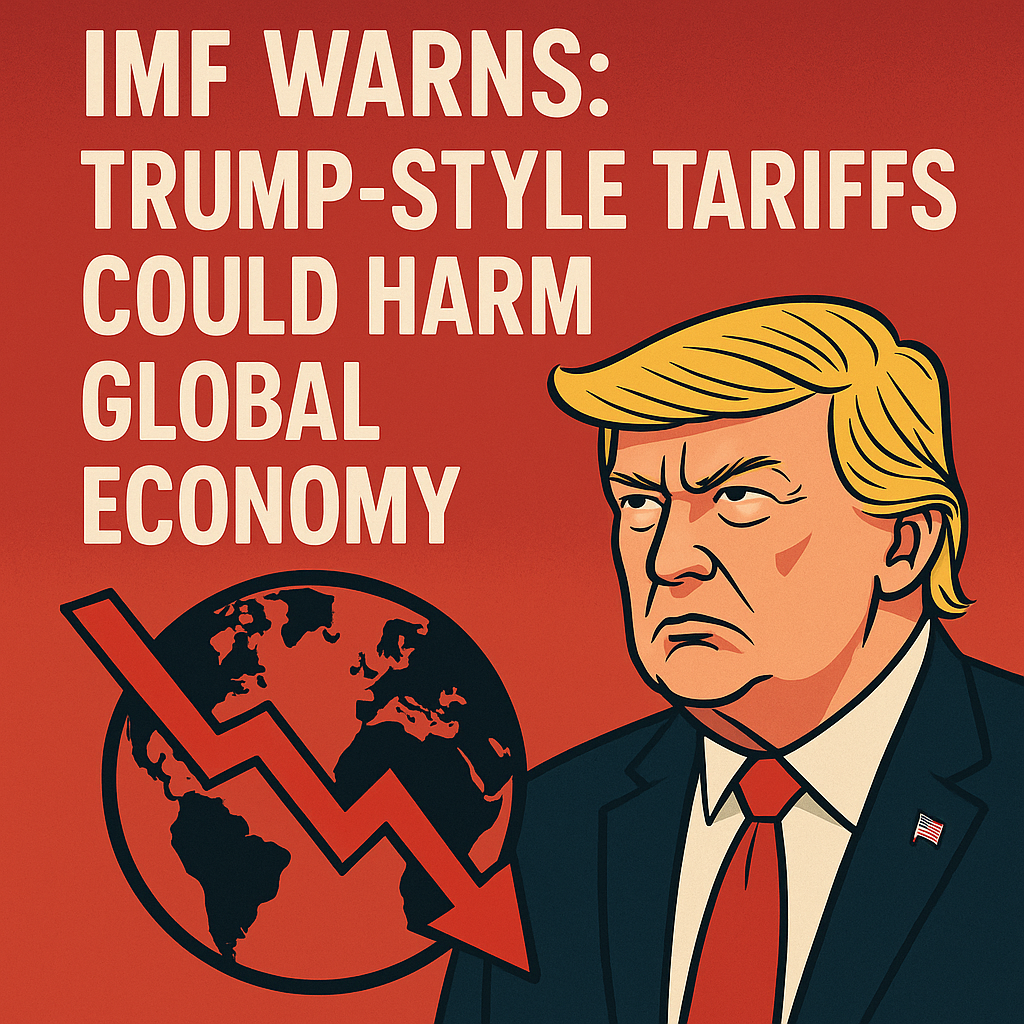
IMF Warns: Trump-Style Tariffs Could Harm Global Economy

IMF Warns: Trump-Style Tariffs Could Harm Global Economy
Recent statements from the International Monetary Fund (IMF) have raised concerns about the potential fallout from implementing tariffs reminiscent of those employed during Donald Trump’s presidency. These tariffs, aimed primarily at protecting domestic industries, could have far-reaching implications for the global economy. As nations grapple with recovering from the COVID-19 pandemic, the IMF warns that a resurgence of such tariffs could counteract progress and lead to increased economic instability.

The IMF’s Stance on Tariffs
The IMF has been vocal about the negative economic impact that tariffs can have, not just on the targeted countries but on the global economy as a whole. A recent article from RT underscores the organization’s caution against enacting trade barriers reminiscent of the Trump administration’s policies. The IMF’s managing director, Kristalina Georgieva, emphasized that tariffs could dampen trade flows, increase costs for consumers, and ultimately slow economic growth, calling for countries to work collaboratively rather than in isolation.


The Fund’s warnings are underscored by empirical data suggesting that increased tariffs historically lead to a decrease in overall economic activity. A study noted by Al Jazeera analyzed the impacts of Trump-era tariffs and found that they caused significant disruptions in international supply chains. As many countries are still in recovery mode, the reintroduction of such measures could exacerbate existing supply chain issues, potentially leading to inflation and further economic challenges.


Divergence in Perspectives
While the IMF’s view leans heavily against the implementation of tariffs, not all opinions are uniform. Supporters of protective tariffs argue that they foster domestic growth and ensure job security within key industries. Proponents assert that by imposing tariffs, countries can shield their industries from unfair competition and support local businesses that have been under pressure from globalization.
In contrast, critics highlight the broader implications of such protectionist measures. For example, an analysis published on Sky News articulates concerns that a rise in tariffs could ignite retaliation from other nations, leading to a trade war. This scenario could result in higher prices for consumers, decreased choices, and ultimately a recessionary environment as economic tensions escalate.
Global Economic Context
In a world increasingly interconnected through trade, the potential repercussions of a “Trump-style” tariff scenario could hinder not only economic growth but also international relations. The IMF’s report echoes a sentiment found across various platforms—trade wars can destabilize economies beyond the initial offending nation. Recent data reflect a precarious economic environment where inflation rates are rising alongside supply chain disruptions; as such, the timing for increased tariffs is particularly concerning.
Amid these discussions, it is crucial to consider the ongoing recovery from the COVID-19 pandemic. Nations are still struggling with inflated prices and shortages in goods; imposing additional tariffs could yield adverse effects. A balanced approach that involves dialogue and cooperation between countries is essential in forging a robust global economic recovery.
The Way Forward: A Balanced Approach
The debate surrounding tariffs is characterized by a complex web of considerations that must navigate economic theory, practical realities, and the geopolitical landscape. Both sides have valid points, yet the IMF emphasizes the importance of a collaborative approach to trade that transcends protectionism. Instead of reverting to heightened tariffs, nations could explore innovative solutions aimed at supporting domestic industries without the draconian measures of the past.
Promoting technological advancements and investing in workforce development can provide a more sustainable framework for bolstering local economies without resorting to harmful protectionist policies. Additionally, fostering international partnerships and trade agreements may serve as an antidote to the adversarial nature of tariff wars.
In conclusion, while the allure of tariffs as a quick fix for economic issues remains, the IMF’s warnings shed light on the detrimental effects that such measures can have on global economic health. A mixed strategy that prioritizes cooperation rather than isolation may be key to navigating these tumultuous economic waters, ensuring stability and growth in an interdependent world.















