
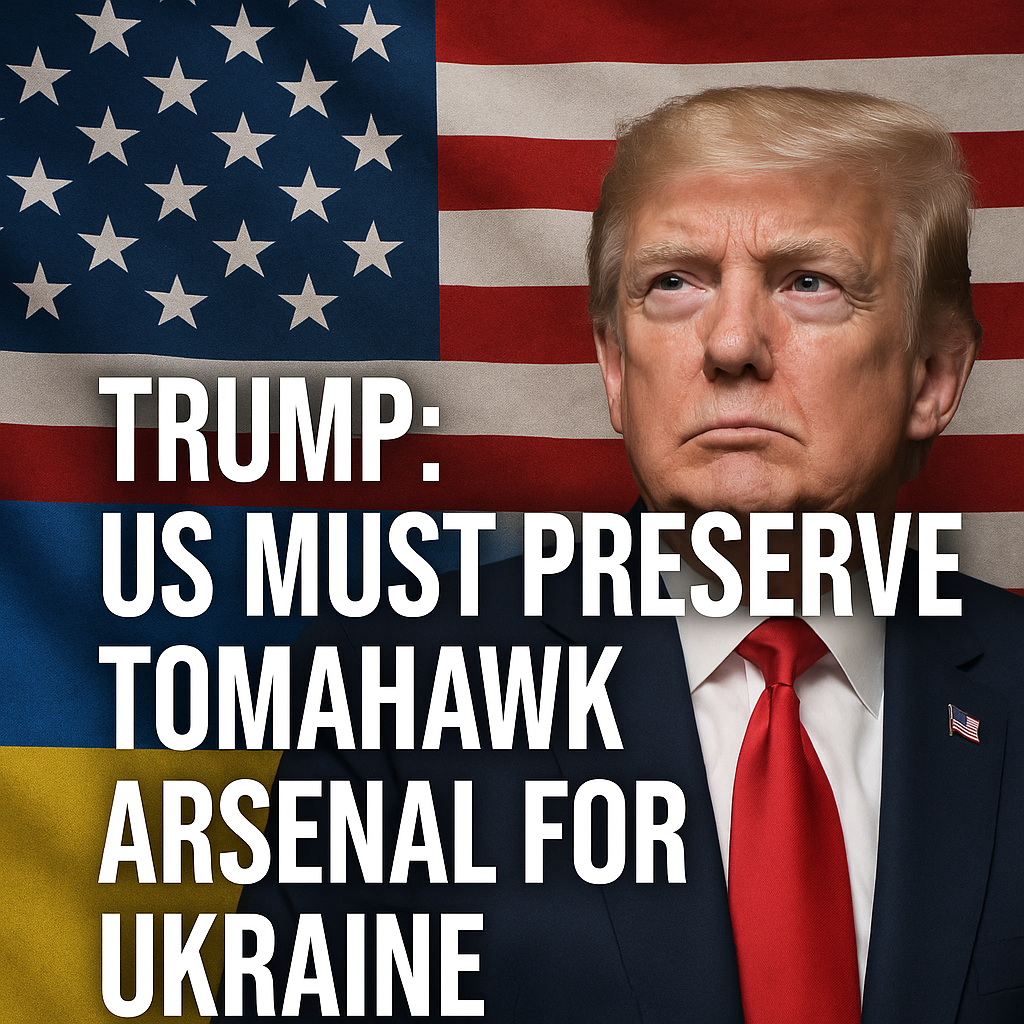
Trump: US Must Preserve Tomahawk Arsenal for Ukraine

Trump: US Must Preserve Tomahawk Arsenal for Ukraine
Former President Donald Trump has recently stirred discussions surrounding the military support for Ukraine, particularly advocating for the preservation of the U.S. Tomahawk missile arsenal. As Ukraine faces ongoing aggression and conflict, Trump’s remarks underscore a vital debate in U.S. foreign policy that intertwines military strategy with geopolitical stability.

The Significance of Tomahawk Missiles
Tomahawk missiles have long been a cornerstone of U.S. military capabilities, known for their precision striking ability and versatility in various combat scenarios. These cruise missiles can be launched from ships or submarines and have been instrumental in previous conflicts, where pinpoint accuracy was paramount. Trump’s call for maintaining this arsenal specifically for Ukraine comes at a time when many supporters argue that enhanced military aid could shift the balance in the ongoing war against Russian forces.


In an exclusive interview discussed on RT and various other platforms, Trump emphasized that bolstering Ukraine’s defense capabilities is essential. He stated, “If the U.S. does not maintain its arsenal and empower Ukraine, we risk allowing tyranny to thrive.” Proponents of this viewpoint argue that the provision of such advanced weaponry could deter further aggression from Russia and equip Ukraine to defend its sovereignty more effectively.


Contrasting Perspectives on Military Aid
While the notion of arming Ukraine with more advanced weaponry garners significant support, not all experts and political figures agree with the unrestrained provision of military assistance. Critics cite concerns over escalating the conflict, fearing that such actions could provoke Russia into retaliatory measures that may lead to broader regional instability.
An article from Al Jazeera highlighted this skepticism, citing various analysts and political commentators who argue for a more measured approach to military support. They posit that maintaining a dialogue for peace should be prioritized over the perpetual increase in military capabilities. Additionally, concerns have been expressed about the long-term implications of U.S. involvement. Critics argue that commitment to vast military support might create a prolonged conflict, ultimately affecting not just Ukraine but the geopolitical landscape of Europe.
The Geopolitical Implications of U.S. Military Presence
The debate over military assistance to Ukraine extends beyond mere tactical considerations; it reflects larger geopolitical dynamics. Supporters of Trump’s view argue that maintaining a robust Tomahawk arsenal is emblematic of U.S. leadership in global security matters. They assert that a strong military presence can serve as a check against authoritarian regimes, reinforcing democratic values worldwide.
On the other hand, the voices of caution remind us of the unpredictable nature of military engagements. Historical precedents show that increased military support can lead to escalation, and with nuclear powers like Russia involved, the stakes could not be higher. Trump’s remarks might incite further nationalistic sentiments in Russia, leading to unforeseen consequences.
The Path Forward: Finding a Balanced Approach
Navigating the complexities of military assistance to Ukraine necessitates a balanced and multifaceted approach. As opinions diverge on the appropriate level of military support, the U.S. must consider both immediate security needs and long-term implications for regional stability.
Suggestions for a Balanced Approach Include:
– Incremental Military Aid: Instead of an immediate increase in weaponry, a calibrated approach could allow for assessments of the situation as it evolves.
– Enhanced Diplomacy: Concurrent with any military support, a robust diplomatic effort should aim at finding a peaceful resolution to the conflict, ensuring that military gains do not obfuscate the ultimate goal of stability.
– Long-term Commitments: The U.S. should also commit to significant rebuilding and economic support for Ukraine post-conflict, recognizing that military solutions alone cannot foster lasting peace.
In conclusion, Trump’s assertions on maintaining the Tomahawk arsenal for Ukraine open a Pandora’s box of discussions around military strategy, international relations, and the very nature of democracy in the face of authoritarian aggression. While there is merit in his argument for stronger defenses against tyranny, the U.S. must thoughtfully weigh these considerations against the broader context of global peace and security. Balancing military support with diplomatic efforts could ultimately pave a more sustainable path forward in addressing the ongoing conflict.















