
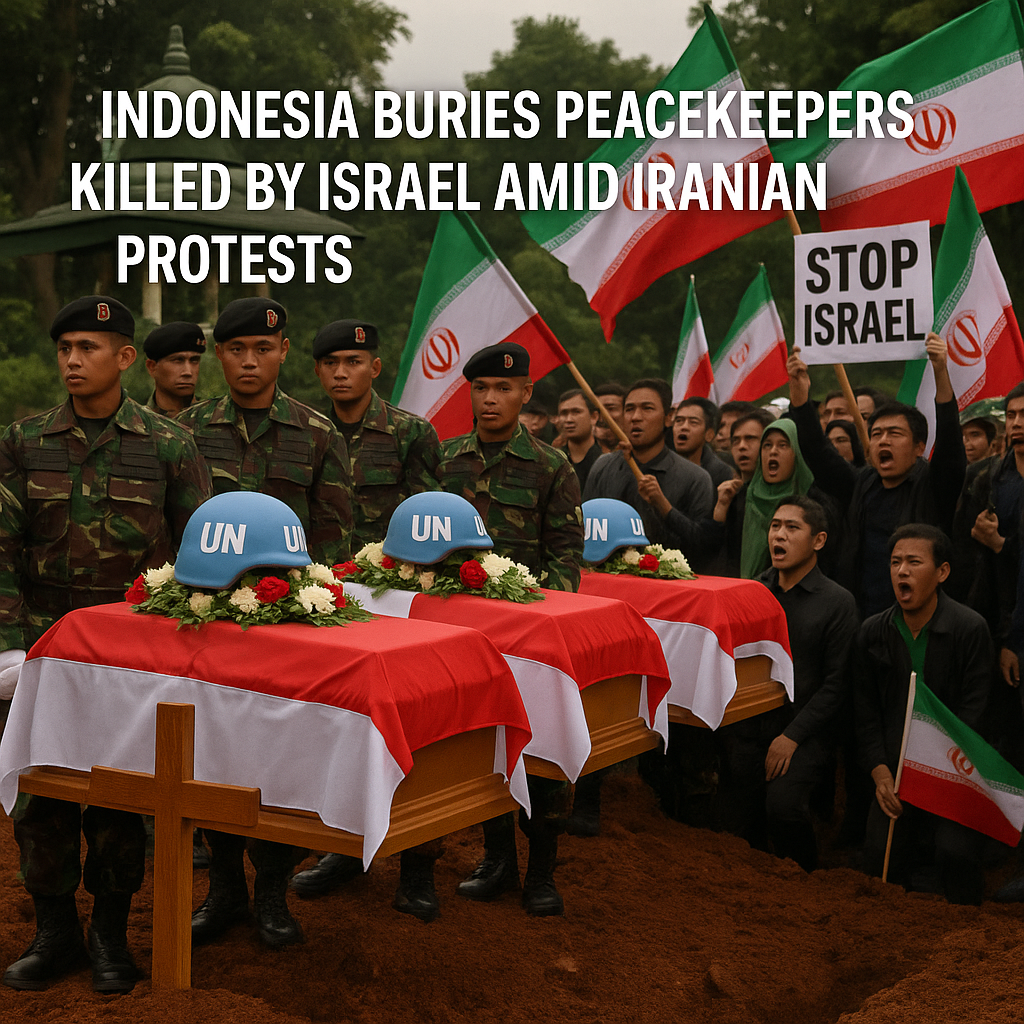
Indonesia Buries Peacekeepers Killed by Israel Amid Iranian Protests

Indonesia Bids Farewell to Peacekeepers Amid Iranian Protests
As tensions rise in the Middle East, Indonesia has buried its peacekeepers who lost their lives in recent conflicts involving Israel, an event that has sparked significant protests in Iran. The situation underscores the intersection of geopolitics, national pride, and human tragedy while raising questions about the role of peacekeeping forces in volatile regions.

The Context of the Peacekeepers’ Tragedy
The deaths of the Indonesian peacekeepers can be traced back to their involvement in United Nations operations aimed at stabilizing regions affected by conflict. These forces take on the noble mission of promoting peace but often find themselves caught in the crossfire of larger geopolitical conflicts. In this instance, the deaths have amplified Indonesia’s longstanding support for the Palestinian cause and highlighted the unresolved tensions between Israel and Iran.


Voices from Indonesia and Iran
In Indonesia, the response has been one of mourning and anti-Israeli sentiment. Many citizens view the peacekeepers as heroes who sacrificed their lives for a just cause. Protests in major cities have filled the streets as demonstrators denounce Israel’s actions and call for greater support for Palestine. The Indonesian government has expressed its condolences while reaffirming its commitment to peacekeeping missions.


Conversely, in Iran, the protests have highlighted a different narrative. Many Iranians perceive the deaths of these peacekeepers as an opportunity to criticize both Israel and Western powers for their roles in perpetuating conflict in the Middle East. State-sponsored media has fueled anti-Israeli sentiment, leading to larger demonstrations calling for solidarity with Palestinians and stronger action against Israeli military actions.
Weighing the Perspectives
While the grief in Indonesia centers around national pride and the valor of peacekeeping missions, the Iranian protests reflect a broader narrative of resistance against perceived aggression. Both nations express outrage, yet their motivations and interpretations of the events diverge sharply.
– Indonesian Perspective: The overarching sentiment is rooted in a desire to honor the sacrifices of fallen peacekeepers, underscoring Indonesia’s historical role as a leader in promoting Islamic solidarity and supporting Palestinian rights. The peacekeepers symbolize more than just military personnel; they embody a nation’s commitment to peace and its ideological stance against oppression.
– Iranian Perspective: The protests serve as a vehicle for expressing broader discontent toward Western influence and highlight Iran’s position as a self-appointed defender of Palestinian rights. The narratives are intricately tied to Iran’s revolutionary ideology, which seeks to position the country against what it perceives as imperialist aggression in the Middle East.
The stark contrast between these viewpoints illustrates the complexities surrounding international peacekeeping efforts, as contextual backgrounds frame how these events are interpreted across different cultures and political landscapes.
The Broader Implications of Geopolitical Tensions
The loss of Indonesian peacekeepers and subsequent protests in Iran demand a reassessment of the international community’s role in peacekeeping missions. The unique challenges faced by troops deployed in conflict zones raise questions about strategies and protocols meant to protect them. Even as Indonesia remains committed to sending peacekeepers overseas, it must navigate a landscape tangled with regional tensions and international partnerships.
Key Takeaways
– The emotional response in Indonesia reflects national pride and solidarity, while Iranian protests highlight anti-Zionist sentiments.
– The tragic loss of life shines a light on the fragile nature of peacekeeping operations and the risks involved.
– The events serve as a reminder of the power of narratives in shaping international discourse, particularly regarding conflicts in the Middle East.
Continuing the Discussion
As these complex dynamics unfold, it’s crucial to maintain a dialogue that encompasses various perspectives. Understanding the motivations behind national reactions can inform future peacekeeping strategies and diplomatic maneuvering. Furthermore, the interplay of local sentiments and global politics illustrates the need for nuanced discussions surrounding military involvement, international relations, and humanitarian efforts in the context of peacekeeping missions.
While the road ahead may be fraught with challenges, the path to peace will require cooperation and empathy from all involved parties. Thus, the international community must actively engage in dialogue aimed at de-escalating tensions and fostering a more stable and cohesive approach to peacekeeping in troubled areas.















