
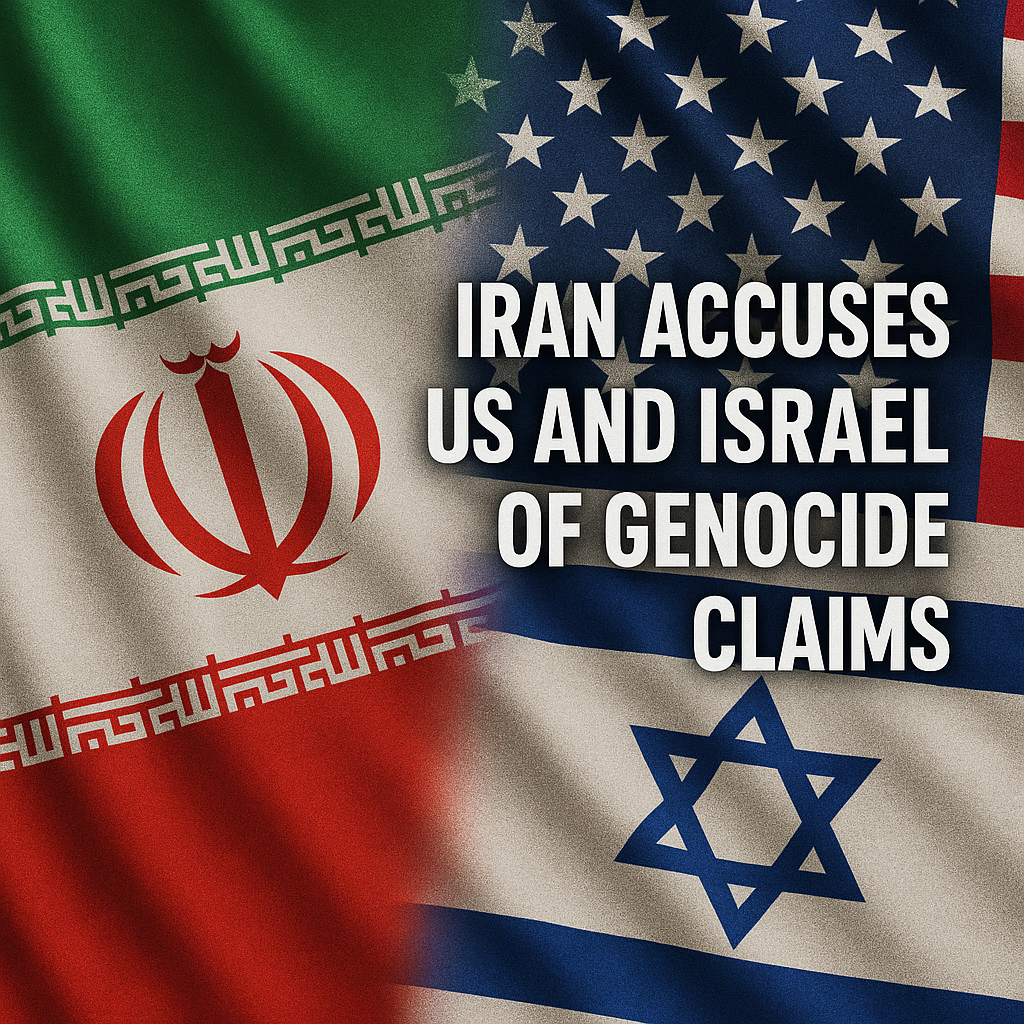
Iran Accuses US and Israel of Genocide Claims

Iran Accuses US and Israel of Genocide Claims
In recent weeks, Iran has intensified its rhetoric against the United States and Israel, accusing them of genocidal actions in the context of their policies in the Middle East. This inflammatory claim has sparked a range of reactions and adds another layer to an already complex geopolitical landscape.

Iran’s Accusations: Context and Claims
The Iranian government has been vocal in its accusations, particularly in the wake of escalating tensions in regions such as Gaza and Iraq. In an official statement, Iranian leaders labeled U.S. and Israeli actions as a form of genocide, arguing that these nations are complicit in humanitarian crises that disproportionately impact civilian populations.


This narrative aligns with a long-standing Iranian position that paints Western powers as oppressors in the region. As noted by state media, “the U.S. and Israel must be held accountable for their actions that lead to the deaths of thousands of innocent people.” These claims often focus on military actions, sanctions, and economic policies that Iran argues contribute to what it describes as a humanitarian catastrophe.


Diverse Reactions from the International Community
Responses to Iran’s accusations have varied significantly across the globe. On one side, some human rights organizations have expressed concern about the humanitarian issues arising from policies and military actions in conflict zones. Reports from sources like Al Jazeera point out that civilian casualties in these areas are a growing concern, which feeds into broader allegations of state violence.
However, not all nations view Iran’s accusations through a sympathetic lens. Many Western nations dismiss these claims as propaganda aimed at deflecting attention from Iran’s own domestic and international controversies. A spokesperson from the U.S. State Department responded to the allegations, stating, “Iran’s claims are an attempt to distract from its own human rights abuses and destabilizing activities in the region.”
Weighing the Evidence: A Complex Picture
The tension surrounding these accusations reflects a deeper, complex geopolitical struggle. Critics argue that while both the U.S. and Israel have engaged in military actions with profound humanitarian implications, the term “genocide” carries specific definitions under international law that may not apply in every instance. This sentiment echoes in various analyses, suggesting that the use of such strong language may be more a tool for political mobilization than a legally defined assertion.
Conversely, proponents of Iran’s position point to the systematic impact of sanctions and military interventions that, while not fitting the strict criteria for genocide, may still contribute significantly to civilian suffering. They argue that the combined effect of repeated military actions and economic sanctions effectively creates conditions that make it difficult for populations to thrive. Given this situation, calling for accountability is seen as a necessary step, even if the terminology remains contentious.
Conclusion: Navigating a Contentious Landscape
In sum, Iran’s accusations against the U.S. and Israel invite a multifaceted discussion about military ethics, humanitarian law, and the geopolitical dynamics of the Middle East. The contrasting perspectives highlight not just the immediate controversies but also the long-standing grievances that fuel distrust and enmity between these nations.
While many condemn the humanitarian toll of military intervention, the use of the term “genocide” complicates discussions and could lead to further polarization. As the international community grapples with these issues, it becomes increasingly crucial to foster dialogue that seeks to address not only the rhetoric but also the substantive concerns behind it.
Ultimately, discerning the truth in this context requires a nuanced approach that recognizes the complexity of international relations, historical grievances, and the often overlapping paths of justice and accountability. As such, the narrative surrounding Iran’s accusations will likely continue to evolve, drawing in various actors and viewpoints in an intricate dance of global diplomacy.















