
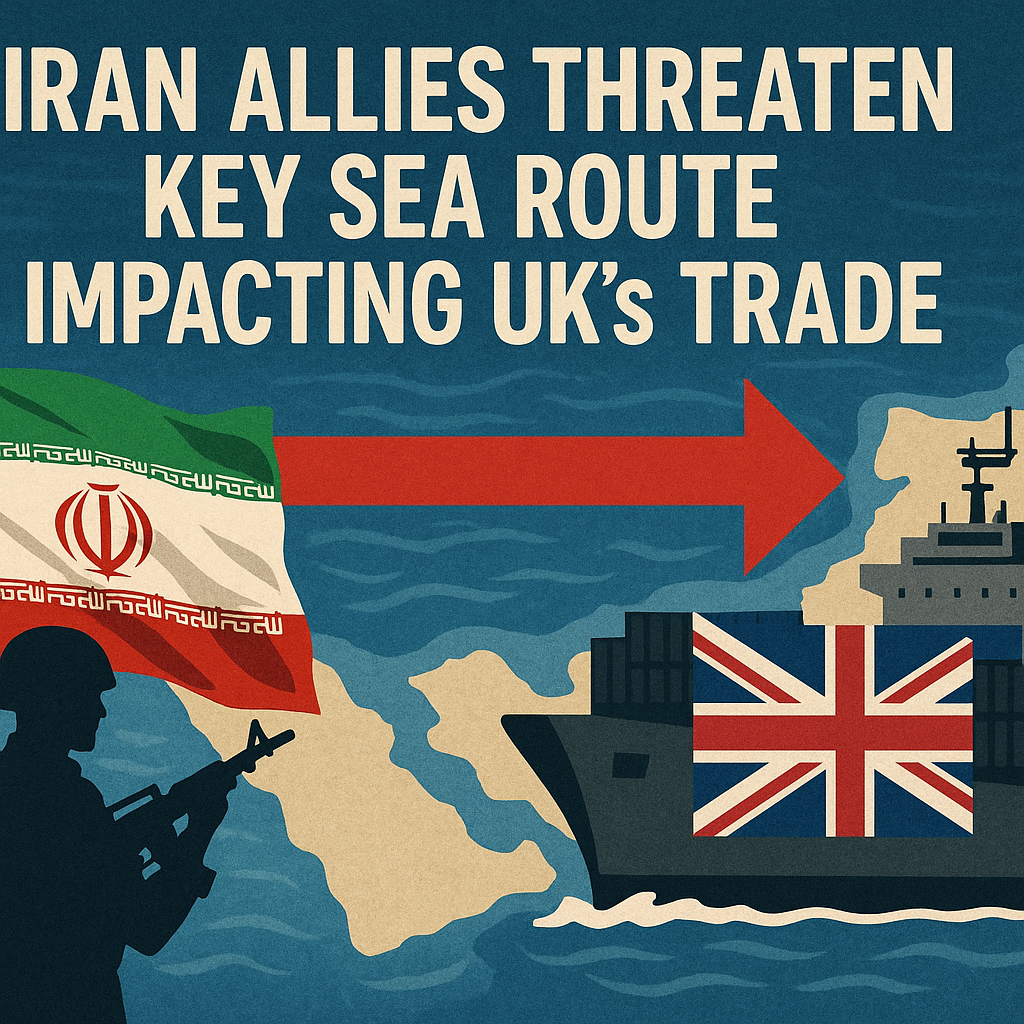
Iran Allies Threaten Key Sea Route Impacting UK’s Trade

Iran Allies Threaten Key Sea Route Impacting UK’s Trade
Tensions in the Middle East have escalated, with Iran’s allies threatening to disrupt vital sea routes critical to the United Kingdom’s trade. This development raises alarms about regional stability and economic repercussions for nations relying on these maritime corridors.

The Central Sea Route: A Lifeline for Trade
The Strait of Hormuz, a narrow waterway linking the Persian Gulf to the Arabian Sea, is a critical artery for global oil transport. Approximately 20% of the world’s petroleum passes through this strait, making it vital for countries like the UK that depend on these shipments for energy and trade.


Recent assertions from Iranian officials suggest that if Israel continues its military actions in the region, Iran’s allied groups, notably Hezbollah and Houthi forces, may escalate their threats to block this key route. Several news sources cite Iran’s history of using maritime security as leverage in geopolitical negotiations. Al Jazeera reports on these threats, warning that closing the strait could significantly increase oil prices globally, leading to higher costs for consumers and businesses in the UK.


A Web of Alliances and Consequences
The situation is complicated further by the alliances within the region. Iran’s proxies, operating in Lebanon and Yemen, have expressed intentions to counteract perceived aggressions from Israel and its U.S. allies. Reports from RT highlight recent missile tests conducted by Houthi rebels and their capabilities to target critical shipping lanes.
While the Iranian government rejoices in its potential to wield this influence, experts suggest that such tactics could backfire. Sky News highlights voices from the UK, emphasizing the need for diplomatic resolutions rather than aggressive tactics that could lead to conflict. The unpredictability of these threats necessitates a carefully measured response from the global community, particularly nations that maintain economic ties with the Gulf states.
The Economic Ripple Effect
Should the threats materialize into action, the economic consequences could be profound. The UK, which sources a significant portion of its crude oil from the Gulf region, would face an escalation in fuel prices. The World Bank has historically noted that substantial disruptions in shipping lanes can lead to inflationary pressures, impacting broader economic conditions—from transportation costs to consumer goods prices.
Moreover, the UK’s strategic interests in maintaining stable trading partnerships with Gulf states may push the government to enhance its naval presence in the region. Commentary from multiple analysts suggests this could test Britain’s military resources, potentially pulling focus away from other pressing international matters.
The Path Forward: Seeking Stability
Navigating these complex waters requires a concerted effort from international stakeholders. While military posturing may be appealing as a show of force, the long-term stability of trade routes hinges on diplomatic engagement. Experts identify communication channels as vital tools in mitigating tensions, advocating for roundtable discussions among affected nations to address security concerns without escalating militarization.
Some sources call attention to recent attempts by the U.S. and European nations to rekindle dialogues with Iran. This effort might help to alleviate fears and avoid an undesired escalation leading to confrontation.
Conclusion: A Complex Landscape of Risks
The threat to key sea routes by Iran’s allies presents both risks and opportunities for Britain. While the economic implications are significant, the path forward must prioritize diplomacy coupled with an understanding of the region’s intricate political dynamics. Countries like the UK must navigate this landscape carefully, balancing immediate security concerns with long-term economic strategies to maintain stability and growth. As the situation evolves, it remains crucial for stakeholders to engage in proactive measures that foster cooperation rather than conflict.















