
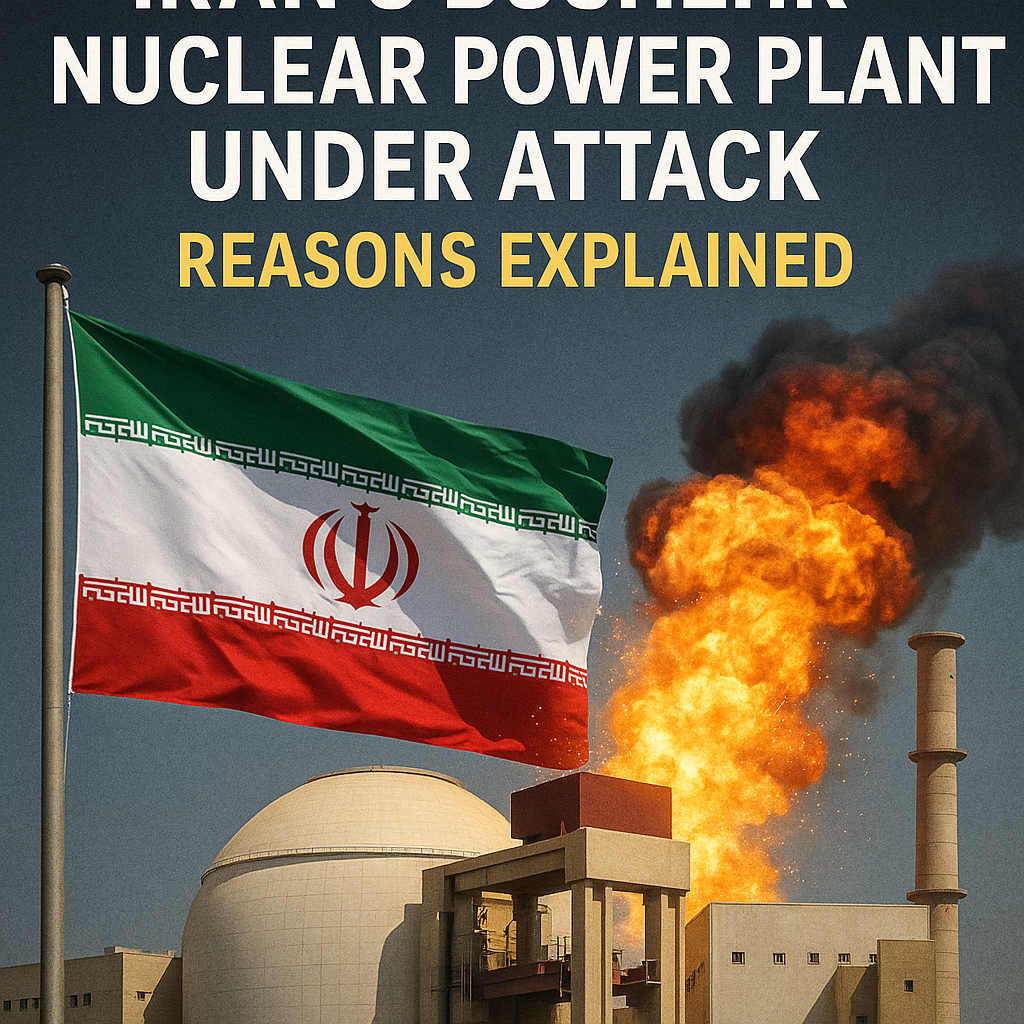
Iran’s Bushehr Nuclear Power Plant Under Attack: Reasons Explained

Iran’s Bushehr Nuclear Power Plant Under Attack: Reasons Explained
Iran’s Bushehr Nuclear Power Plant has once again become a focal point of international tension, raising questions about the broader implications of nuclear power in geopolitics. The site is not only part of Iran’s energy strategy but also a symbol of its technological ambitions and regional aspirations.

The Current Context: Escalating Threats
Recent threats directed at the Bushehr facility have triggered a flurry of discussions among analysts and policymakers. Various sources indicate that these threats come amid increasing geopolitical tensions, particularly involving Iran, the United States, and Israel. The eastern and western narratives present a complex array of motives and concerns.


From Iran’s perspective, the Bushehr plant symbolizes a step toward energy independence. It serves a dual purpose: fulfilling domestic energy needs and fostering technological advancements. As noted in some reports, Iranian officials assert that the facility is critical for generating electricity and supports the nation’s vision of being a scientifically advanced state.


Conversely, nations like Israel and the U.S. view the plant and Iran’s nuclear ambitions as a direct threat. Israel has been particularly vocal, claiming that any further advancements in nuclear capabilities could lead to potential military applications. According to data from various sources, this fear stems not only from Iran’s past actions but also from its ongoing contributions to groups such as Hezbollah, raising alarm bells concerning regional security dynamics.
Diverse Perspectives on Nuclear Diplomacy
The international community is split on how to address Iran’s nuclear development, especially regarding Bushehr. Some advocate for diplomatic engagement, emphasizing that dialogue could defuse tensions and lead to transparency in Iran’s nuclear program. However, others caution that engagement has historically failed to rein in Iran’s ambitions effectively, so a more forceful posture may be needed.
For instance, while Al Jazeera emphasizes the potential of negotiations, RT offers a starkly different viewpoint, framing U.S. policies as exacerbating tensions rather than easing them. This divergence illustrates the complexity around the discourse on Iran’s nuclear capabilities. A consensus seems elusive; stakeholders exhibit varying degrees of willingness to compromise, with some pushing for stringent sanctions while others endorse a path of cooperation.
The Potential Consequences of Military Action
The threats surrounding the Bushehr plant raise concerns about the potential for military conflict. Should any attack occur, the implications could be disastrous—not just for Iran but for regional stability in the Middle East. Experts warn that military engagement could lead to a broader conflict, involving not only neighboring countries but also global powers.
Moreover, the proximity of the Bushehr plant to densely populated areas poses additional risks, including possible radiation exposure. International Atomic Energy Agency (IAEA) safeguards have been established to monitor these facilities, but as highlighted in various analyses, the effectiveness of these measures remains a point of contention.
In this context, many analysts argue that any military action could galvanize public support for the Iranian government, leading to a rally-around-the-flag effect. Statements from Iranian officials portray any attack as an act of aggression, further complicating the diplomatic landscape and reinforcing Iran’s narrative of victimization.
Navigating the Future of Iran’s Nuclear Ambitions
The path forward for Iran’s Bushehr Nuclear Power Plant—and its role in Iran’s broader nuclear strategy—remains fraught with uncertainty. As scientists and policymakers grapple with the implications of nuclear energy and warfare, the overarching question persists: How can the international community effectively manage nuclear proliferation without descending into conflict?
While some advocate for immediate sanctions and greater military readiness, others argue for a tempered and diplomatic approach that considers the complex motivations driving Iran’s nuclear ambitions. The nuances in narratives between Western and Eastern perspectives indicate a multifaceted issue that transcends simple dichotomies of good versus evil.
Conclusion: A Call for Balanced Discourse
As the situation at the Bushehr Nuclear Power Plant evolves, it remains imperative for policymakers and analysts to engage in balanced discourse that acknowledges the complexity of the regional dynamics at play. Clear and transparent communication, combined with a willingness to understand diverse perspectives, could pave the way for more effective solutions.
In the end, the future of the Bushehr facility—and by extension, Iran’s nuclear program—will likely depend on the global community’s ability to navigate these complexities thoughtfully, seeking both the security and advancement of all nations involved.















