
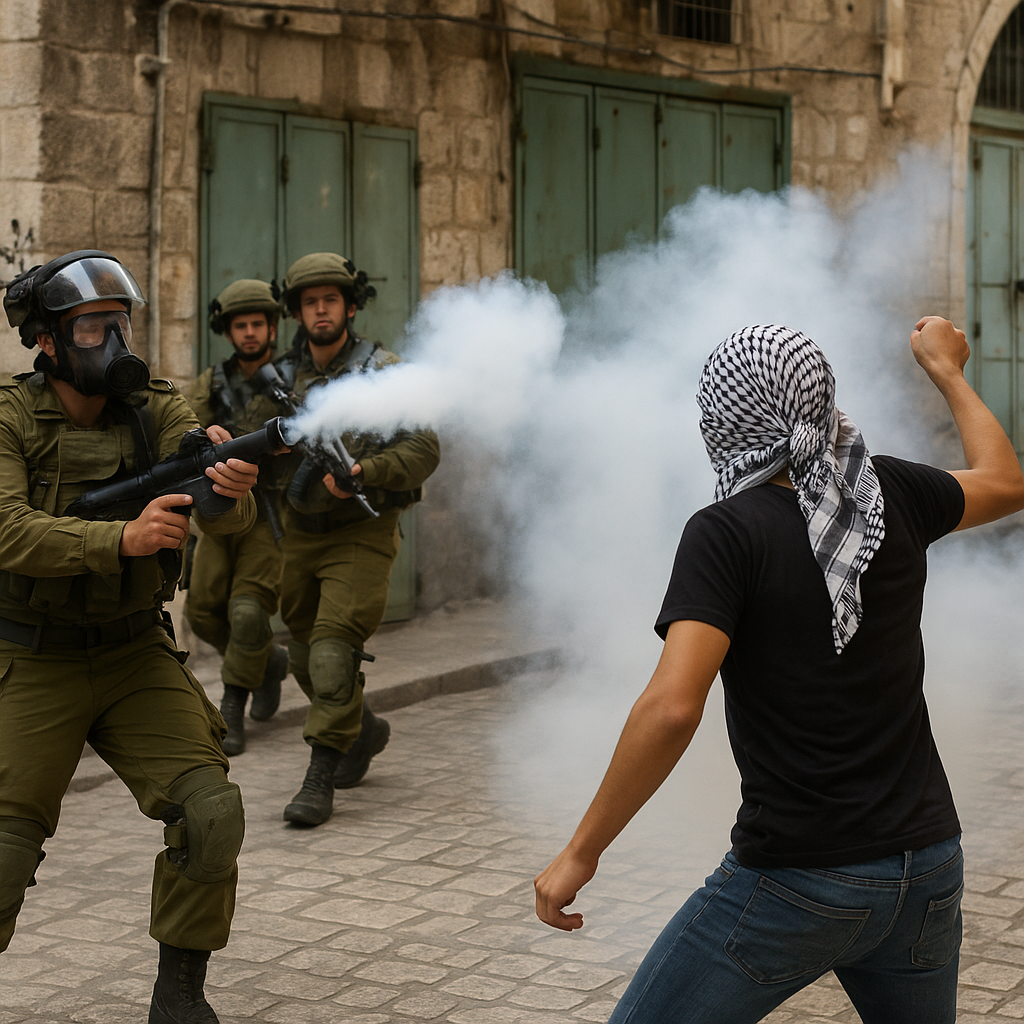
Israeli Soldiers Fire Tear Gas at Palestinian Youth in Hebron

Tensions Rise in Hebron: The Impact of Tear Gas on Palestinian Youth
Recent events in Hebron, a city steeped in tension, have brought international attention to the ongoing conflict between Israeli forces and Palestinian residents. Reports indicate that Israeli soldiers used tear gas against Palestinian youth during a raid, an action that has sparked debate and raised questions about both military conduct and the broader implications for peace in the region.

Understanding the Context: Hebron’s Historical Significance
Hebron is known as a focal point for Israeli-Palestinian strife, with its divided neighborhoods symbolizing the complexity of a conflict that has persisted for decades. The city is home to religious sites revered by both Muslims and Jews, which has historically contributed to its volatility.


The recent incident, captured on video, shows Israeli soldiers deploying tear gas to disperse a crowd of Palestinian youth, believed to have been protesting the raid. Al Jazeera reported that the soldiers claimed the use of tear gas was necessary to maintain control and ensure security during the operation. However, critics argue that such measures often exacerbate tensions rather than mitigate them.


The Perspectives on Military Actions
In analyzing the varied viewpoints regarding the use of tear gas by Israeli forces, it’s imperative to consider the arguments from multiple stakeholders.
1. The Israeli Narrative: Israeli officials often justify military actions as necessary for maintaining security and order. The army frequently emphasizes that operations are aimed at preventing attacks and thwarting violence, portraying the use of crowd control measures like tear gas as part of their efforts to safeguard citizens.
2. Palestinian Perspectives: Conversely, many Palestinians and their supporters view these actions as oppressive. The use of tear gas, especially in residential areas, is criticized as a tactic that endangers the local population, particularly children and those with respiratory conditions. Activists contend that such confrontations illustrate broader systemic issues, including military aggression and violations of human rights.
3. International Responses: International reactions to incidents like these vary. While some human rights organizations have condemned the use of tear gas against civilians, calling it a violation of human rights, others express support for Israel’s right to self-defense. The varying responses underscore the dilemma faced by global leaders who must navigate complex geopolitical dynamics while advocating for human rights and peace.
Consequences of Tear Gas Use
The immediate effects of tear gas deployment can be severe. Eyewitness accounts state that the gas used can cause serious health issues, especially in confined spaces. Symptoms such as coughing, choking, and disorientation can lead to more severe medical conditions if not treated promptly.
For children, who are particularly vulnerable, exposure to tear gas poses both short-term and long-term health risks. Organizations have pointed out that repeated exposure can have lasting effects on respiratory health. This not only raises concerns about immediate harm but also about the broader repercussions for a generation growing up in an environment fraught with violence and unrest.
A Nuanced View of the Ongoing Conflict
The situation in Hebron exemplifies the multifaceted nature of the Israeli-Palestinian conflict. While some may advocate for stronger military actions in the name of security, it is essential to weigh these decisions against their long-term social costs.
There is a growing sentiment among observers that sustainable peace cannot be achieved through increased militarization. The international community increasingly calls for dialogue and understanding rather than escalation. It becomes crucial to address the root causes of tensions in Hebron and other similar areas, fostering an environment conducive to peace and reconciliation.
Conclusion: The Path Forward
The recent incident involving tear gas in Hebron underscores a critical juncture in the Israeli-Palestinian conflict. As both sides navigate their narratives, the effects of military action on innocent lives must not be overlooked. While security remains paramount, the ongoing use of tear gas and similar crowd control methods raises ethical questions about the treatment of civilians and the long-term viability of such approaches.
In considering the path forward, it is essential for leaders on all sides to prioritize diplomacy and open dialogue. Only by understanding and addressing the underlying grievances can a lasting peace be established, allowing both Israelis and Palestinians to live in mutual respect and security. As global attention remains focused on these events, the need for comprehensive strategies that consider human rights alongside national security grows more urgent.















