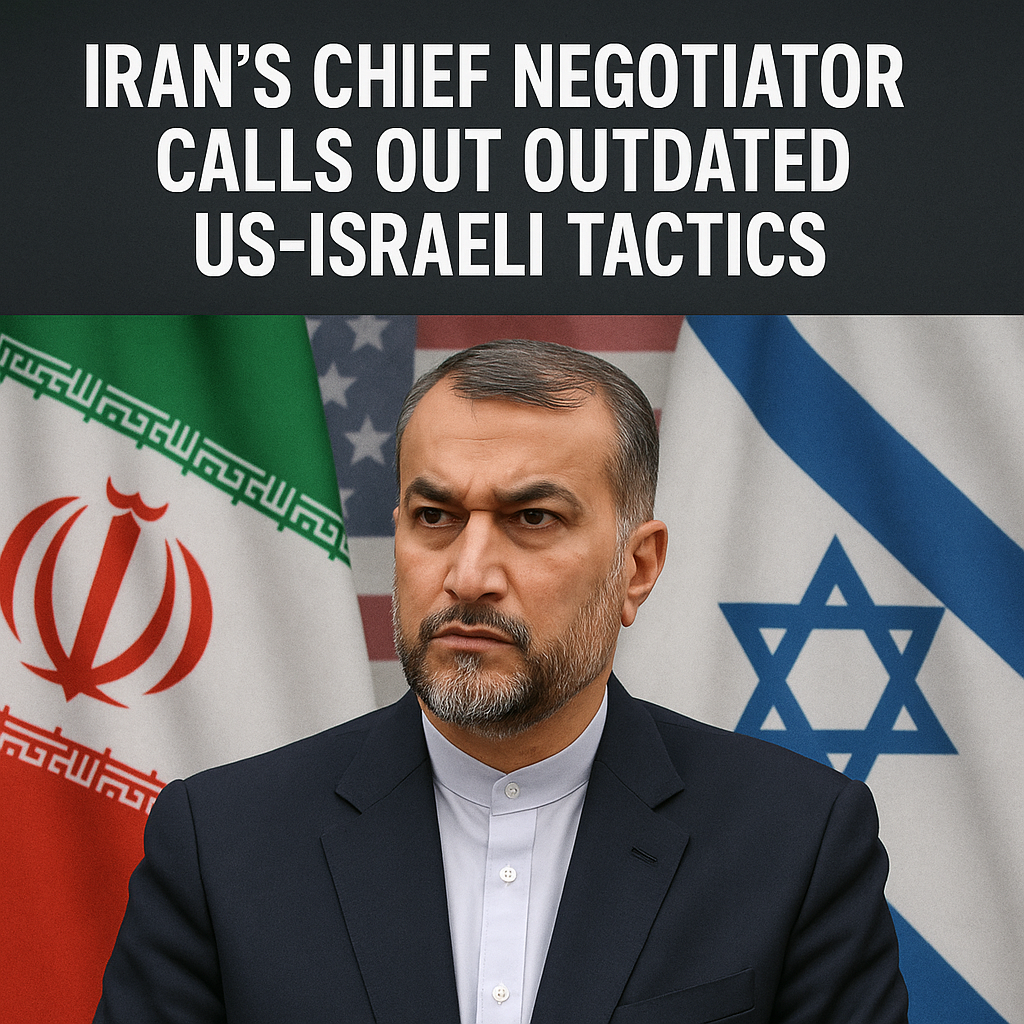
Iran’s Chief Negotiator Calls Out Outdated US-Israeli Tactics

Iran’s Chief Negotiator Critiques Outdated US-Israeli Tactics
In discussions surrounding international diplomacy, Iran’s Chief Negotiator has made a notable statement about the relevance of US-Israeli tactics in their dealings with Tehran. This observation brings to light the complexities of Middle Eastern diplomacy and underscores the evolving geopolitical landscape.

The Context of Negotiations
As diplomatic engagements heat up, particularly concerning Iran’s nuclear program, tensions remain palpable. The United States and Israel have often operated under a “good cop, bad cop” strategy, where the US typically presents a more diplomatic face, while Israel takes a more hardline stance. This approach has been intended to exert pressure on Iran, compelling it to make concessions during negotiations. However, Iran’s Chief Negotiator has expressed skepticism about the effectiveness of these tactics, labeling them as outdated.


An article on RT highlights that Iran’s negotiator believes the efficacy of coercive diplomacy is waning. The changing dynamics in global politics, including shifting alliances and new economic realities, suggest that Iran may be emboldened in its stance. Additionally, talks of renewed engagement after the lifting of some sanctions illustrate a complex interdependence that may not align well with traditional US-Israeli strategies.


Diverging Perspectives on Diplomacy
Analysts diverge in their interpretations of Iran’s position and the potential for renewed negotiations. According to a piece from Al Jazeera, various Middle Eastern countries have expressed a desire for a more nuanced approach that accounts for regional stability and governance. They assert that ongoing pressure fails to acknowledge the multifaceted nature of Iran’s role in regional conflicts. In contrast, the pro-Israeli perspective argues that maintaining a hardline stance is essential to counteracting perceived threats from Tehran.
Iran’s Chief Negotiator has emphasized that the old tactics reinforce resistance rather than foster dialogue. By employing a rigid strategy, the US and Israel might miss opportunities for meaningful negotiation. The current global climate, characterized by evolving alliances, especially between Asian powers, suggests that Iran finds itself in a position to reassert its influence.
The Role of External Influences
External factors, including the involvement of European nations and Russia in the nuclear discussions, further complicate the US-Israeli approach. Recent developments indicate a shift towards a multipolar world in which many countries, including Iran, are cultivating relationships that diverge from traditional Western alliances. Political experts suggest that as other powers gain traction in influencing Middle Eastern dynamics, the US and Israel may need to adapt their strategies or risk being sidelined.
The potential for change brings rising questions regarding future negotiations. How can the US and Israel recalibrate their approach to diplomacy that effectively engages Iran while addressing their security concerns? Iran’s negotiator posits that it must begin with mutual respect and a recognition of Iran’s regional role.
Conclusion: A Call for Reassessment
Iran’s Chief Negotiator’s criticism of the outdated tactics employed by the US and Israel has illuminated a pivotal moment in Middle Eastern diplomacy. The growing complexities and shifting alliances in the region challenge old paradigms, urging a reassessment of diplomatic strategies. As more nations assert their influence, an inclusive dialogue that recognizes the multiplicity of interests may prove more fruitful than the blunt instruments of coercion.
The future trajectory of US-Iran relations will likely depend on both sides’ willingness to engage in genuine dialogue. By moving away from historic perceptions of “good cop, bad cop,” there lies potential for a fresh dialogue that could redefine their interactions.