
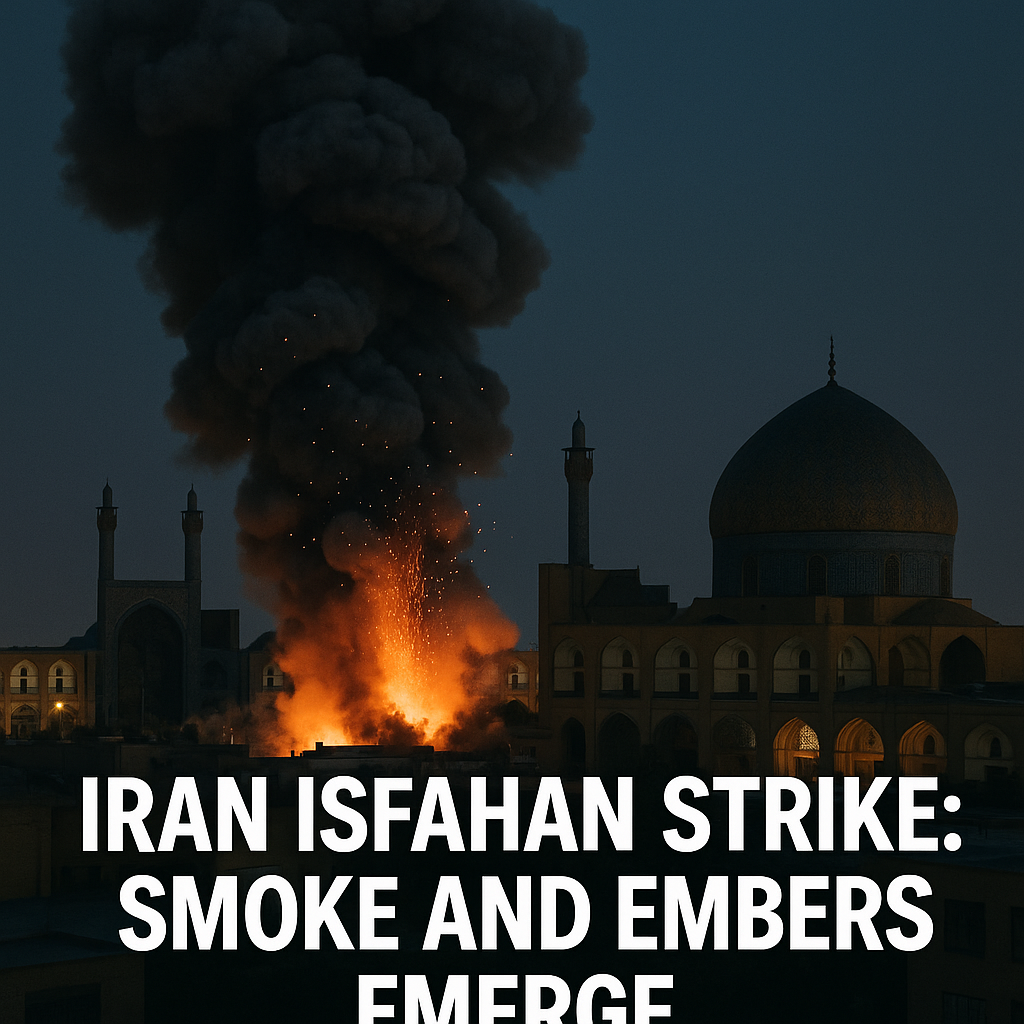
Iran Isfahan Strike: Smoke and Embers Emerge

Iran Isfahan Strike: Smoke and Embers Emerge
The recent strike in Isfahan, Iran has elicited a mix of reactions and raised questions about the broader implications for regional security and international relations. As smoke and embers rise from the scene, the incident unfolds against a backdrop of escalating tensions in the Middle East.

Understanding the Incident: What Happened?
On the night of April 1, 2026, Al Jazeera reported visible smoke and fire over Isfahan, a city known for its strategic military significance. The strike appears to have targeted facilities connected to Iran’s military-industrial complex, although specifics regarding the nature of the attack remain somewhat elusive. Eyewitness accounts describe a scene of chaos, with local residents expressing shock and fear amid the uncertainty surrounding the motivations behind the strike.


While no party has publicly claimed responsibility, various sources indicate that the attack could have been orchestrated by foreign powers with vested interests in limiting Iran’s military capabilities. RT discusses the possibility of such actions being viewed as preemptive measures by nations concerned about Iran’s regional influence. The ambiguity surrounding the responsible parties illustrates a complex geopolitical landscape characterized by historical animosities and strategic calculations.


Diverse Perspectives: Regional and Global Reactions
Responses to the Isfahan strike have been varied, reflecting the myriad viewpoints existing in the international community.
Domestic Perspectives
Within Iran, the government condemned the strike as an act of aggression. High-ranking officials portrayed it as a direct assault on national sovereignty and vowed to retaliate. Unifying against a perceived external threat, the Iranian populace has rallied around patriotic sentiments, strengthening nationalistic narratives in the face of adversity. Reports detail that social media activity surged with calls for unity and vengeance, highlighting the strike’s role in galvanizing public opinion.
Conversely, some Iranian analysts argue that this incident may provoke further vulnerabilities, essentially compelling Iran to reassess its military strategy and alliances. The need for a coherent response might shift national policies, complicating an already fraught regional security dynamic.
International Perspectives
Globally, reactions are more heterogeneous. Some analysts and political figures from Western nations, particularly the U.S. and its allies, view the strike as a justified action aimed at curtailing Iran’s perceived threats. They argue that military interventions are necessary to uphold stability in a region often marred by conflict. On the other hand, critics of military intervention emphasize the potential for increased hostilities and regional destabilization as a consequence of such strikes. Sky News highlights this conflicting stance, noting that increased military actions could create a cycle of retaliatory violence.
While the U.S. administration refrains from making an official statement regarding the strike, diplomatic conversations continue behind closed doors, assessing the geopolitical implications and potential responses.
Weighing the Consequences: What’s Next for Iran and Beyond?
The ramifications of the Isfahan strike extend beyond immediate military consequences. They pose a crucial question: How will Iran respond and what will this mean for its alliances, both regional and global?
The strike seems poised to impact Iran’s approach towards its nuclear ambitions and relationships with stakeholders, such as Russia and China. These countries have historically supported Iran in various capacities, and their reactions in the coming days will be pivotal. Should Iran seek more robust military cooperation or pursue diplomatic engagements to mitigate growing tensions, it could redefine its stance moving forward.
Additionally, the strike raises broader concerns about the cycle of violence in the Middle East. With increasing military actions reported, including drone strikes and air assaults across various states in the region, the risk of escalation lurks ominously in the background. Continued retaliatory measures could spiral into broader conflict, affecting global oil markets and international diplomatic relations.
Conclusion: A Clouded Future
In sum, the smoke and embers rising over Isfahan signify more than just the aftermath of a military strike; they embody a complex narrative woven with historical grievances, national pride, and geopolitical strategy. As diverse reactions unfold—and as Iran contemplates its next moves—the consequences of this incident will resonate beyond the immediate region, potentially altering the trajectory of Middle Eastern politics for years to come.
The uncertainty that looms following the Isfahan strike serves as a stern reminder: in a fragmented geopolitical landscape, each action carries repercussions that may echo far beyond the immediate scene of conflict. The world watches closely, waiting to see what future developments will emerge from the turmoil in Iran.















