
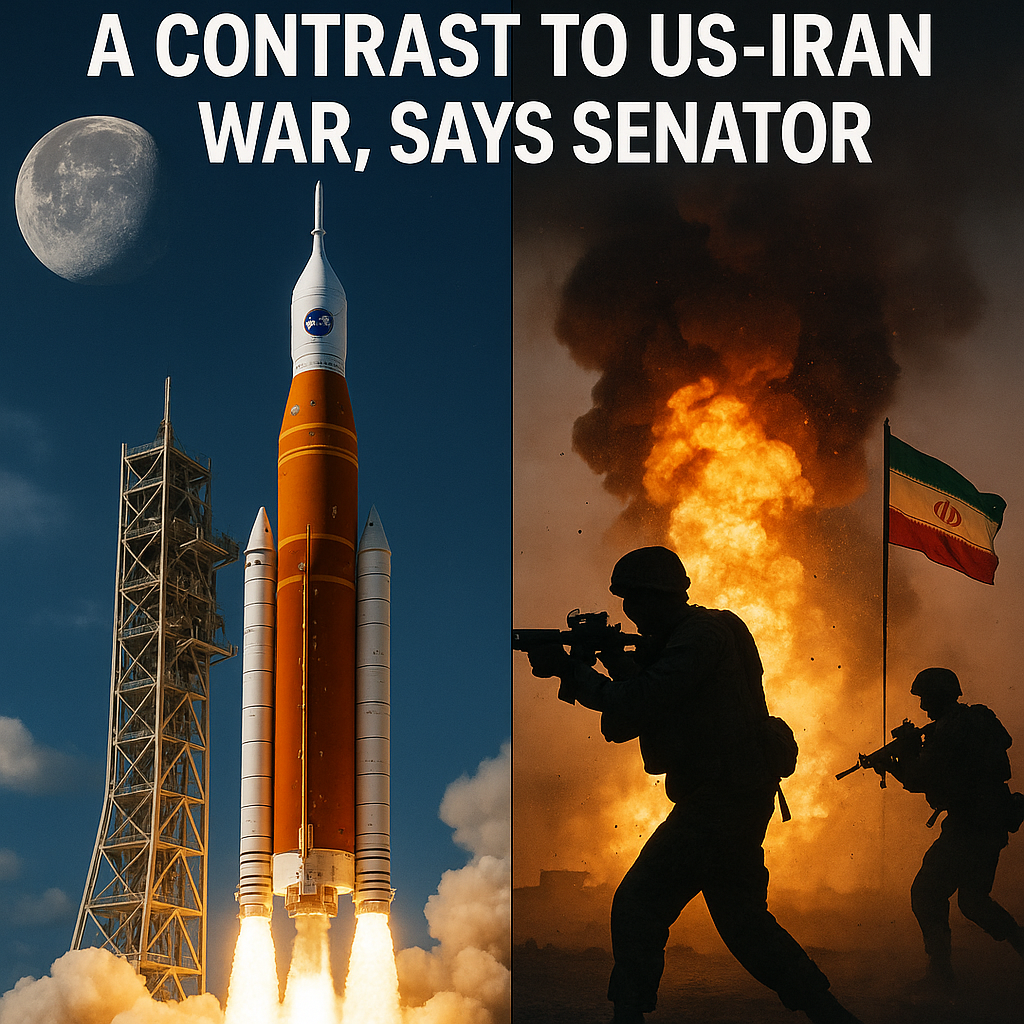
NASA Moon Mission: A Contrast to US Iran War, Says Senator

NASA Moon Mission: A Contrast to U.S.-Iran War, Says Senator
As humanity gears up for its next lunar adventure, a U.S. senator has drawn a stark contrast between NASA’s upcoming Moon mission and the complex geopolitical tensions surrounding the U.S. stance on Iran. This perspective emphasizes the dichotomy of investment in exploration versus military engagements, inviting a broader examination of American priorities.

NASA’s Vision for Lunar Exploration
NASA’s Artemis program aims to return astronauts to the Moon as part of a broader goal to establish a sustainable human presence on the lunar surface by the end of the decade. This ambitious campaign has garnered widespread public interest and support for its potential to advance scientific knowledge and inspire future generations.


In remarks made by Senator John Barrasso, he underscored how the Moon mission could serve as a beacon of positive, collaborative efforts in science and technology. “While we navigate complex international relations, projects like Artemis showcase what we can achieve when we focus our energy on exploration and innovation,” he stated. This sentiment echoes a growing belief among some policymakers that investing in educational and scientific endeavors could unite rather than divide nations.


The Military Narrative: U.S.-Iran Relations
Conversely, the U.S.-Iran relationship remains fraught with tension, characterized by sanctions, military posturing, and a wariness that complicates diplomatic relations. Analysts have often pointed to the potential ramifications of these policies on global stability and American credibility. As reports continue to surface about the potential for conflict, the distinction drawn by Senator Barrasso carries weight.
Some commentators argue that the focus on military engagements diverts resources away from constructive projects like lunar exploration. As one analyst noted, “The costs associated with military operations can overshadow the investments needed for scientific progress.” This point of view resonates with many who envision a future where countries cooperate in innovative spheres rather than engage in warfare.
Exploring the Dichotomy
The juxtaposition of the NASA mission against the backdrop of U.S.-Iran tensions serves to illuminate broader questions about national priorities. The Artemis program is not just about returning to the Moon; it symbolizes human ingenuity and collaborative spirit. Yet, as the international landscape becomes increasingly tumultuous, critics contend that military involvement draws focus—and finances—away from the arts of exploration and diplomacy.
Public Sentiment and Economic Impact
Public sentiment, as reflected in various polls, indicates strong support for NASA’s initiatives. Many view space exploration as a unifying venture that transcends national boundaries. In stark contrast, views on military engagement tend to be polarized. While some citizens express support for a stronger military presence, others advocate for shifting resources towards science and technology—fields perceived as more constructive.
Moreover, financial investments in programs like Artemis could yield significant returns. According to economic reports, every dollar spent on NASA’s missions generates approximately $10 in economic value. This aspect highlights another layer in the ongoing conversation about prioritizing between military expenditures and investments in exploration.
Conclusion
As the Artemis program prepares for its leap into lunar exploration, the commentary from Senator Barrasso serves as an important reminder of the broader narratives at play within American society. The mission offers a picture of what is possible when investment is directed toward science, cooperation, and innovation. In contrast, ongoing tensions with Iran bring to light the ramifications of military engagements that often overshadow such advancements.
Ultimately, embracing ambivalence in the face of both technological promise and geopolitical uncertainty may lead to a more nuanced understanding of what it means to navigate the future. The challenge remains: can America translate its aspirations in space into a narrative that transcends the confines of its military history? Only time will tell as we stand on the precipice of a new era in lunar exploration.















