
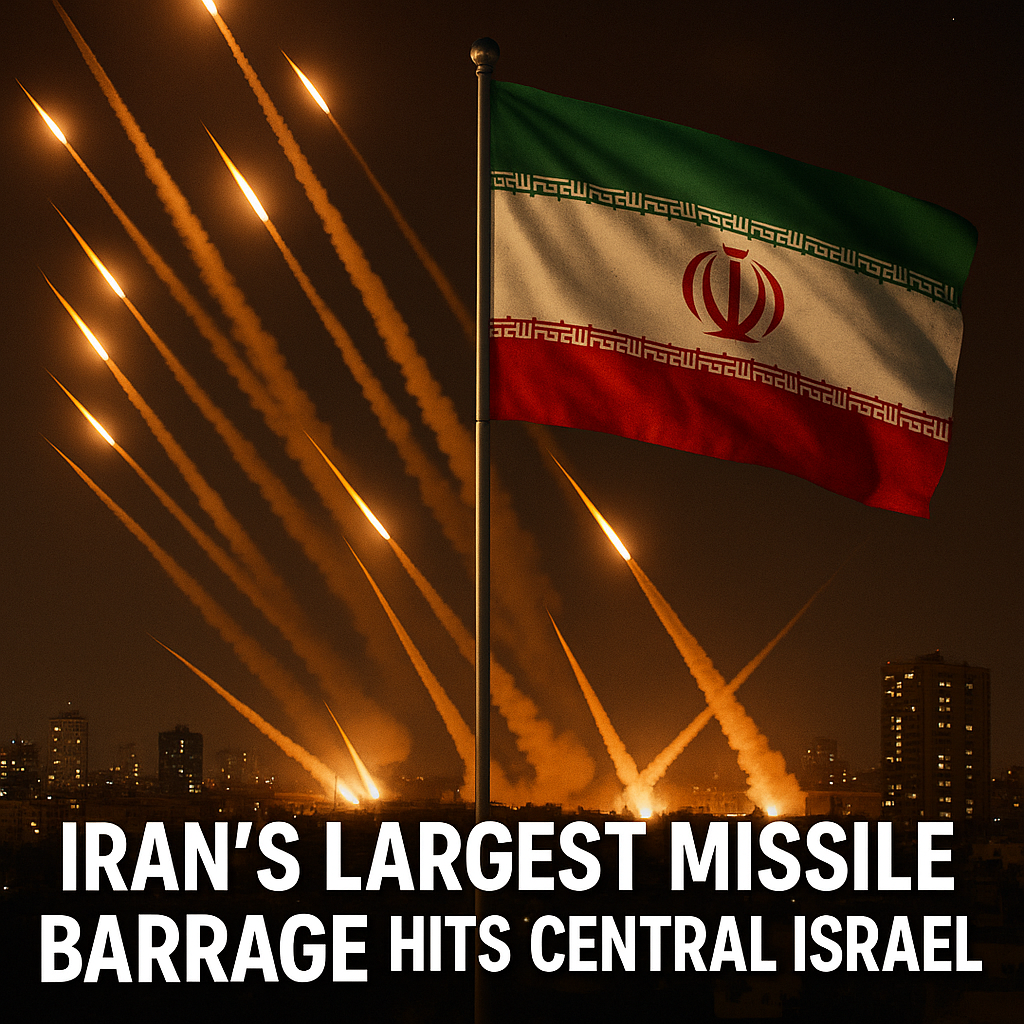
Iran’s Largest Missile Barrage Hits Central Israel

Iran’s Largest Missile Barrage Hits Central Israel: A Complex Geopolitical Landscape
Iran’s recent missile barrage targeting central Israel marks a significant escalation in one of the Middle East’s most fraught geopolitical conflicts. This assault underlines the increasing tensions in the region, bringing both military and diplomatic implications. The multifaceted nature of this conflict demands a careful analysis of the events and their broader impacts.

The Context of the Attack
The backdrop to this missile barrage is the long-standing enmity between Iran and Israel. In recent years, Iran has accelerated its military capabilities, including its ballistic missile program, which has been a focal point of concern for Israel and its allies. The missile barrage, reported to involve dozens of strikes, was described by Al Jazeera as one of the largest in recent weeks. This specific attack occurred amidst rising tensions following previous skirmishes and verbal confrontations, reflecting the fragile military balance in the region.


Motivations Behind the Escalation
Iran’s motivations appear to be multifaceted. Experts suggest that this barrage may serve several purposes:


1. Demonstrating Military Strength: Iran often uses missile attacks as a show of force to signal its capabilities to both domestic and international audiences. The missile strikes serve as a reminder of Iran’s military prowess, particularly following successful weapons tests and developments within their military infrastructure.
2. Political Messaging: The timing of the strikes correlates with heightened discussions concerning Israel’s regional policies and America’s support for the Israeli government. By launching an attack now, Iran could be aiming to reinforce its position against perceived Israeli aggression and to rally support from allied groups in the region.
3. Response to Provocations: Both countries have accused each other of provocations, with Iran citing Israeli airstrikes on its military assets scattered throughout Syria and elsewhere in the region as a justification for its aggressive posturing.
International Reactions and Implications
The international community has responded in various ways. According to reports from Al Jazeera and Sky News, Israel has vowed to retaliate against Iranian threats, emphasizing the need for both a military and strategic response to such aggression. Israeli officials have indicated that this kind of attack cannot go unanswered, signaling potential further escalations in violence.
Conversely, reactions from Iran and its allies have been more defensive. Iranian state media portrayed the missile strikes as a legitimate exercise of self-defense, claiming that they reflect a response to Israeli provocations. This sentiment is echoed among Iran’s regional allies, who argue that their actions are necessary to protect their sovereignty against what they perceive as Israeli aggression.
The Broader Geopolitical Landscape
This missile strike’s implications extend far beyond just Iran and Israel. The United States and other Western nations remain deeply involved in monitoring the situation, with Washington reiterating its support for Israel amidst the escalating tensions. However, discussions around potential sanctions or military actions against Iran remain contentious within international forums.
In addition, the regional dynamics complicate the situation. Countries such as Saudi Arabia and the UAE, traditionally opposed to Iranian influence, may view this escalation as a call to solidify their alliances and bolster their defense strategies in anticipation of further Iranian aggression. The stakes are even higher when considering the broader implications for energy markets and trade routes that pass through this already volatile area.
A Complex Path Ahead
In navigating this complex landscape, one thing becomes clear: the tensions between Iran and Israel will not be easily resolved. As both countries continue to demonstrate military capabilities and political resolve, the potential for conflict remains high. Each side has its narrative and justifications, which complicates international diplomacy efforts.
While there may be calls for peace and dialogue, the persistent cycle of provocation and retaliation suggests that such hopes may be elusive in the short term. Analysts recommend that any diplomatic resolution must consider the broader regional dynamics, including Iran’s motivations and the responses of neighboring countries.
In conclusion, while the missile barrage represents a critical moment in Iranian-Israeli relations, it also serves as a reminder of the complexities of Middle Eastern politics. With no straightforward path to resolution, both regional and global actors must tread carefully as they navigate the multitude of interests and threats at play. The escalation may provoke strong reactions on all sides, and maintaining a dialogue will be essential for future stability in this fractious region.















