
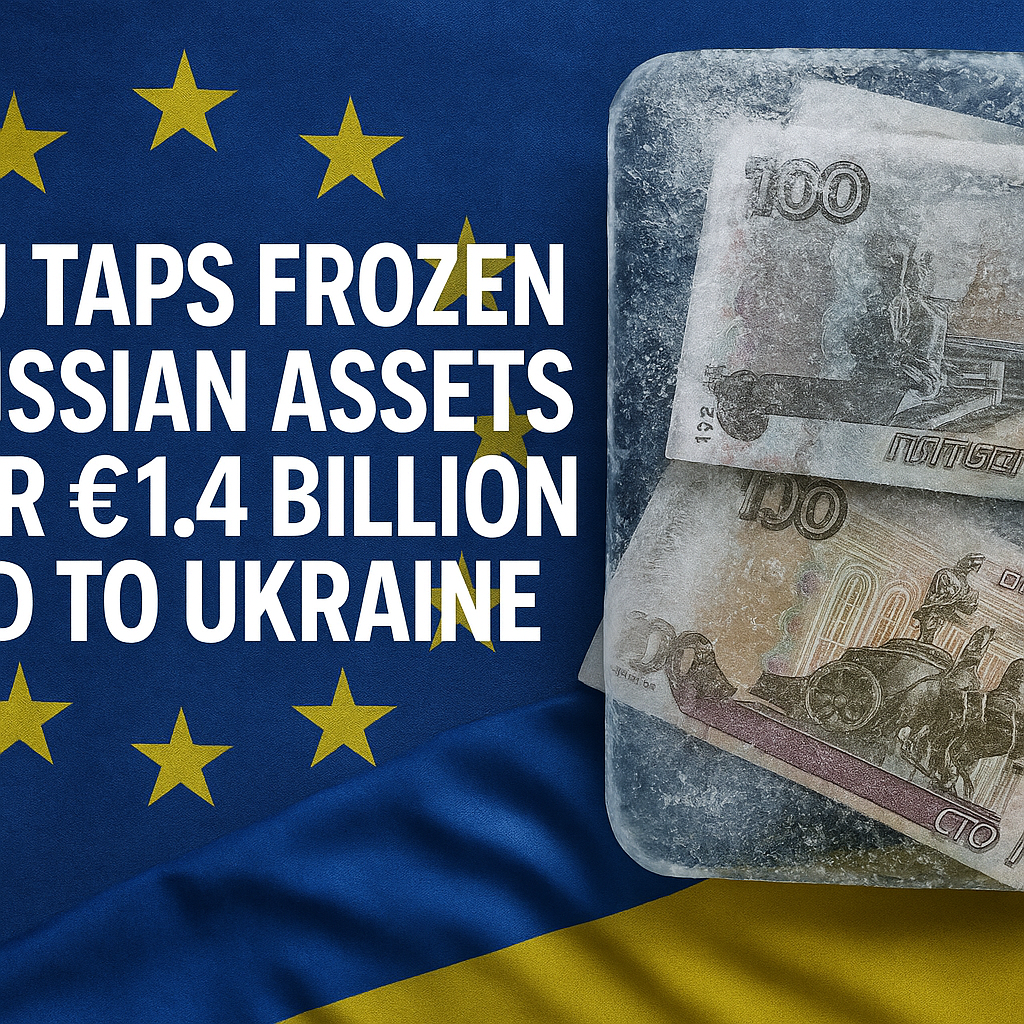
EU Taps Frozen Russian Assets for €1.4 Billion Aid to Ukraine

EU Taps Frozen Russian Assets for €1.4 Billion Aid to Ukraine
In a significant move, the European Union has decided to utilize frozen Russian assets to provide €1.4 billion in aid to Ukraine. This bold decision reflects the EU’s ongoing commitment to support Ukraine amidst the ongoing conflict and highlights the complexities surrounding the geopolitical landscape.

Frozen Assets: A New Approach?
The EU’s decision to tap into frozen Russian assets marks a pivotal shift in how international sanctions can be used as a mechanism to aid Ukraine. According to reports from RT, the assets in question have been amassed in various categories, notably from oligarchs and state institutions linked to the Kremlin. The use of these funds raises a compelling question: Can asset freezes serve not only as punitive measures but also as a means to finance humanitarian support?


Critics of the initiative argue that utilizing frozen assets could set a dangerous precedent. They caution that the move may undermine the rationale behind international sanctions and could provoke further retaliatory measures from Russia. However, proponents claim that the action demonstrates Europe’s steadfastness in standing up against aggression while simultaneously fulfilling humanitarian needs.


Al Jazeera encapsulated these sentiments, emphasizing that the legality and moral grounds for such actions are under scrutiny. The dual purpose of sanctioning and providing aid could be a balancing act that the EU needs to navigate carefully.
Economic and Political Implications
The implications of this decision stretch beyond mere finances. By diverting these assets for aid, the EU signals to both Russia and the international community its resolve to support Ukraine. However, the economic ramifications could be significant.
From a financial standpoint, funding humanitarian efforts through confiscated wealth raises ethical questions. How will these funds be managed? Are there sufficient safeguards in place to ensure that these resources are directed solely towards humanitarian efforts and not misappropriated?
Moreover, the political oversight surrounding this initiative could become a contentious point within the EU itself. Member countries might disagree on how to distribute these funds, leading to possible tensions. This reflects broader questions about unity within the EU’s stance towards Russia.
Sky News pointed out that while this funding avenue is unprecedented, it may also invite scrutiny over Europe’s commitment to upholding the rule of law, especially if legal challenges arise from the Russian side.
A Complex Web of International Relations
The interplay between sanctions and humanitarian aid cannot be viewed in isolation. Analysts have observed that the EU’s actions may provoke a more aggressive response from Russia. Statements from Kremlin sources suggest that Russia views these actions as unjust, viewing the freezing of assets as an illegitimate act of aggression rather than a legal pathway.
The broader geopolitical landscape significantly factors into this equation. Concerns arise over how other nations, especially those observing the EU’s approach, will respond. Engaging with the complexities of global alliances, countries such as China and India are closely monitoring these developments. Their reactions could significantly shape the future of international support for Russia or Ukraine as tensions persist.
Conclusion: Looking Forward
The EU’s decision to utilize frozen Russian assets for humanitarian aid illustrates the challenges and complexities inherent in modern geopolitics. While the intention to assist Ukraine is commendable, the decision carries potential repercussions that may reverberate through international relations.
As the situation evolves, observers will be watching to see how the EU navigates this contentious strategy and whether it can maintain unity among its members while fulfilling its obligations to support Ukraine. Although the decision reflects a novel approach to sanctioning and aid, it also highlights the need for careful deliberation regarding its long-term implications. Now more than ever, the EU must not only commit to providing aid but also uphold principles of legality and fairness amidst a highly charged geopolitical landscape.















