
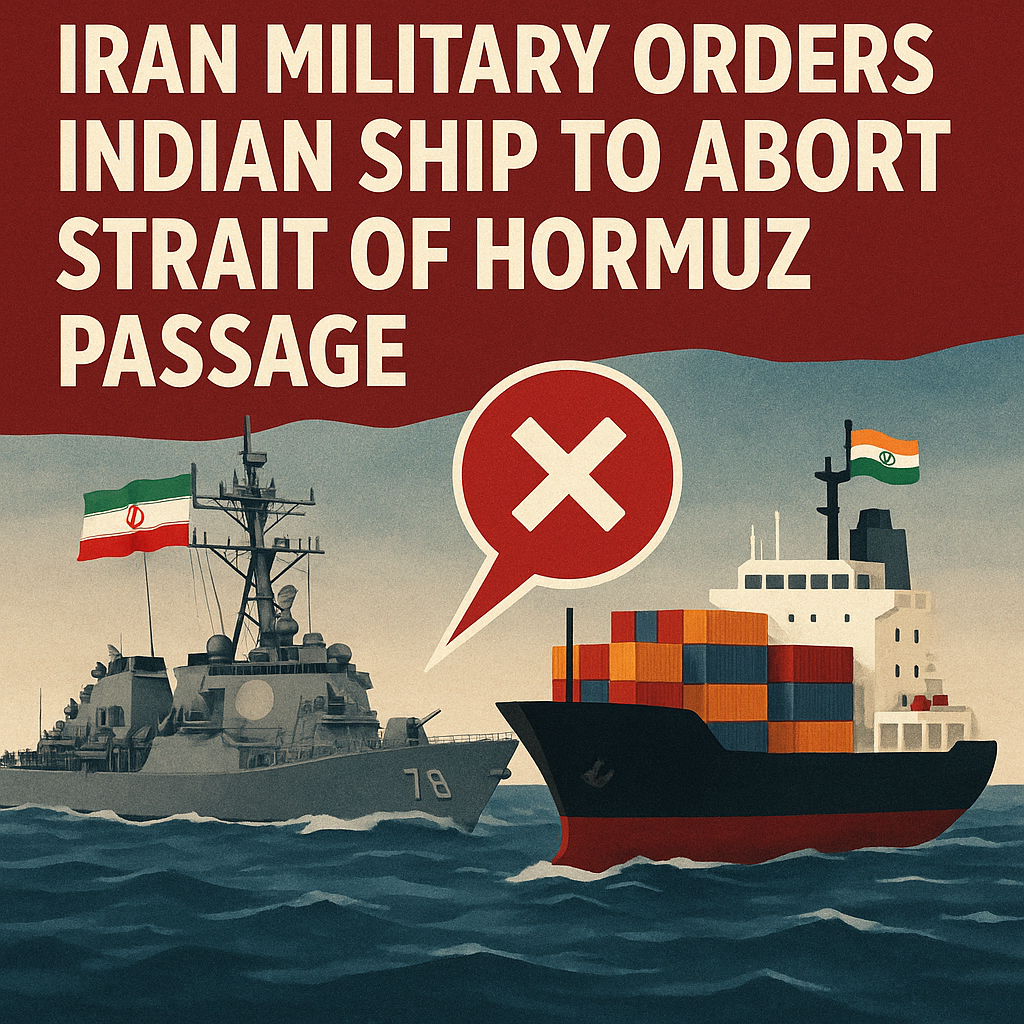
Iran military orders Indian ship to abort Strait of Hormuz passage

Tensions Rise: Iran Military Orders Indian Ship to Abort Strait of Hormuz Passage
The Strait of Hormuz, a crucial waterway for global oil shipping, has become the focal point of escalating tensions after reports emerged that Iran’s military ordered an Indian vessel to abort its passage through the strait. This incident raises questions about maritime security and geopolitical dynamics in the Persian Gulf region.

Context and Significance of the Strait of Hormuz
The Strait of Hormuz is strategically vital, with approximately 20% of the world’s oil flowing through it. Countries such as Iran, the United States, and several Gulf states have vested interests in the region, creating a complex geopolitical scenario. The waters have been a flashpoint for conflicts and military maneuvers, influencing global oil prices and international relations.


Recent Incident Analysis
According to multiple sources, including Al Jazeera and RT, the Iranian military directed the Indian tanker to change course as it entered the Strait. The order reportedly stemmed from heightened security measures during what Iran claims are ongoing military exercises in the area. In this context, the Iranian government emphasized the necessity of maintaining a secure maritime environment, asserting their right to regulate passage in their territorial waters.


Contrasting perspectives emerged regarding the legitimacy of Iran’s actions. Proponents of Iran assert that the military’s directive is in line with national sovereignty and security strategies aimed at ensuring safety in an area frequently frequented by foreign naval forces. Meanwhile, critics argue that Iran’s aggressive stance contributes to regional instability and could provoke further tensions with nations, particularly those aligned with the U.S.
Divergent Viewpoints and Potential Impacts
From one perspective, Iranian officials maintain that they are simply upholding their sovereignty and maritime laws. They highlight that military exercises in strategic areas are standard practices employed by nations globally, suggesting that the incident should not be viewed as an act of aggression but as a measure of precaution.
In stark contrast, observers point out that such maneuvers only exacerbate the already volatile situation in the Gulf region. Reports from Sky News capture this unease, noting that incidents like these could escalate into broader confrontations, especially given the presence of naval forces from the U.S. and its allies in close proximity.
Continued disputes over shipping lanes raise critical implications for international shipping and global energy markets. The uncertainty surrounding Iran’s policies could lead to increased insurance costs for vessels and higher oil prices, which would ultimately affect economies worldwide.
The Broader Global Perspective
The increasingly aggressive posture of Iran can be contextualized within its ongoing disputes with the West, particularly the U.S. and Israel. Escalating military activities in the waters symbolize not just Iran’s defense strategies but also its broader defiance against sanctions and diplomatic pressures. As tensions simmer, the international community watches closely, aware that even minor incidents can spiral into significant geopolitical crises.
Concluding Thoughts
The recent orders by Iran’s military for an Indian ship to abort its passage through the Strait of Hormuz highlight a complex interplay of sovereignty, security, and regional stability. While Iran emphasizes its rights to enforce maritime security, critics warn that these actions contribute to heightened tensions in an already fragile geopolitical climate.
The situation remains fluid, with various stakeholders closely monitoring developments. As incidents like this continue to unfold, they underscore not only the risks inherent in maritime navigation but also the potential for broader conflict in the region. Maintaining open lines of communication and seeking diplomatic resolutions may be the most effective path forward to mitigate risks and enhance maritime security in the Strait of Hormuz.















