
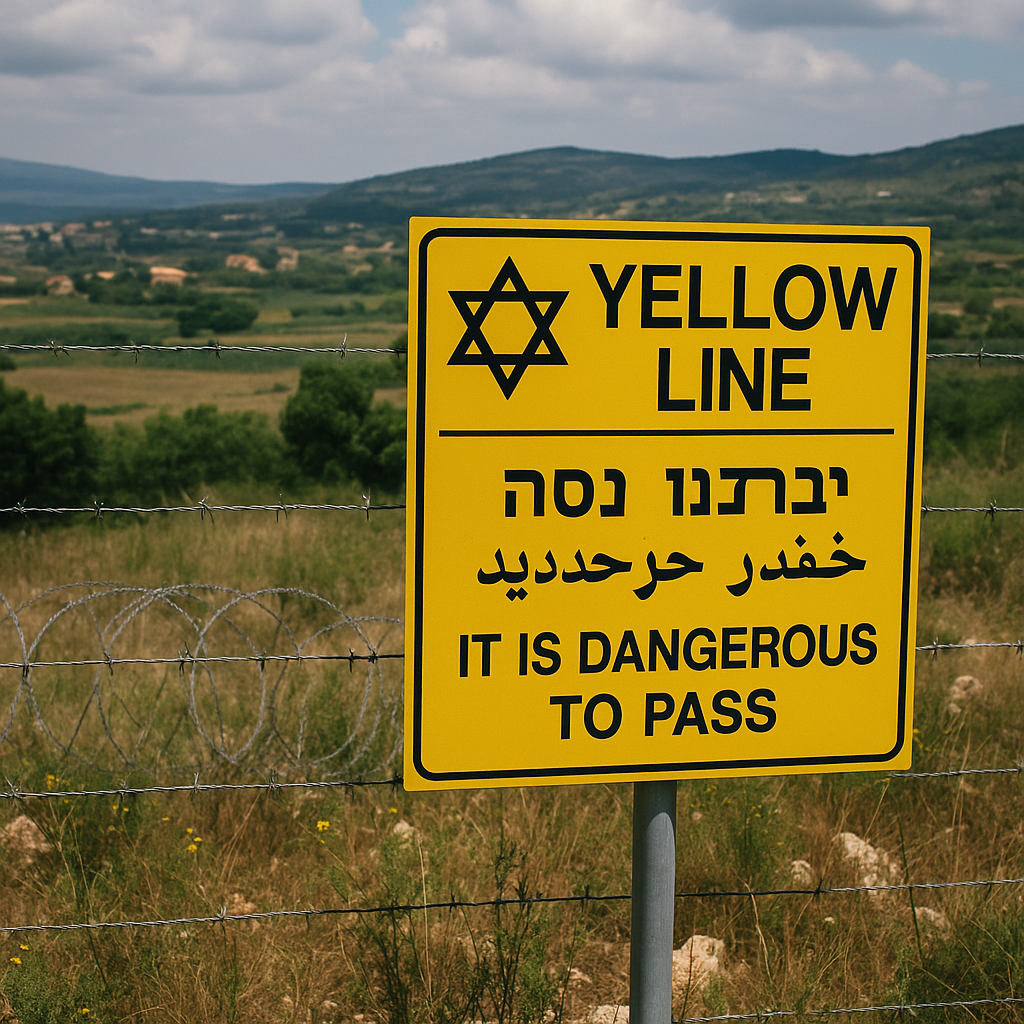
Israel Establishes ‘Yellow Line’ in Lebanon Like Gaza

Israel Establishes ‘Yellow Line’ in Lebanon Like Gaza
In a significant development along its northern border, Israel has established a “Yellow Line” in Lebanon, similar to the buffer zones it created in Gaza. This decision has sparked a range of reactions both locally and internationally, reflecting the complexities of border security, geopolitical tensions, and humanitarian concerns.

Understanding the ‘Yellow Line’
The term “Yellow Line” was initially coined to describe the boundaries Israel set in Gaza to delineate secure areas from those deemed threats. Now, this strategy is being applied in Lebanon, where the Israeli Defense Forces (IDF) have outlined a similar demarcation. According to Al Jazeera, the Israeli government states that the Yellow Line is necessary to protect its citizens from cross-border attacks, particularly from militant groups like Hezbollah. The IDF maintains that this approach will enhance security by monitoring movement and minimizing potential conflicts.


Security Implications
From Israel’s perspective, the Yellow Line is a proactive measure aimed at thwarting incursions and protecting its citizens. Reports from RT News emphasize Israeli concerns about Hezbollah’s military capabilities, arguing that the group poses a credible threat to national security. The established line is intended to provide a buffer that delineates areas where military operations could be justified if perceived threats emerge.


However, such a strategy isn’t without its critics. Locally, some Lebanese officials and citizens express concern over this unilateral action. They argue that establishing a line on Lebanon’s territory raises questions of sovereignty and could escalate tensions. The Lebanese military has reiterated its commitment to defending its borders and has called for dialogue rather than unilateral measures that could lead to confrontation.
The Broader Geopolitical Landscape
The creation of the Yellow Line also reflects Israel’s broader strategy in managing its northern border. Analysts from various sources suggest that this move could be seen as a reaction to the shifting dynamics in the region, particularly following the reassertion of Iranian influence and increasing military support for Hezbollah.
On an international level, reactions have varied. While the United States traditionally supports Israel’s right to defend itself, it has also encouraged diplomatic solutions to conflicts with neighboring states. The Biden administration may view the establishment of a Yellow Line as a potential flashpoint that could complicate ongoing discussions about regional stability.
Humanitarian Concerns
Beyond military implications, the establishment of the Yellow Line raises humanitarian concerns. Critics argue that unilateral border changes can lead to displacement and exacerbate the already challenging living conditions for civilians. Human rights organizations have voiced worries that such measures could result in increased tension, leading to violence that disproportionately affects non-combatants. According to sources from Sky News, they emphasize the need for negotiations that consider the humanitarian implications rather than solely focusing on security-driven strategies.
In interviews, local residents express fear that their everyday lives will be further impacted by increased military presence and surveillance. They stress the need for a stable and peaceful environment, one where dialogue replaces the rhetoric of conflict.
Conclusion: Navigating the Complex Landscape
Israel’s establishment of a Yellow Line in Lebanon encapsulates a complex web of security, political, and humanitarian factors. While Israel asserts its need for security against perceived threats, regional actors, as well as humanitarian organizations, urge for dialogues based on mutual respect and sovereignty.
The tensions along the Israel-Lebanon border continue to challenge diplomatic efforts, as both sides face internal and external pressures. As this situation evolves, the delicate balance of security and human rights remains at the forefront of discussions, highlighting the intricate and often fraught nature of international borders in conflict zones.
In these complex scenarios, the path forward may require innovative approaches that prioritize peace over militarization, allowing communities on both sides of the border to navigate their futures with hope rather than fear.















