
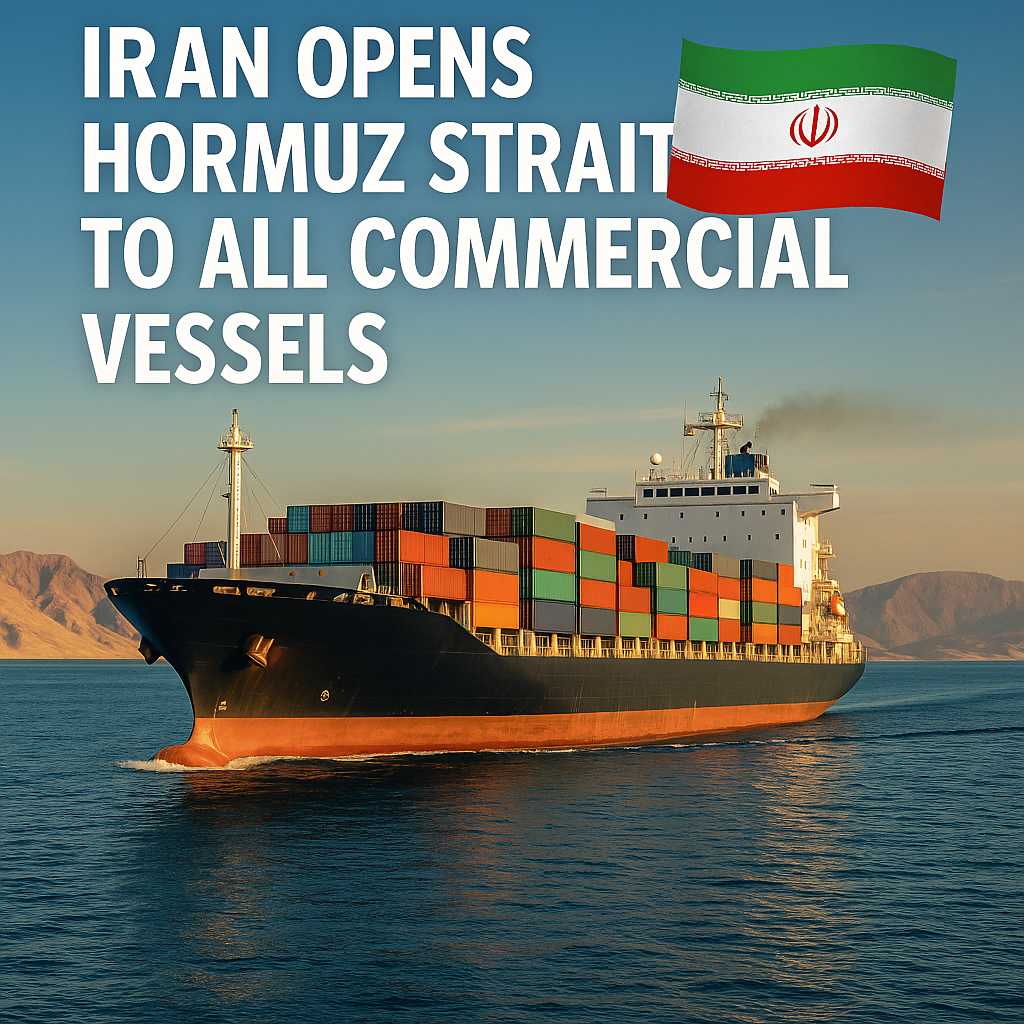
Iran Opens Hormuz Strait to All Commercial Vessels

Iran Opens Hormuz Strait to All Commercial Vessels
In a strategic maneuver reflecting both geopolitical intentions and economic interests, Iran has recently announced the opening of the Hormuz Strait to all commercial vessels. This important maritime passage, which connects the Persian Gulf to the Arabian Sea, has long been a focal point of global trade and a hotspot for international tension. The decision to allow unrestricted passage could have significant implications for global shipping routes, energy supplies, and regional security.

A Shift in Policy
Iran’s announcement marks a pivotal shift in its maritime policy. The Hormuz Strait is known as one of the busiest maritime corridors in the world, with an estimated 20% of the total global oil trade transiting through its waters. Before this development, the region had seen heightened tensions, particularly regarding U.S. sanctions and naval encounters between Iranian forces and foreign military vessels. This new move is seen by many analysts as a bid by Iran to project a more open and cooperative image on the international stage.


According to a report from RT, Iranian officials have emphasized that their decision was motivated by a desire to bolster trade and meet economic needs in light of ongoing sanctions. The willingness to allow all commercial vessels, rather than adopting a selective approach, could signal Iran’s intent to integrate itself more fully into global markets. This development is welcomed by many shipping companies, who rely on the safe passage of goods through this crucial waterway, especially oil tankers.


International Reactions: Cautious Optimism and Skepticism
While Iran’s gesture has been received positively by various shipping sectors, the international community exhibits a mix of cautious optimism and skepticism. Al Jazeera reports that while some nations appreciate the potential for smoother operations in the Strait, others worry about Iran’s long-term intentions. Analysts point out that this shift in policy may be strategic, aimed at alleviating economic pressure while simultaneously reinvigorating its diplomatic standing.
The U.S. has maintained a vigilant stance in the region, and many experts caution that this announcement should not be interpreted as a complete easing of hostilities. In fact, the Pentagon has expressed intentions to continue monitoring Iranian naval activities closely. The juxtaposition of Iran’s open-door policy with ongoing military readiness illustrates the complexities inherent in Middle Eastern politics.
The Geopolitical Landscape: Navigating New Waters
The ramifications of Iran’s decision extend beyond the Strait itself. A stable and open Strait of Hormuz can lead to a decrease in shipping costs and contribute to a more stable global oil market. Countries heavily dependent on oil imports, such as Japan and South Korea, are likely to view this news favorably, potentially easing tensions over energy supply security.
However, there is a significant caveat: the actual implementation of this policy will require rigorous monitoring and collaboration between nations. If Iran’s military presence remains pronounced in the region, fears about security incidents may still loom large. Observers note that despite its declaration, Iran’s history of influencing shipping through show of military force complicates the issue.
Global shipping industries are keenly aware of these variables. Many leaders in maritime transport now highlight the necessity of clear, cooperative frameworks to safeguard the interests of all parties in the Strait. As optimism grows about smoother passage, the need for international discussions surrounding maritime security becomes more pressing.
Conclusion: Navigating Uncertainty
Iran’s decision to open the Hormuz Strait for all commercial vessels represents a complex interplay of economics, geopolitics, and security considerations. While this may present opportunities for greater engagement and cooperative trade, existing tensions and overarching geopolitical realities still paint a nuanced picture.
In essence, the international community remains watchful as these developments unfold. The successful navigation of this new policy will depend on multiple factors, including regional cooperation and the ability to mitigate potential military conflicts. As uncertainties linger, the world will be observing closely to see how Iran balances its diplomatic overtures with its strategic aims in a region that is as volatile as it is crucial to global commerce.















