
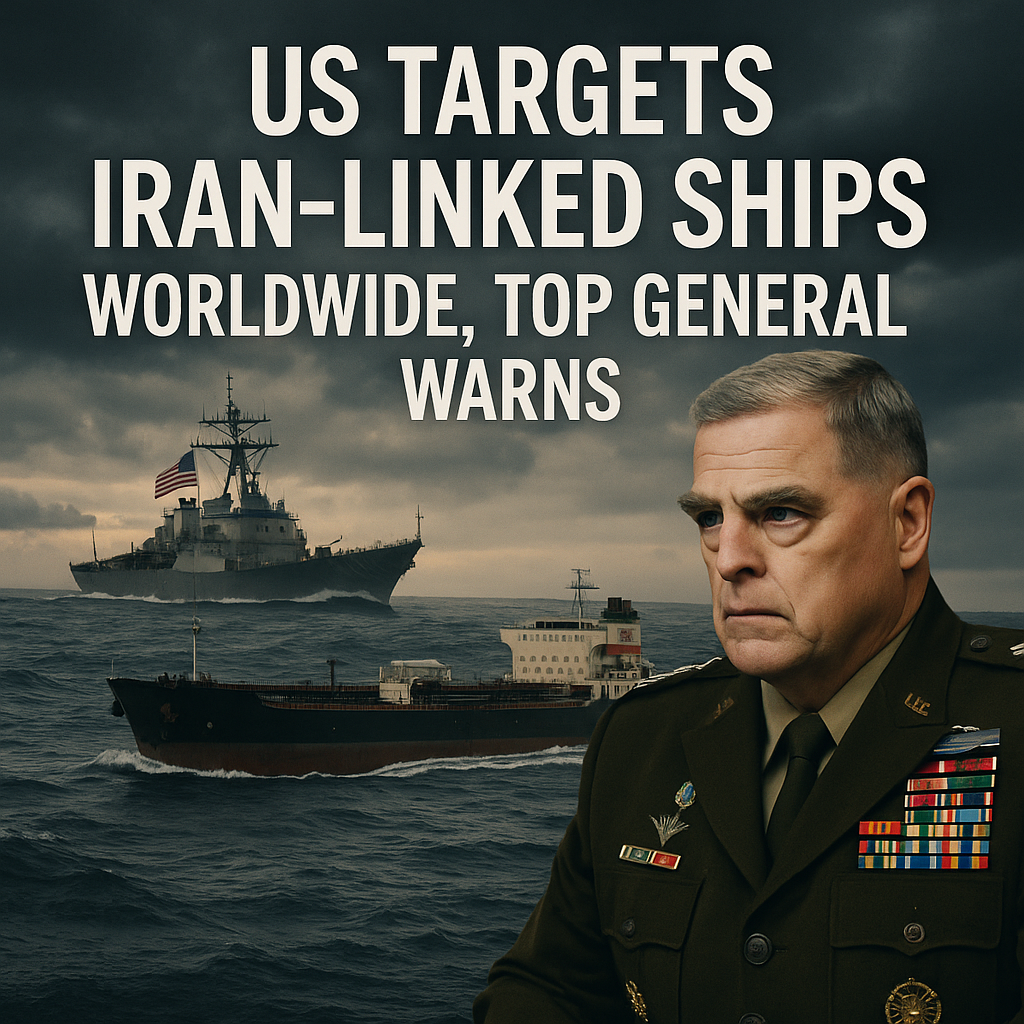
US Targets Iran-Linked Ships Worldwide, Top General Warns

The US Targets Iran-Linked Ships Worldwide: A Complex Geopolitical Landscape
Tensions in the Middle East have intensified as the U.S. has ramped up its efforts to target Iran-linked ships around the globe, a move underscored by recent statements from military officials. This shift highlights not only a growing concern over Iran’s maritime activities but also the intricate web of alliances and conflicts shaping global security.

Understanding the Current Situation
The backdrop to the U.S. actions is Iran’s increasing naval capabilities and its connection to various militant groups across the region, which have been described as a threat to international shipping lanes, particularly in strategic areas like the Strait of Hormuz. Recent reports indicate that U.S. naval forces, including ships equipped with advanced tracking technology, are actively monitoring and intercepting vessels suspected of being linked to Iran.


General Michael Kurilla, head of U.S. Central Command (CENTCOM), emphasized the need for vigilance in a recent briefing, warning that the U.S. is prepared to take action against any perceived threats. “The Iranian navy’s activities have the potential to be disruptive,” he stated, signaling that the U.S. might engage in more aggressive surveillance and enforcement operations.


Diverse Perspectives on U.S. Actions
Reactions to these U.S. military maneuvers are varied, reflecting a spectrum of opinions on how best to address perceived threats from Iran.
1. Support for U.S. Measures
Proponents of the U.S. stance argue that monitoring and potentially intercepting Iranian vessels is essential for maintaining maritime security and protecting allies in the region. The U.S. views this as a proactive measure to deter aggression and prevent escalation, particularly given Iran’s history of seizing foreign ships alleged to be violating sanctions. This viewpoint is further supported by claims that Iranian support for proxy groups could destabilize neighboring countries, leading to broader conflicts.
2. Criticism of Escalation
On the other hand, critics argue that increasing military presence and aggressive posturing could exacerbate tensions, leading to unintended confrontations. Some analysts caution that provocative actions may play into the hands of hard-liners within Iran, fueling anti-Western sentiment and reinforcing the narrative of Western aggression. The delicate nature of U.S.-Iran relations necessitates a balanced approach that prioritizes diplomatic engagement rather than military confrontation.
The Broader Geopolitical Implications
The U.S. actions against Iran-linked ships carry significant implications for global trade and diplomatic relations:
– Impact on Global Shipping
The Strait of Hormuz is a critical chokepoint for oil transportation, with a substantial percentage of the world’s oil passing through this narrow passage. Any escalation that disrupts shipping flows could have direct repercussions on global oil prices and economic stability. The U.S. must carefully navigate its military tactics to avoid creating a situation that could lead to wider conflict.
– Regional Alliances and Diplomacy
The geopolitical landscape is further complicated by the interests of other regional players such as Saudi Arabia and Israel, both of whom view Iran as a significant threat. Their backing of U.S. initiatives might offer short-term benefits but could also entrench sectarian divisions in the Middle East. Simultaneously, forces advocating for a diplomatic resolution warn that isolating Iran might push it closer to adversarial nations like Russia and China.
Navigating Forward: A Call for Diplomacy
In light of the complexities involved, while the U.S. military’s objective to monitor and secure against potential threats is clear, a dual strategy incorporating diplomacy is essential. Engaging Iran in dialogue while maintaining military readiness can potentially de-escalate tensions.
Recent history suggests that communication may pave the way for mutual agreements that prioritize stability without compromising security interests. Diplomatic channels could help not only in reducing immediate military threats but also in laying the groundwork for a longer-term resolution—an outcome that benefits all parties involved.
In conclusion, the U.S. targeting of Iran-linked ships exemplifies the intricate balance between security and diplomacy in contemporary global relations. As military leaders express warnings and strategies evolve, the need for a comprehensive approach that includes dialogue alongside military action becomes increasingly vital. Balancing these elements could ultimately lead to a more stable and secure geopolitical landscape.















