
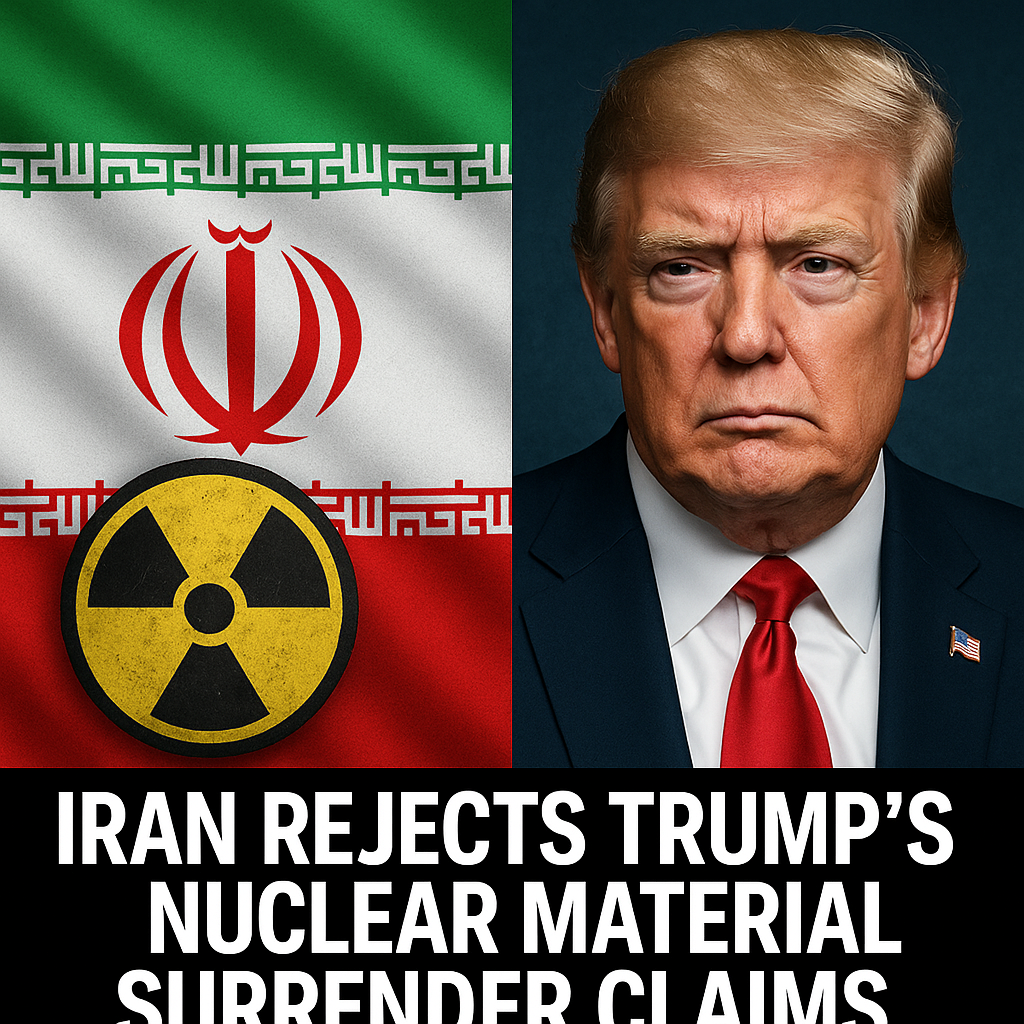
Iran Rejects Trump’s Nuclear Material Surrender Claims

Iran Rejects Trump’s Nuclear Material Surrender Claims: A Complex Perspective
Iran’s recent rebuttal of former President Donald Trump’s claims regarding a deal to surrender nuclear material has stirred the geopolitical pot. This development sheds light on the complex dynamics surrounding Iran’s nuclear program and its international perception. The situation remains multifaceted, with implications reaching beyond mere statements from political figures.

A Clash of Statements and Perspectives
Iran’s leadership firmly rejected Trump’s assertions, deeming them as politically motivated fabrications aimed at garnering support. Official statements from Tehran emphasized that there was never any agreement regarding the surrender of nuclear material, labeling the claims as an attempt to mislead the public and shift focus from domestic issues. Such denials illustrate Iran’s commitment to maintaining its sovereignty and narrative despite outside pressures.


Conversely, Trump’s comments, which seem to suggest an agreement during his administration, reflect a more contentious interpretation of the events that transpired during negotiations surrounding the Joint Comprehensive Plan of Action (JCPOA). Supporters of the former president argue that his approach—marked by maximum pressure and strategic posture—was necessary to curb Iran’s nuclear ambitions and negotiate from a position of strength. This discourse illuminates two contrasting narratives: one of diplomatic negotiation and another rooted in mistrust and geopolitical maneuvering.


Diverging Viewpoints: Analysis and Implications
The contrasting perceptions emerge from the broader implications of Iran’s nuclear program. Proponents of Iran’s assertiveness argue that the country has a legitimate right to its nuclear pursuits, emphasizing that its program is intended for peaceful purposes. In their view, international scrutiny and accusations are often used as tools for geopolitical dominance by Western nations, particularly the United States.
On the other hand, critics highlight Iran’s past actions and lack of transparency, which have fueled international concerns about its intentions. The legacy of Iran’s nuclear program dates back decades and includes incidents that have raised alarms among global observers. The 2015 JCPOA, which aimed to curtail Iran’s nuclear capability in exchange for sanction relief, is an example of how fragmented global perceptions can be. The U.S. withdrawal from the deal in 2018 under Trump’s administration further complicated the dialogue, exacerbating mistrust on both sides.
– U.S. Perspective: The U.S. maintains that its position is justified, arguing that Iran’s engaging in nuclear enrichment poses a significant threat to global security. The idea of holding Iran accountable for its actions, in the eyes of the U.S. government, underscores the perceived need for strict oversight and compliance.
– Iranian Perspective: Conversely, Iranian officials assert their right to pursue nuclear technology, viewing it as a sovereign issue unrelated to foreign dictates. They argue that mistrust and historical grievances form part of the root cause of the current impasse.
The Road Ahead: Uncertainty and Potential Outcomes
The future of Iran’s nuclear program remains uncertain, particularly given the escalating rhetoric from both sides. Despite efforts toward dialogue, the polarizing viewpoints between Iran and the U.S. leave little room for compromise. The rejection of Trump’s claims indicates a steadfast stance by Iran; however, it also underlines the intricate nature of international relations and negotiation tactics.
Currently, there are multiple pathways that could evolve from this scenario:
– Renewed Diplomatic Efforts: There remains the possibility of renewed engagement between Iran and world powers. If effective dialogue can be reopened, it may pave the way for a more cohesive approach to managing nuclear proliferation.
– Escalation of Tensions: On the flip side, continued hostility and refusal to acknowledge each other’s perspectives could lead to further escalations. Increased sanctions or military posturing might ensue, making diplomatic resolutions more challenging.
– Public Memory and Perception: Furthermore, the impact of public perception cannot be ignored. How these developments are interpreted by citizens in both Iran and the U.S. will shape future negotiations and relationships. Misinformation and political narratives can significantly influence public support for policymakers.
As geopolitics continues to evolve, addressing the core issues of trust, transparency, and historical context will be crucial. An open dialogue based on mutual understanding may offer the best chance at finding a resolution that serves not just the interests of the powerful but also the broader global community.
In the meantime, the world watches closely as Iran and the U.S. navigate this complex landscape, grappling with the legacy of past decisions while weighing the potential paths forward.















