
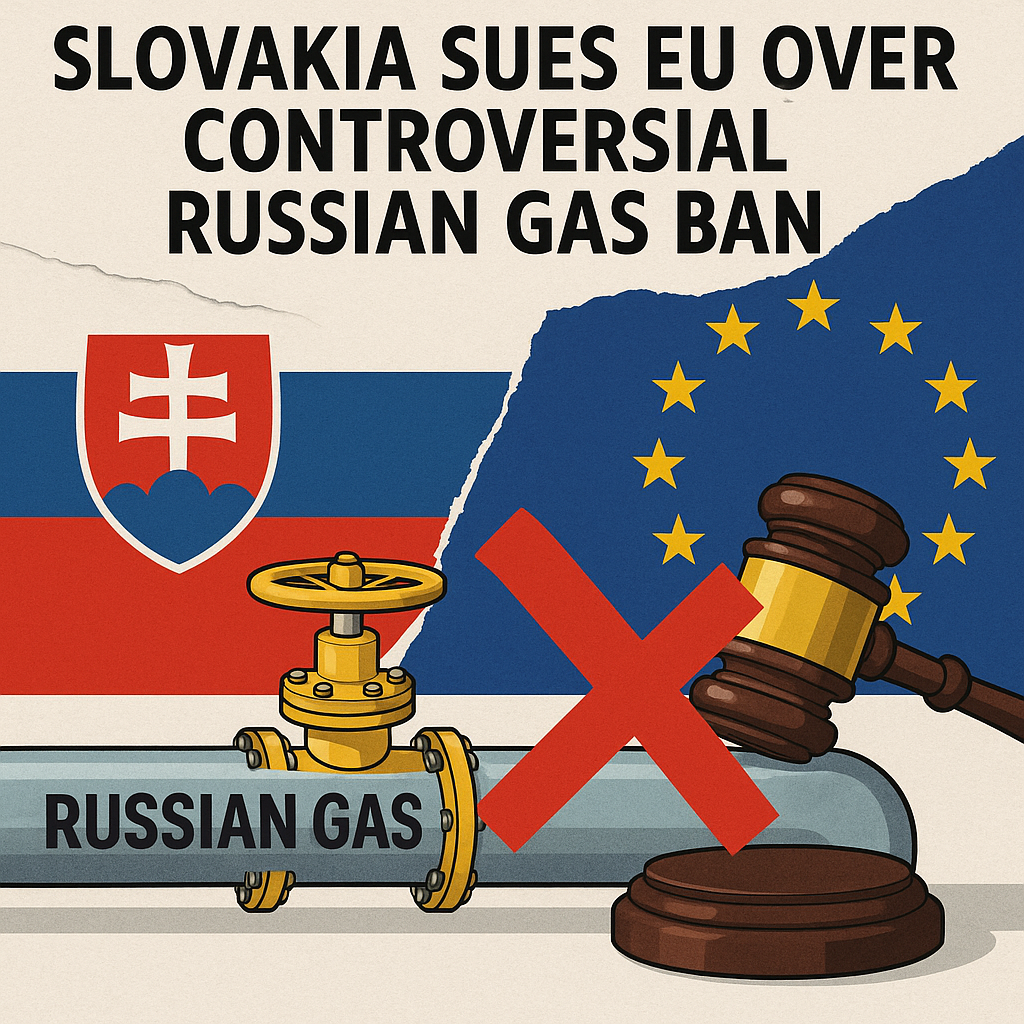
Slovakia Sues EU Over Controversial Russian Gas Ban

Slovakia Sues EU Over Controversial Russian Gas Ban
The ongoing geopolitical tensions surrounding energy supplies in Europe have intensified with Slovakia’s decision to sue the European Union (EU) over its controversial ban on Russian gas imports. As nations grapple with the ramifications of this ban, Slovak officials assert that the measure disproportionately impacts their economy, raising questions about fairness and the EU’s collective policies.

Understanding Slovakia’s Position
Slovakia, highly dependent on Russian gas for its energy needs, has argued that the gas ban endangers its economic stability. According to reports from various sources, including RT News and Al Jazeera, Slovakia’s government claims that the abrupt halt in gas supplies could lead to severe economic consequences, particularly for its industries and households.


Economic Vulnerability
Slovakia’s reliance on Russian gas is significant, with estimates indicating that over 80% of its gas imports traditionally came from Russia. This dependency makes the country particularly susceptible to energy market fluctuations and political decisions made in Brussels. The Slovak government argues that the EU’s decision overlooked the unique challenges faced by smaller member states. They contend that while energy independence is a laudable goal, it should be pursued in a manner that does not jeopardize the economic welfare of specific nations.


Proponents of the suit argue that the EU should provide more tailored solutions for countries like Slovakia, which may not possess the same energy diversification capabilities as larger member states. During a recent press conference, Slovak Energy Minister Richard Sulík stated, “We are committed to the EU’s energy goals, but this should not come at the expense of our economy.”
The EU’s Perspective
From the EU’s point of view, the ban on Russian gas is primarily a response to geopolitics, notably Russia’s actions in the ongoing conflict in Ukraine. Many EU officials argue that the ban is necessary to diminish Europe’s reliance on Russian energy sources and enhance energy security. They emphasize that the move is part of a broader strategy aimed at transitioning to renewable energy sources while safeguarding the long-term economic stability of the bloc as a whole.
According to some economic analysts quoted by Sky News, transitioning away from Russian gas can ultimately stimulate investment in alternative energy solutions and create new jobs in the green energy sector. The EU has painted the ban as a crucial step toward fostering a collective future that prioritizes energy independence and sustainability.
Diverging Opinions
While Slovakia’s lawsuit highlights the specific grievances of one member state, it also underscores a more extensive debate within the EU regarding energy policy. Competing narratives emerge, with some smaller nations advocating for a more gradual transition away from Russian energy, while larger economies may push for swift and decisive action.
The European Commission has been largely firm in its stance on the ban, arguing that all member states should be part of a united front. However, dissent voices grow within the ranks of less economically robust states. Dutch energy and economic experts have pointed out that such approaches might exacerbate inequalities among member states, particularly those like Slovakia that are less equipped to shift their energy sourcing quickly.
What Lies Ahead?
As Slovakia moves forward with its lawsuit, the outcome could set important precedents for how the EU addresses internal disparities among its members concerning energy policies. If successful, Slovakia’s case might encourage other member states to voice their concerns more robustly and demand re-evaluations of policies that equally affect their economies.
Both advocates and critics of the gas ban will continue to debate the viability and ethics of such measures in the coming months, especially as Europe heads into what could be a challenging winter in terms of energy consumption. The resolution to this legal challenge may not only redefine Slovakia’s energy strategy but also shape broader EU energy policy for years to come.
In conclusion, Slovakia’s lawsuit encapsulates the complexities of navigating energy policies in a coalition of diverse nations, each with unique economic landscapes and social ramifications. Balancing collective action with individual needs remains one of the EU’s most significant challenges as it seeks to navigate the turbulent waters of international relations and energy dependency.















