
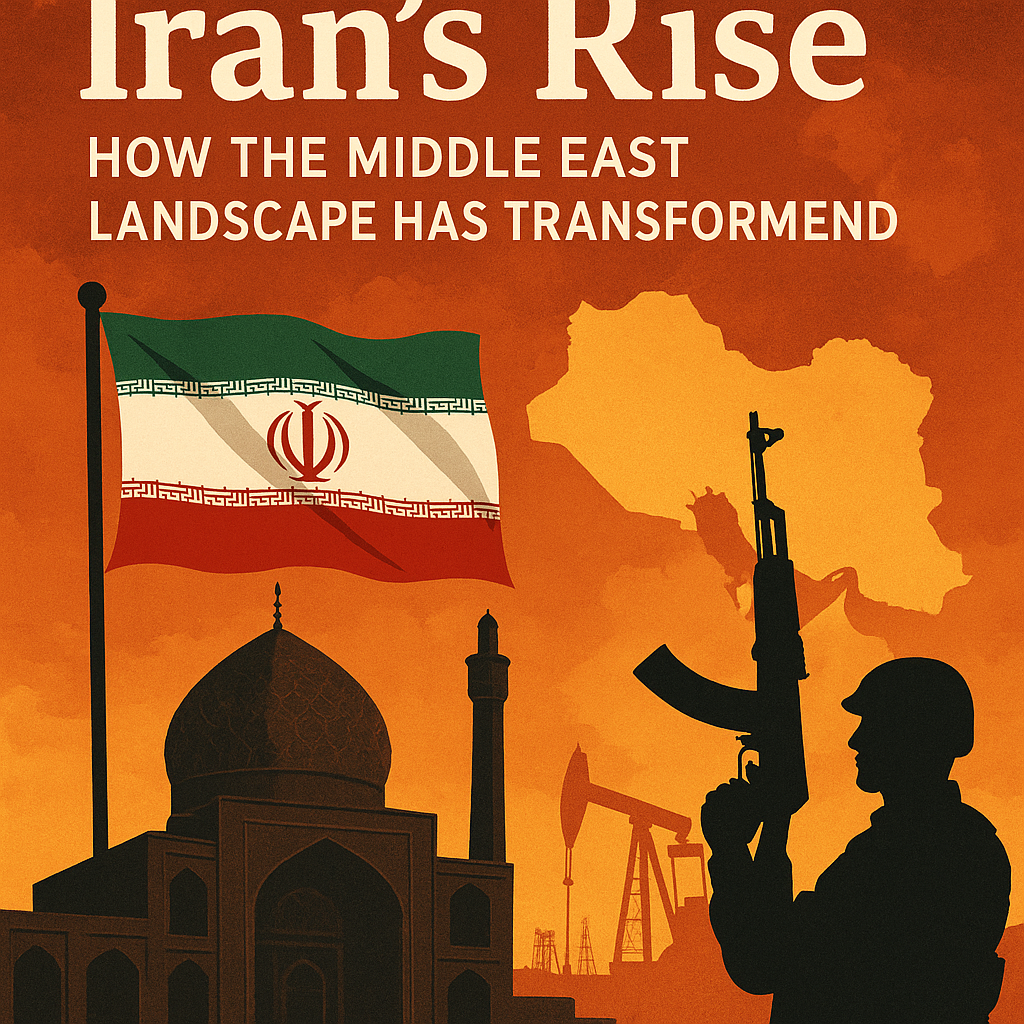
Iran’s Rise: How the Middle East Landscape Has Transformed

Iran’s Rise: Transforming the Middle East Landscape
Iran’s ascent as a regional power has significantly altered the geopolitical landscape of the Middle East. Over the past few decades, this transformation has been marked by complex interplay among various nations, ideologies, and conflicts, reshaping alliances and rivalries in unprecedented ways.

A Shifting Power Balance
Historically, Iran has wielded a considerable influence over its neighbors, predominantly through ideological and political spheres. The 1979 Iranian Revolution not only heralded the establishment of the Islamic Republic but also set the stage for Iran’s intervention in regional crises, often positioning itself as a champion of anti-imperialist ideologies.


Recent analyses, such as those from RT, highlight the pivotal moments that shape Iran’s regional presence. For instance, the U.S. withdrawal from Iraq in 2011 allowed Iran to forge stronger ties with Shiite factions in Baghdad, thereby solidifying its influence in Iraq. This has led to a surge in Iranian-supported militias, creating an axis of power that spans from Iran, through Iraq, to Syria and Lebanon.


On the contrary, Al Jazeera emphasizes the more aggressive responses to this rise, particularly from Gulf states and Israel. The U.S. and its allies have increasingly viewed Iran’s influence as a threat. The normalization of relations between Israel and several Arab nations under the Abraham Accords was partly aimed at counterbalancing Iran’s regional ambitions. This complex interplay suggests a multi-faceted power dynamic, where alliances are constantly shifting and traditional enmities are re-evaluated.
The Role of Proxy Conflicts
The ongoing civil war in Syria is a prime example of how Iran employs proxy forces to extend its influence. Iran has played a crucial role in supporting the Assad regime, enabling it to regain significant territories lost to opposition groups. This support is not merely symbolic; it has extensive implications for regional security. Iranian troops and allied militia groups operate effectively along Israel’s borders, creating a persistent flashpoint for potential conflict.
Conversely, Saudi Arabia and its Arab allies have sought to counter this influence through military interventions, most notably in Yemen. Here, the conflict has been framed as a proxy war between Iranian-backed Houthi rebels and a Saudi-led coalition. The struggle has exacerbated regional tensions and human suffering, making it a focal point of international concern.
Both sides are locked in a cycle that perpetuates instability, meaning that while Iran’s rise may offer it more regional clout, it simultaneously attracts backlash from its neighbors. Thus, despite Iran’s apparent ascendancy, the outcomes remain uncertain as regional rivalries escalate.
Economic Factors at Play
The transformation of Iran’s status also involves significant economic dimensions. Economic sanctions, especially those imposed by the U.S., have undoubtedly strained Iran’s economy. However, some experts argue that these sanctions have inadvertently strengthened Iran’s resolve and its commitment to self-sufficiency. Reports indicate that Iran has sought to bolster its economic ties with neighboring countries, particularly in sectors like energy and trade.
For example, Iran’s extensive natural gas reserves present an opportunity for collaboration (and potential rivalry) with nations such as Iraq and Turkey. While some regional players have engaged in economic partnerships, disagreements over oil production levels have occasionally undermined these relationships. The question emerges: can economic interdependence coexist with political rivalry?
Conclusion: A Complex Future
The complexities surrounding Iran’s rise reveal a tapestry of competing narratives and interests. While some portray Iran as a stabilizing force advocating for regional autonomy, others see it as a destabilizing entity threatening the security equilibrium in the Middle East. The reality is much more nuanced; Iran’s actions serve both as a response to its circumstances and as a catalyst for wider regional conflict.
In this fluid landscape, it remains vital for global powers not only to understand Iran’s influence but also to consider the broader implications of their policies in the region. Whether through dialogues for peace, economic cooperation, or military preparedness, the choices made today will indelibly shape the Middle East’s future. As this pivotal moment unfolds, the consequences of Iran’s rise will echo for generations to come, necessitating a continued and nuanced engagement from both regional and global actors.















