
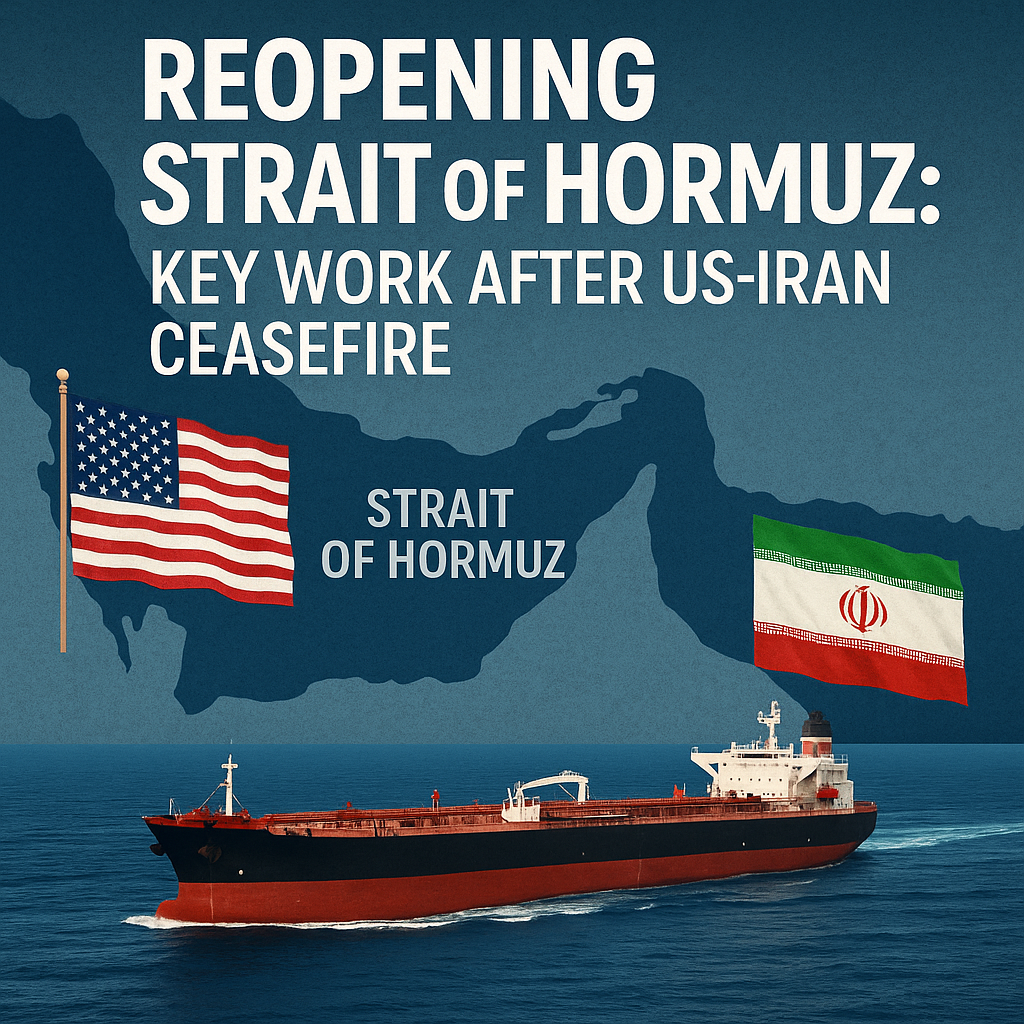
Reopening Strait of Hormuz: Key Work After US-Iran Ceasefire

Reopening the Strait of Hormuz: Key Work After US-Iran Ceasefire
The reopening of the Strait of Hormuz is crucial following the recent US-Iran ceasefire. This strategic passageway, through which a significant percentage of the world’s oil supply flows, is not merely a regional issue but a global concern, impacting energy prices and geopolitical stability.

The Strategic Importance of the Strait of Hormuz
The Strait of Hormuz is a narrow waterway connecting the Persian Gulf with the Gulf of Oman, serving as a vital route for oil exports from several major producers, including Saudi Arabia, Iraq, and Iran. Approximately 20% of the global oil consumption transits through this corridor, making its security paramount to energy markets and international economies.


Recent tensions between the US and Iran have brought the Strait into the spotlight, particularly following allegations of various provocations, including harassment of commercial vessels and military drills by Iranian forces. Experts emphasize that ensuring freedom of navigation in this area is critical, not only for oil-exporting nations but also for global stability.


Diverse Perspectives on the Reopening Efforts
The ceasefire between the US and Iran has raised hopes for a more stable environment in the region, but skepticism persists about the viability of reopening the Strait of Hormuz. Al Jazeera reports that officials from both sides have indicated a need for significant diplomatic work to alleviate tensions. They suggest a multipronged approach that includes enhanced dialogue and cooperation to rebuild trust.
Conversely, outlets like RT highlight that Iran’s military capabilities, showcased through increased naval exercises, indicate a significant commitment to maintaining its influence over the waterway. Iran perceives the Strait as a national security priority, especially following a history of sanctions and military confrontations with the US. This perspective suggests that any reopening efforts might face considerable resistance unless they address Iranian security concerns.
According to Sky News, there are calls from international bodies to ensure that navigation in the Strait is safeguarded under international law. Such voices advocate for a collaborative framework that involves key stakeholders—including not just Iran and the US, but also Saudi Arabia and regional allies—to craft a balanced solution that respects the sovereignty of nations while ensuring free passage for commercial vessels.
Challenges Ahead in Diplomatic Negotiations
Despite the optimistic outlook following the ceasefire, reopening the Strait of Hormuz will not be straightforward. Various factors complicate the situation:
– Internal Iranian Politics: Any concessions from Iran might face backlash domestically, particularly from hardliners who oppose US engagement.
– US Military Presence: The continued presence of US forces in the region could exacerbate tensions and create an environment of mistrust, as Iran views this as a direct threat to its sovereignty.
– Global Energy Markets: Fluctuations in oil prices due to geopolitical instability can have far-reaching ramifications. Stakeholders must consider the economic implications of prolonged uncertainty in the Strait.
The Path Forward: Seeking Balance and Cooperation
Experts suggest that for a sustainable resolution, both sides will need to prioritize dialogue and set a framework for mutual respect. Initiatives could include:
– Bilateral Discussions: Direct talks between the US and Iran to clarify expectations and security guarantees could reduce misunderstandings.
– Regional Alliances: Engaging neighboring countries in discussions about shared security interests in the Strait could foster a more cooperative atmosphere.
– Monitoring and Enforcement: Establishing international monitoring mechanisms to ensure compliance with any agreements made will be essential for building trust.
The complexity of reopening the Strait of Hormuz lies in the need for a nuanced understanding of the geopolitical landscape. As international actors weigh their interests against local realities, the hope is that dialogue can overcome discord. Achieving a lasting peace will depend on a multi-stakeholder approach that respects the interests of all involved, particularly in addressing the longstanding grievances that have historically defined US-Iran relations.
In conclusion, while progress is possible following the ceasefire, the road to reopening the Strait of Hormuz requires careful navigation of diplomatic waters. Whether the global community can foster an environment conducive to cooperative engagement remains an open question, but the urgency of the situation cannot be overstated. The Strait’s significance to global stability and energy security mandates collective efforts towards a peaceful resolution.















