
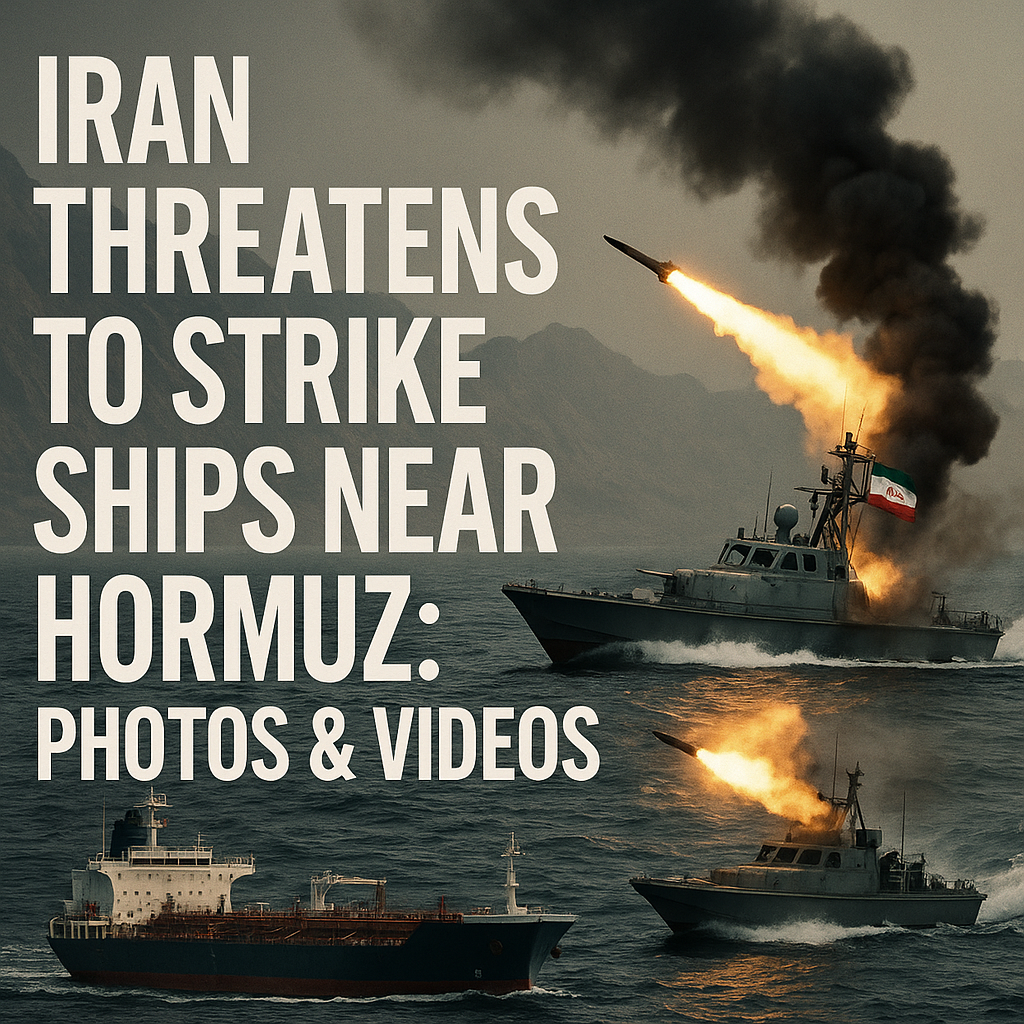
Iran Threatens to Strike Ships Near Hormuz: Photos & Videos

Iran Threatens to Strike Ships Near Hormuz: A Complex Conundrum
Iran’s recent threats to target vessels in the Strait of Hormuz signal heightened tensions in a strategically vital waterway. This situation draws attention not just to military actions but also to a complex web of geopolitical, economic, and security-related implications.

Iran’s Position: Defending National Interests
Iran maintains that its threats are a response to perceived provocations from foreign powers, particularly the U.S. According to the reports from RT, Iranian officials accused the U.S. of engaging in what they describe as “piracy” in the region. This sentiment is echoed in various articles covering the topic, where Iran expresses its commitment to safeguard its territorial waters against what it calls foreign aggression.


Essentially, Iran views the Strait of Hormuz—which is crucial for oil trade and energy security—as a red line. The Iranian government’s rhetoric often emphasizes that any disruption in the region’s shipping routes could have dire consequences not just for Iran but also for global energy markets.


The strategic importance of the Strait cannot be overstated, as it serves as a conduit for approximately 20% of the world’s oil supply. Given this economic significance, Iran argues that its military capabilities are essential for ensuring the security of its national interests.
U.S. and Allied Responses: Stakes and Strategies
The United States and its allies have a starkly different perspective on Iran’s threats, labeling them as destabilizing actions that endanger not just maritime activities but also regional peace. According to Sky News, U.S. military operations in the Gulf have included increased surveillance and naval deployments to counter what they term Iran’s aggressive posturing.
The U.S. has historically taken a hardline stance against Iran, particularly in the context of its nuclear ambitions and regional military influence. The consensus among U.S.-aligned forces is that ensuring the free passage of vessels is paramount and that Iran’s threats could provoke a wider conflict.
However, there’s a notable diversity in reaction among U.S. allies. While some NATO countries openly support U.S. initiatives to counter Iran, others remain cautious and advocate for diplomatic solutions to de-escalate tensions. Al Jazeera reports that European nations are increasingly advocating for dialogue over military confrontation, fearing that such conflicts could spiral into more extensive, unintended warfare.
The Complexity of Maritime Security
Maritime security in the Strait of Hormuz exemplifies the intertwining of economic interests and national security concerns. On one hand, Iran’s insistence on using military force to defend its interests raises questions about the risks posed to international shipping. On the other hand, the collective response from the U.S. and its allies underscores a commitment to maintaining freedom of navigation—a principle that is central to international law and global trade.
Beyond the Strait: Implications for Global Energy Markets
The uncertainty surrounding Iran’s threats reverberates through global energy markets. Any rise in tensions typically leads to spikes in oil prices, demonstrating how interconnected geopolitics and economics can be. The potential for conflict, especially in a region so critical to oil supply, is a concern not just for the countries directly involved but for economies worldwide.
In recent moves, officials from both Iran and the U.S. have indicated a willingness to negotiate under specific circumstances. For example, while Iranian leaders have been vocal about their military readiness, they also recognize the economic pressures stemming from sanctions. Some analysts speculate that this creates an opening for dialogue, despite the persisting threats.
A Path Forward: Negotiation or Escalation?
As tensions persist, the global community faces a pressing question: how can long-term peace in the Strait of Hormuz be achieved? The divergent perspectives on Iran’s actions leave a cloud of uncertainty hanging over future developments. On one side, Iran’s defenses of its territorial waters highlight a sentiment of nationalism, while the U.S. approach underscores a commitment to upholding international maritime norms.
Key to resolving these tensions will be international diplomatic efforts that consider the views and interests of all parties involved. Rather than solely focusing on military posturing, a concerted effort aimed at unified negotiations could pave the way for de-escalation. The question remains whether the U.S. and its allies are willing to balance their security strategies with diplomatic avenues.
Conclusion: Navigating a Treacherous Waterscape
Iran’s threats to strike ships near Hormuz are emblematic of broader geopolitical struggles that encompass national sovereignty, economic interests, and military strategy. The balance of power in this vital region hinges not only on military readiness but also on diplomatic engagement. As various nations weigh their options, the hope remains that reason prevails over aggression, guiding everyone towards a more secure and stable future.















