Israel’s Largest West Bank Settlement Expansion in Decades

Israel’s Largest West Bank Settlement Expansion in Decades
Israel’s announcement of the largest expansion of West Bank settlements in decades has ignited significant debate both domestically and internationally. This expansion, taking place amid ongoing tensions and a complex geopolitical landscape, raises critical questions about the implications for peace, security, and human rights in the region.

The Context of Settlement Expansion
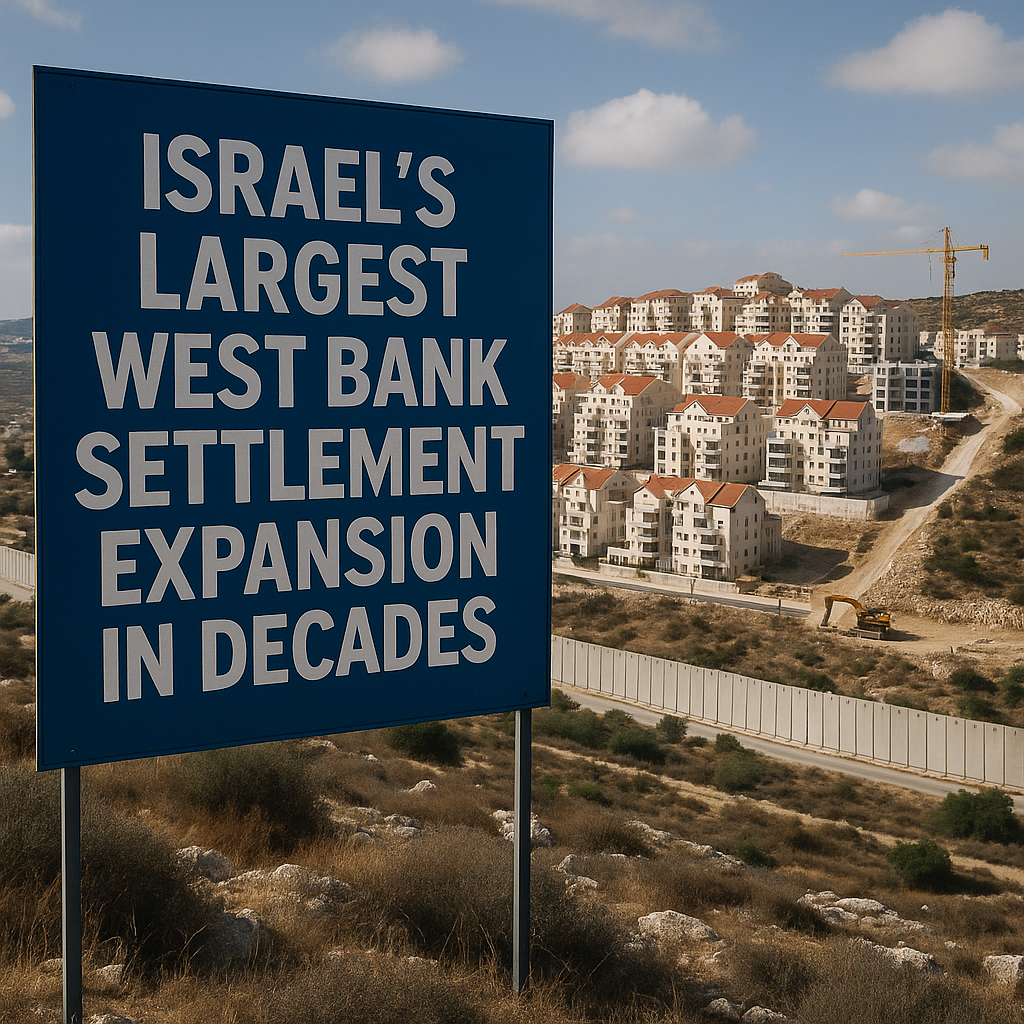
Settlement expansion has been a contentious issue at the heart of the Israeli-Palestinian conflict for years. According to reports from multiple sources, the Israeli government recently approved plans for thousands of new housing units in various settlements across the West Bank. This move marks a substantial increase in settlement activity, sparking protests from Palestinian leaders and concern among the international community.


The expansion aligns with a broader trend in Israeli policy under the current government, which has shown a willingness to bolster its presence in contested areas. Data from Al Jazeera indicates that this specific expansion could see the construction of around 10,000 new housing units, the largest such increase in over a decade. Proponents of the settlements argue that they are essential for Israel’s security and rightful claim to the land. However, critics assert that such expansions undermine peace efforts and violate international law.


Diverse Perspectives on the Expansion
The international reaction to the settlement expansion has been markedly divided. On one side, many Israeli officials and political advocates assert that these settlements are legitimate extensions of Israeli sovereignty. A spokesperson for the Israeli government stated, “These housing units are crucial for the growth of our communities and our security.” This perspective frames the expansion as a necessary step towards population stability and security in a volatile region.
Conversely, Palestinian officials and global human rights organizations have decried the expansion as an illegal land grab that jeopardizes the potential for a two-state solution. According to reports from RT, Palestinian Authority Prime Minister Mohammad Shtayyeh condemned the plans, stating that they amount to “a war on the Palestinian people.” Human Rights Watch and other NGOs argue that expanding settlements violates the Fourth Geneva Convention, which prohibits an occupying power from transferring its civilian population into the territory it occupies.
The Broader Implications of Expansion
This latest round of settlement expansion could have far-reaching effects, impacting everything from local socio-economic dynamics to international diplomatic relations. Settlement growth often leads to increased tensions on the ground, with both Israelis and Palestinians facing heightened security risks. Incidents of violence have historically increased in response to such expansions as the two groups vie for control over land and resources.
Moreover, the expansion’s impact on peace negotiations is another critical dimension. Many analysts argue that these developments contribute to an increasingly fragmented landscape, making it more challenging to achieve a resolution to the conflict. The possibility of a contiguous Palestinian state becomes less feasible if settlement growth continues unchecked. Political analyst and commentator Avi Shlaim remarked, “Every single settlement added takes us further away from a viable Palestinian state.”
A Call for Dialogue and Peaceful Resolution
The prospects for a constructive dialogue amid heightened tensions appear daunting. While the Israeli government remains steadfast in its commitment to expanding settlements, Palestinian leaders are calling for greater international intervention to hold Israel accountable for its actions. The United States and the European Union have both expressed concerns regarding the trajectory of settlement policies, emphasizing the need for a renewed commitment to the peace process.
To foster understanding and progress, it may be essential for both sides to engage in dialogue that prioritizes human rights and mutual recognition. Peaceful coexistence requires more than political concessions; it demands a willingness to confront deep-seated narratives and grievances on both sides.
In conclusion, Israel’s largest West Bank settlement expansion in decades is not merely a housing issue; it encapsulates the broader challenges of a protracted conflict with profound historical roots. With diverse perspectives and implications at stake, finding a path towards sustainable peace will not only require negotiations but also a shift in how both parties—and the international community—perceive the intertwined narratives of security and sovereignty.