
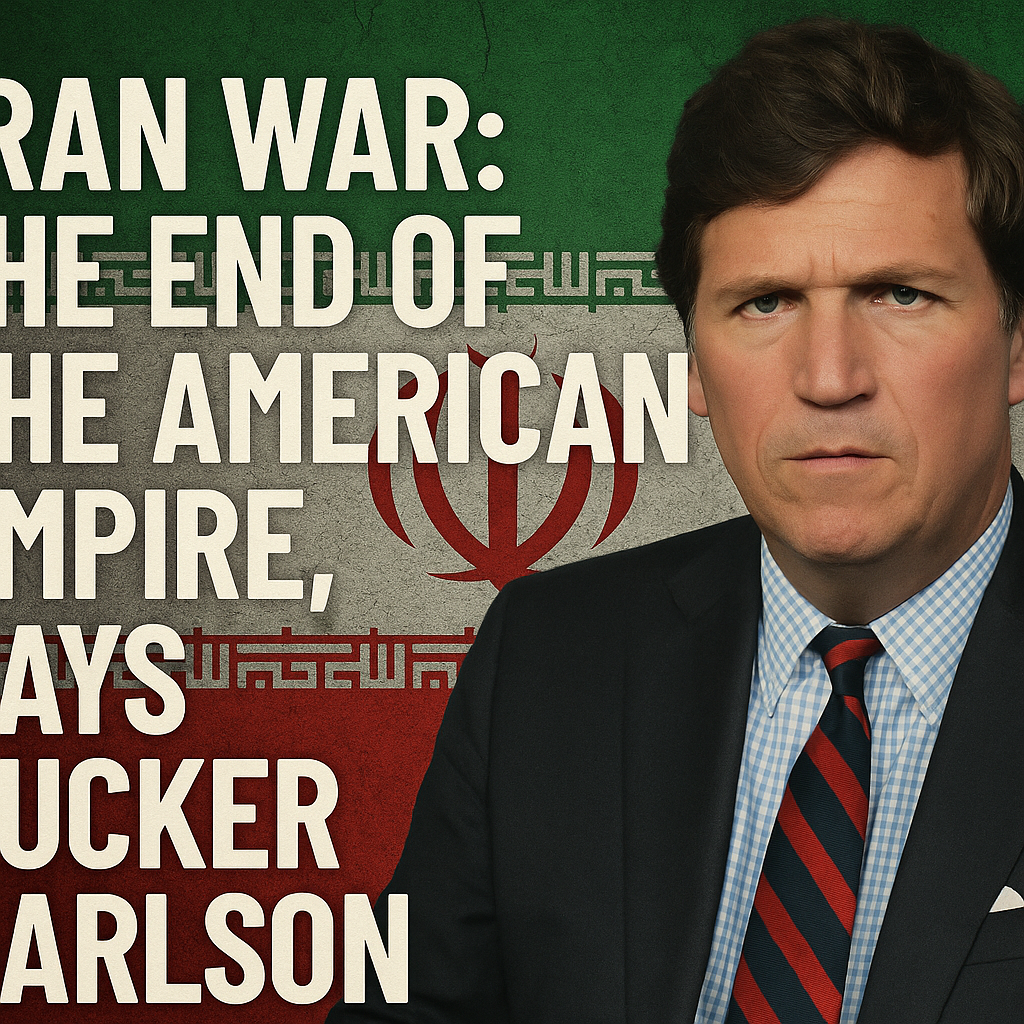
Iran War: The End of the American Empire, Says Tucker Carlson

The Complex Narrative of the Iran Conflict: Tucker Carlson’s Take on the American Empire
In recent discussions on foreign policy, the viewpoint that the Iran conflict may signify the end of the American Empire has gained traction, particularly among commentators like Tucker Carlson. This assertion raises pivotal questions about America’s role in global affairs, its military engagements, and the implications for its influence around the world.

Historical Context of American Involvement in Iran
To understand Carlson’s claim, we need to delve deeper into the history of American involvement in Iran—a relationship marred by political upheaval and military interventions. The U.S. first became heavily involved in Iran during the Cold War, undertaking efforts to secure its interests in the resource-rich region. This included the 1953 coup to reinstate the Shah, an action that ultimately led to widespread discontent among Iranians and laid the groundwork for the 1979 Islamic Revolution.


Since then, the United States has maintained a contentious relationship with Iran, characterized by mutual distrust and hostility. Events such as the Iran-Iraq War, the U.S. sanctions against Iran post-1979, and the more recent tensions that escalated following the Trump administration’s withdrawal from the Joint Comprehensive Plan of Action (JCPOA) have further complicated this dynamic.


Tucker Carlson’s Perspective: A Cultural and Political Lens
Carlson articulates a viewpoint that reflects a more isolationist stance, suggesting that continuous American military involvement in conflicts like those in the Middle East may be indicative of a broader decline in the nation’s global standing. He argues that the “end of the American Empire” could be marked by an inability to achieve meaningful outcomes in overseas conflicts, especially in volatile regions like Iran.
Critics of Carlson’s assertions point to the complexity of global geopolitics and how multifaceted relationships often resist simplification into a narrative of decline. For instance, while some news outlets, such as Al Jazeera, highlight ongoing U.S. diplomatic efforts and alliances that still provide leverage in international affairs, Carlson’s perspective underscores growing public sentiment against endless military engagement.
Contrasting Perspectives: A Global View
Interestingly, contrasting viewpoints emerge from various reliable sources on the possible implications of American military actions in Iran. Reports from Sky News indicate that the U.S. is still considered a significant player in Middle Eastern politics, albeit amid rising criticisms of its interventions. Supporters of American involvement argue it acts as a stabilizing force against threats like terrorism and authoritarian regimes. However, this position is countered by many who feel that U.S. interventions have often exacerbated instability rather than alleviating it.
Moreover, an analysis of the current geopolitical landscape reveals an evolving power dynamic. As Russia and China assert influence in the region, some analysts suggest that the traditional American approach may no longer suffice. Such shifts could support Carlson’s notion that the U.S. might be losing its grip on global leadership as emerging powers gain prominence.
Navigating the Future of U.S.-Iran Relations
The path forward concerning U.S.-Iran relations is fraught with uncertainty. While some believe that diplomatic engagement and renewed negotiations over nuclear capabilities could help mend ties, others remain skeptical about Iran’s commitment to any agreement. The enduring legacy of past grievances complicates any efforts aimed at reconciliation.
Moreover, public opinion in the United States appears to gradually favor a shift towards diplomacy rather than military intervention. As evidenced by recent surveys, a significant portion of the American populace expresses wariness about entering foreign conflicts, suggesting a pivot towards a more isolationist foreign policy. This cultural shift may lend credence to Carlson’s theories regarding the waning influence of the American Empire, as citizens increasingly advocate for prioritizing domestic issues over international entanglements.
Conclusion: A Multidimensional Outlook
In summary, Tucker Carlson’s statement that the Iran conflict may signify the end of the American Empire reveals a compelling narrative that encapsulates widespread anxieties about U.S. foreign policy. This perspective invites a broader discourse about America’s role in the world, the effectiveness of military interventions, and the shifting geopolitical tides influenced by emerging superpowers.
As the discourse continues, it remains vital to weigh diverse opinions and articulate a nuanced understanding of such complex topics. Given the fluidity of international relations, ongoing analysis and open dialogue will be essential in navigating the uncertain future of U.S.-Iran relations and the broader implications for the American Empire.















