
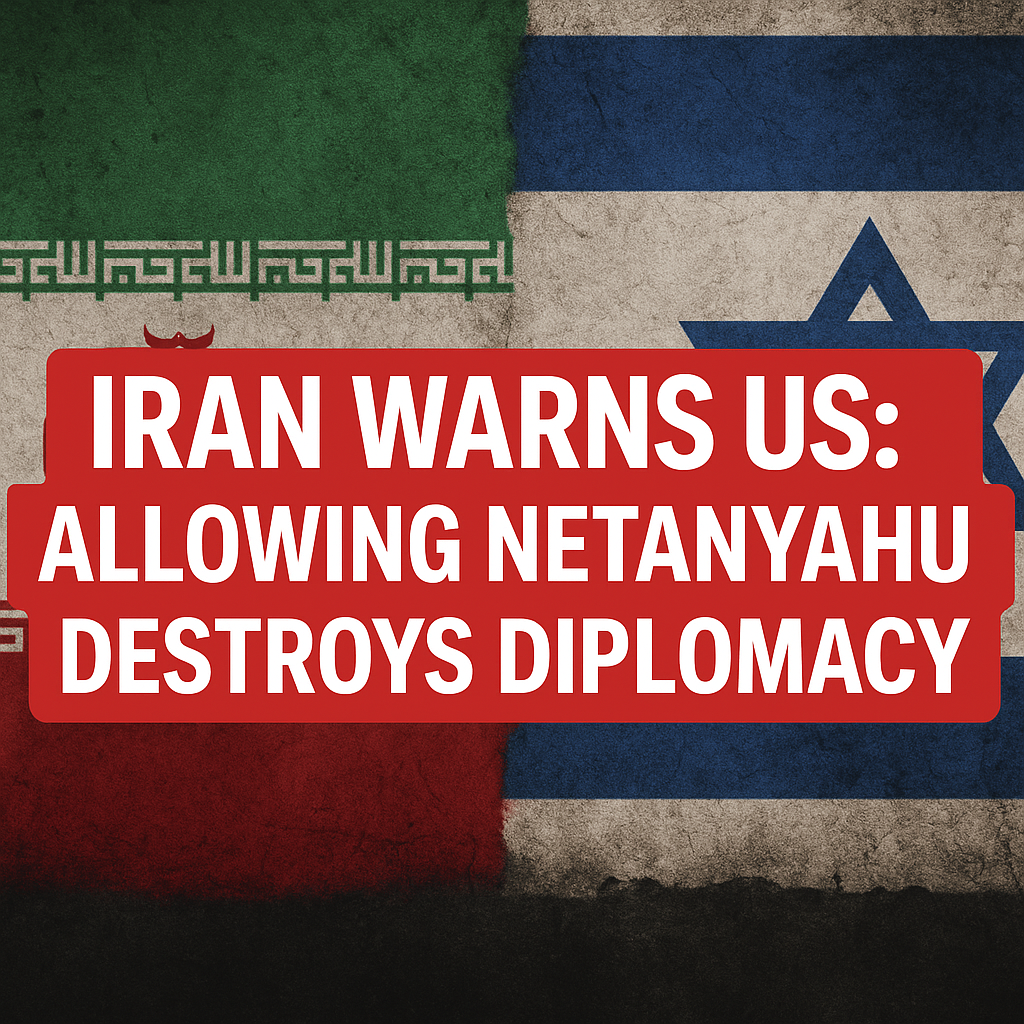
Iran Warns US: Allowing Netanyahu Destroys Diplomacy

Iran Warns US: Allowing Netanyahu Destroys Diplomacy
In recent discussions, Iran has expressed stern warnings towards the United States regarding its support for Israeli Prime Minister Benjamin Netanyahu. Iranian officials argue that enabling Netanyahu’s aggressive policies undermines efforts for diplomacy in the region. This perspective raises critical questions about the role of international alliances and their impact on broader geopolitical stability.

The Iranian Perspective: A Call for Caution
Iran’s strong rhetoric against Netanyahu is rooted in concerns over the Israeli administration’s approach to Palestine and regional partnerships. Iranian officials labeled the notion of U.S. support for Netanyahu as “dumb,” suggesting that it not only complicates diplomatic relations but also fuels tensions in an already volatile Middle East.


Key Takeaways from Iran’s Stance:
– Condemnation of Military Aggression: Iran accuses Netanyahu’s government of engaging in military actions that exacerbate tensions—particularly actions related to Palestinian territories.
– A Call for Diplomacy: Iranian foreign policy advocates for negotiations as a means to resolve ongoing conflicts, positioning itself as a potential mediator.
– Cultural and Religious Sentiments: The Iranian leadership frames the struggle with Israel not just as political but as a matter of religious identity, leveraging sentiments among its population to rally support against U.S. policies in the region.


Iranian officials warn that continued U.S. backing for a perceived aggressor leads to isolation and the dismantling of a potential diplomatic bridge in the region. They advocate for a more balanced U.S. approach that takes into consideration the plight of Palestinians and the broader geopolitical implications of supporting Israeli military actions.
The U.S. and Israeli Dynamics: A Complicated Relationship
Conversely, many U.S. analysts and political figures maintain that strong ties with Israel, particularly under Netanyahu’s leadership, are pivotal for American interests in the Middle East. They argue that Israel is a crucial ally in facing shared threats, including terrorism and Iranian influence in the region.
Key Points from the U.S. Perspective:
– Security Alliances: The U.S. sees Israel as a key ally in a strategically important region, allowing for a united front against common adversaries.
– Political Support for Netanyahu: Despite criticisms of Netanyahu’s policies, the American political landscape—including elements of both major parties—continues to support Israel’s right to self-defense.
– Advocacy for Peace Talks: Many U.S. officials still advocate for a two-state solution, desiring to balance support for Israel while acknowledging Palestinian grievances.
This dichotomy reflects a complex balancing act within U.S. foreign policy, where public support for Israel may overshadow pressing diplomatic needs and the realities on the ground for Palestinians. The challenge remains: can the U.S. effectively support its ally while promoting genuine dialogue among conflicting parties?
Diverging Views and Uncertainty Ahead
The contrasting narratives emerging from Iran and American perspectives highlight the multifaceted nature of Middle Eastern diplomacy. As tensions soar, the debate hinges on both the moral imperatives of supporting vulnerable populations and the strategic necessities of safeguarding national interests.
Key Considerations:
– The Influence of Domestic Politics: The U.S. political landscape is marked by polarizing views on foreign aid and military support for allies, complicating coherent responses to Iran’s warnings.
– Future Diplomatic Efforts: Potential negotiations or peace initiatives face obstacles not just from Iranian rhetoric, but also from entrenched views within the Israeli leadership.
While Iran calls for caution in U.S. support for Netanyahu, the growing divergence in policy priorities reflects an uncertainty that could hinder diplomatic channels. To navigate these challenges, stakeholders must engage in open dialogues that consider the historical context and cultural sensitivities at play.
In summary, the complexities of U.S.-Iran-Israel relations remain a critical narrative in international diplomacy. As Iran warns of the potential consequences of unwavering support for Netanyahu, the international community must grapple with the intertwined interests of security, diplomacy, and humanitarian concerns. Only through careful navigation and a commitment to dialogue can there be hope for lasting resolution in this intricate geopolitical landscape.















