
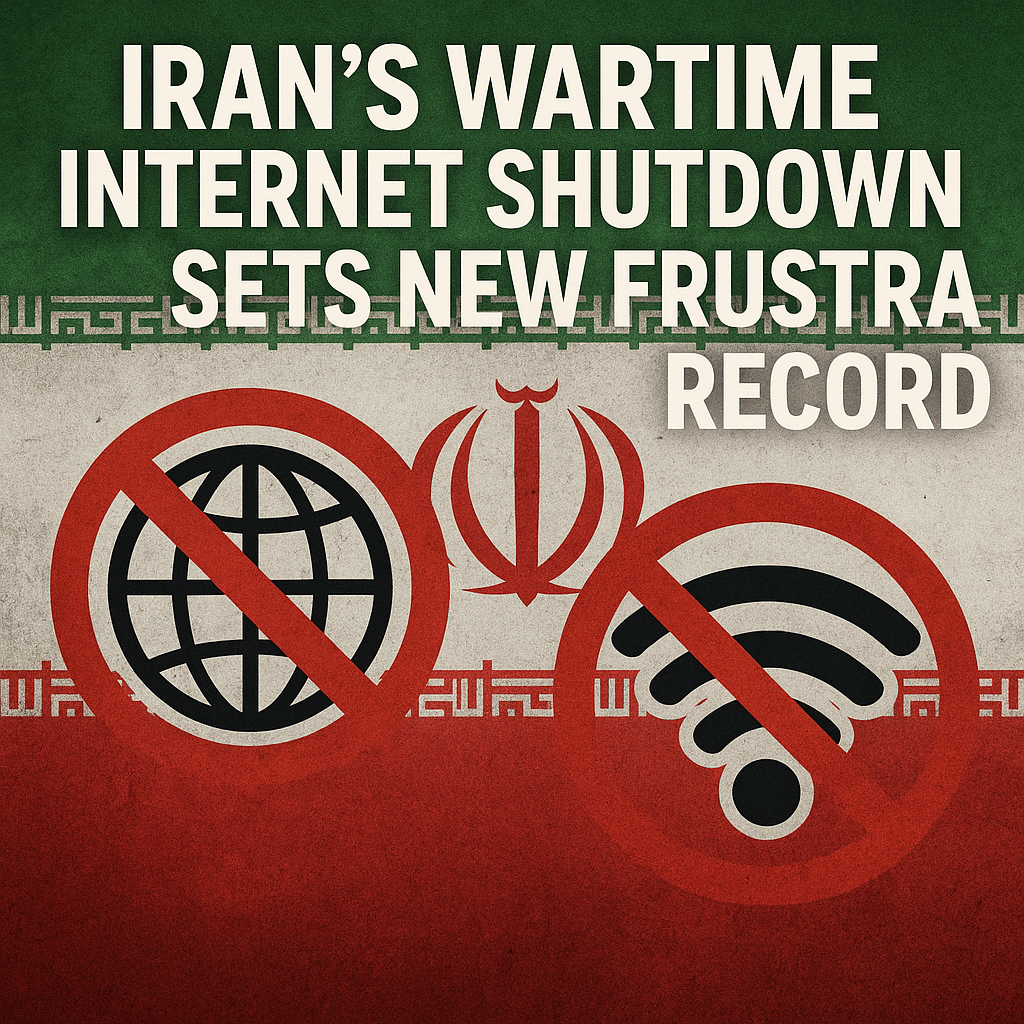
Iran’s Wartime Internet Shutdown Sets New Frustration Record

Iran’s Wartime Internet Shutdown Sets New Frustration Record
In recent months, Iran has witnessed a significant escalation in internet restrictions amidst ongoing conflicts, setting new records for frustration among its citizens. The government’s wartime internet shutdown has left many feeling isolated, with limited access to information and communication.

A Disruption of Daily Life
The Iranian authorities have implemented sweeping internet restrictions, particularly during periods of unrest. Citizens find themselves grappling with not just the physical implications of conflict but also severe limitations on their ability to communicate and access vital information. According to Al Jazeera, the shutdowns have become more frequent and prolonged, igniting widespread public frustration. Many residents voiced their concerns about how these restrictions have hindered not only day-to-day communication but also access to crucial resources, such as health information and news updates.


Consequences of Limited Connectivity
The ongoing internet restrictions have far-reaching implications. Businesses that depend on digital connectivity have faced unprecedented challenges, with many struggling to adapt to a rapidly changing landscape. Economic activities have already faltered under the weight of sanctions, and these shutdowns exacerbate the situation.


Reports from Sky News note that individuals attempting to run online businesses or engage in freelance work have been significantly affected. A marketing consultant in Tehran remarked, “It’s become nearly impossible to maintain clients or even communicate with them effectively. The internet disruptions have turned my daily life upside down.”
Should We Call This a New Norm?
As these disruptions become increasingly commonplace, one must question whether this is now standard operating procedure for the Iranian government. Analysts are divided on this issue. Some argue that the state is merely trying to maintain control over the narrative by limiting access to information. In contrast, others posit that these actions are a reaction to external pressures and internal dissent.
The contrast in viewpoints points to a complex reality. While some advocates see the internet shutdowns as a deliberate attack on civil liberties, others view it as a pragmatic measure amidst national threats. The reality, as highlighted by various reports, is that the Iranian government faces genuine challenges from both external adversaries and internal strife, creating a precarious balancing act in maintaining order while dealing with significant dissatisfaction among its populace.
The Voices of Frustration
The ongoing situation has created a chorus of dissatisfaction among Iranians. Social media platforms have become hotbeds for frustration, with citizens demanding not only better connectivity but also broader freedoms and human rights. People are vocal about their need for transparency and open communication.
Interestingly, RT reported protests over these disruptions, emphasizing a growing unified front demanding that the government reconsider its stance on internet accessibility. These protests are not limited to urban areas; reports indicate that even rural populations are joining in, highlighting a broader societal feeling of disconnection not just from the internet, but from the governmental structure itself.
Navigating a Complex Future
Given the myriad of challenges faced by both the government and citizens, the path forward appears fraught with uncertainty. Questions remain about whether these internet shutdowns signify a trend towards greater authoritarianism or are merely temporary solutions for a government in crisis. One thing is clear: both the Iranian government and its citizens are navigating a complex reality, marked by an interplay of external pressures and internal dynamics.
While the immediate frustration is palpable among the populace, the broader implications of these actions could have lasting ramifications. How the government chooses to address or continue these internet restrictions may well define its future relationship with its citizens.
In conclusion, as Iran wrestles with its internal and external struggles, the internet shutdowns have emerged as a critical point of contention. Citizens demand greater access to information and communication, while the government seems torn between maintaining control and addressing the needs of its people. The ongoing situation remains fluid and will likely continue to evolve, shaped by both domestic pressures and international scrutiny.















