
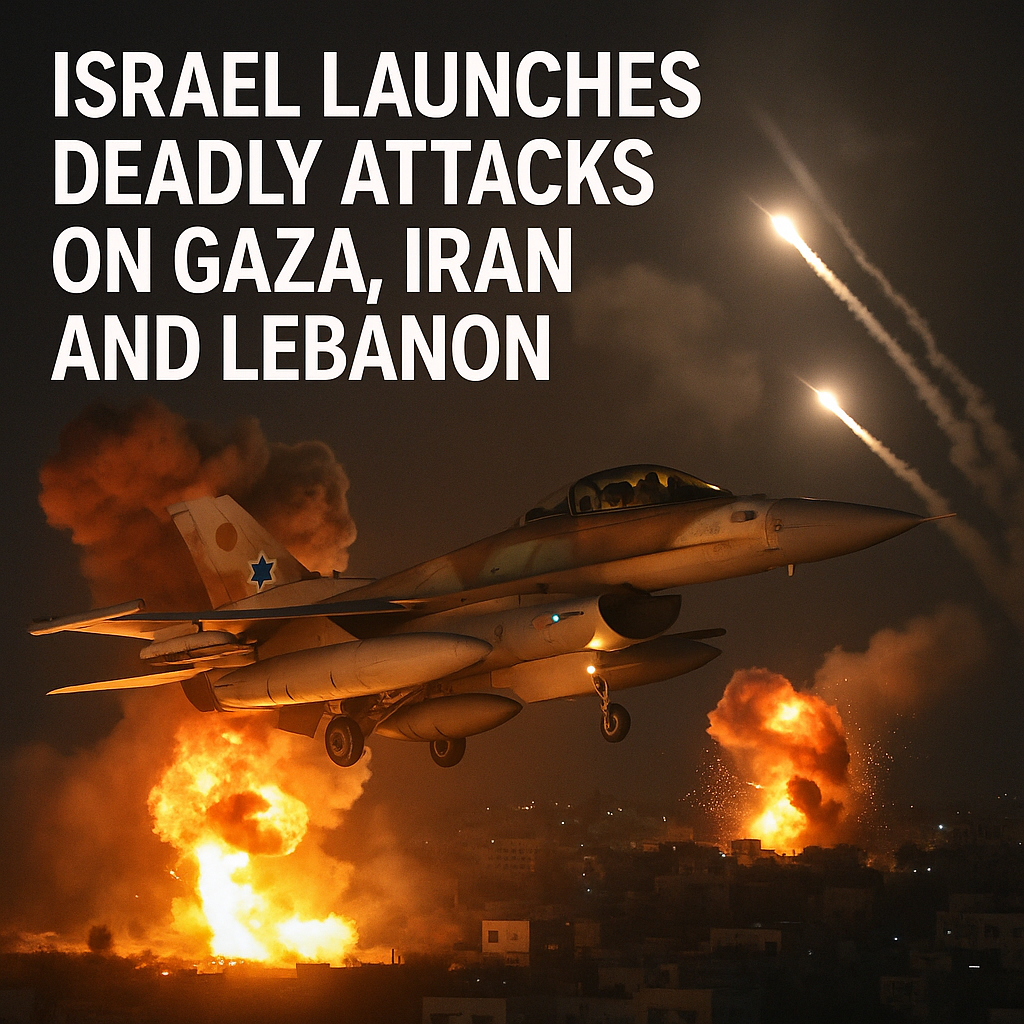
Israel Launches Deadly Attacks on Gaza, Iran, and Lebanon

Israel Launches Deadly Attacks on Gaza, Iran, and Lebanon
Recent military actions have escalated tensions in the Middle East, with Israel’s targeted strikes on Gaza, Iran, and Lebanon dominating the news. This series of attacks has sparked global concern and brought to the forefront the complex interplay of regional politics, historical grievances, and humanitarian issues.

Israel’s Strategic Military Actions
Israel’s recent operations have targeted various groups deemed threats, notably Hamas in Gaza. Operations against Hamas are characterized by airstrikes aiming at military positions, with the stated goal of dismantling the group’s capacity to launch attacks on Israeli territory. According to Al Jazeera, these strikes intensified following an uptick in rocket fire into Israel, which the country views as a direct threat to its national security.


– Escalation of Violence: The situation in Gaza has been particularly dire, with reports of civilian casualties rising alongside military engagements. As noted by various news outlets, including Sky News, Israeli officials have asserted that their military actions are defensive and necessary to safeguard citizens against what they describe as “terrorist” threats.


Diverse Perspectives on the Ground Reality
While Israel argues that its actions are preventive and aimed at deterring future attacks, the humanitarian consequences of these strikes cannot be overlooked. The impacts on civilians in Gaza have been devastating, with Al Jazeera providing data indicating significant loss of life and injury among non-combatants, prompting international outcry. Opponents of Israel’s military strategy argue that such actions not only harm innocent lives but also perpetuate a cycle of violence that makes lasting peace increasingly elusive.
On the other side, Iranian and Lebanese responses to these strikes have been strong. Iranian state media has denounced Israel’s actions as aggressive aggression and has called for unity amongst regional powers against perceived Israeli hostility. Lebanon’s response has also reflected a rising sentiment of solidarity with Palestinian groups, suggesting a further complication of regional dynamics.
The Broader Geopolitical Implications
Israel’s military actions are not occurring in isolation. The broader geopolitical landscape includes Iranian influence in Lebanon and support for militant groups like Hezbollah. According to RT, there are concerns that Israel’s operations may provoke a larger conflict involving these groups, which could destabilize the region further. This complexity underscores why international observers are closely monitoring the developments.
– Potential for Wider Conflict: The risk of a multi-front confrontation cannot be overstated. Analysts suggest that if Hezbollah were to engage militarily in response to Israeli actions in Lebanon, this could lead to an explosive situation, drawing in other regional actors and perhaps even foreign powers.
The Path Forward: Challenges and Uncertainties
The question remains: how can a balance be achieved amidst this turmoil? While the international community has called for de-escalation, the lack of trust between the involved parties complicates dialogue and negotiation efforts. Many experts emphasize that without addressing the root causes of the conflict—historical grievances, territorial disputes, and social injustices—temporary ceasefires may merely serve as a pause in ongoing violence.
In conclusion, Israel’s recent military strikes represent more than just isolated actions; they are emblematic of a deeper, more intricate struggle shaped by a myriad of factors. As both humanitarian crises grow and geopolitical tensions rise, the calls from various fronts—civilian advocates, regional governments, and international bodies—for peace and dialogue become increasingly imperative. However, achieving a sustainable resolution remains fraught with challenges, underscoring the complexities of the ongoing conflict in the Middle East.















