
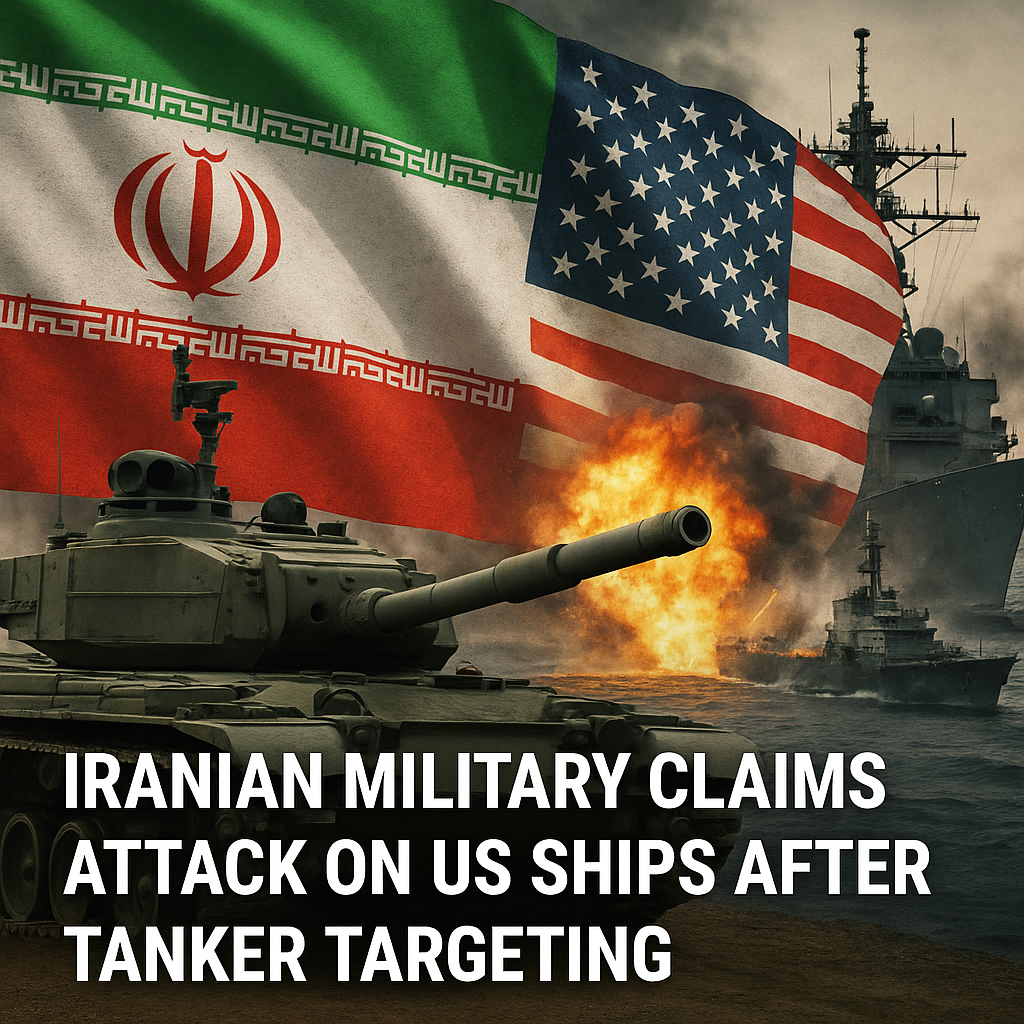
Iranian Military Claims Attack on US Ships After Tanker Targeting

In a recent escalation of tensions in the Persian Gulf, Iranian military officials have claimed responsibility for an attack on U.S. ships, attributing the aggression to the perceived targeting of their oil tankers. This incident underscores the fraught dynamics between Iran and the United States amidst an already precarious geopolitical landscape.

Background of Tensions in the Gulf
The tension in the region has a long history that has become increasingly pronounced in recent years, particularly following the U.S. withdrawal from the Iran nuclear deal in 2018. Accusations and counter-accusations regarding sanctions, oil trade, and military presence have amplified conflicts. Iran’s Revolutionary Guard Corps (IRGC) has frequently reiterated its commitment to protecting its interests against foreign provocations, particularly those from the U.S. Navy, which it views as an occupying force.


Recent reports indicate that explosions were heard in Iranian waters, coinciding with clashes that involved U.S. Navy vessels. According to Al Jazeera, local media in Iran suggested these conflicts were highly contested, with the Iranian government framing them as a defensive measure against American aggressions, particularly those targeting Iranian oil infrastructure. However, U.S. officials have refuted these claims, insisting that their military actions have remained within international law and have focused solely on security in the Gulf.


Varied Perspectives on the Incident
Several perspectives emerge when examining this situation. On one hand, Iranian sources depict the actions taken against U.S. ships as a necessary defense. They argue that such measures are responses to the tangible threats posed by American naval operations in the region. Iran’s narrative is steeped in a historical perception of foreign interference, claiming that it has been consistently victimized by U.S. policies.
Conversely, U.S. officials maintain that these actions from Iran are provocative and heighten the risk of conflict in an already volatile area. Reports from Sky News indicate that U.S. military operations in the Gulf are aimed at ensuring freedom of navigation and protecting global trade routes, especially given the significant amount of oil passing through the Strait of Hormuz. America maintains that Iran’s aggressive actions could spiral into wider military engagement that would not only threaten regional stability but also global oil supplies.
Potential Consequences of Escalating Tensions
The escalation of tensions in the Gulf could have far-reaching implications, not just for Iran and the U.S., but for international relations overall. Here are some potential consequences:
– Increased Military Presence: As a response to ongoing threats, both nations may opt to reinforce their military presence in the Gulf. The U.S. has already been strategically deploying additional naval assets to deter potential Iranian aggression.
– Impact on Global Oil Markets: Any disruption in the Persian Gulf could influence global oil prices, as it is a critical chokepoint for oil transport. A prolonged conflict might lead to a supply shock, affecting economies worldwide.
– Regional Alliances and Proxies: Iran might lean on its regional alliances, supportive groups in countries like Iraq, Syria, and Lebanon, to counterbalance American influence. Conversely, the U.S. is likely to strengthen its ties with Gulf states that perceive Iran as a primary threat.
– Diplomatic Efforts on the Line: Any escalation could hinder diplomatic channels aimed at reducing tension. Previous dialogues following the nuclear deal indicate that sustained engagement could lead to de-escalation; however, recent claims may hinder such peaceful approaches.
The Road Ahead: Diplomacy or Conflict?
As the situation continues to unfold, the international community is left in a position of uncertainty. While Iran’s claims of being under attack paint a picture of an embattled nation defending its sovereignty, the U.S. narrative emphasizes a need for a stable maritime environment free of hostilities.
Understanding the motives and narratives of both sides remains critical in formulating responses that prioritize peace over conflict. Calls for diplomatic resolutions emerge as a sound strategy but are often complicated by longstanding grievances and mutual distrust. Until a coherent and collaborative approach is adopted, the risk of conflict remains ever-present, illustrating the fragility of peace in a region marked by historical animosities.















