
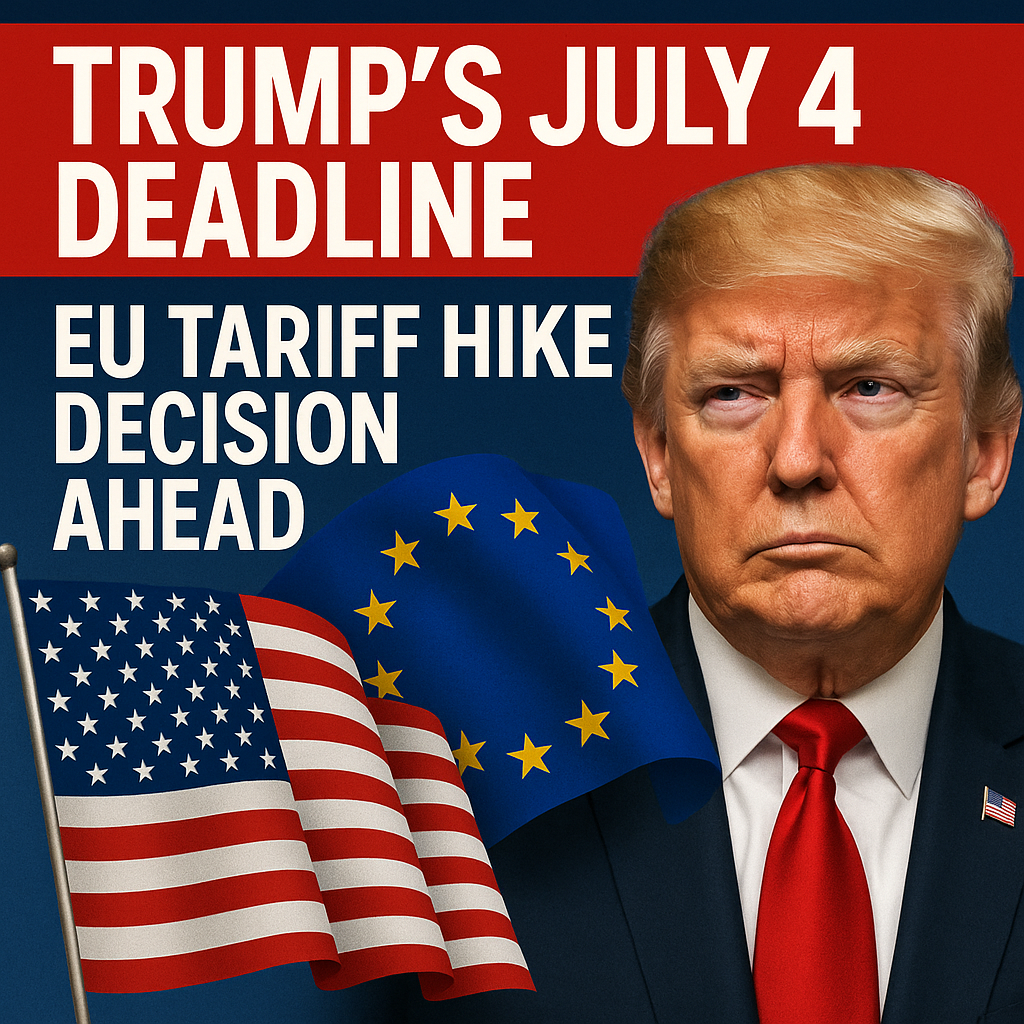
Trump’s July 4 Deadline: EU Tariff Hike Decision Ahead

Trump’s July 4 Deadline: EU Tariff Hike Decision Ahead
Former President Donald Trump has set a July 4 deadline for the European Union to make a critical decision regarding proposed tariff hikes on American goods. This ultimatum has reignited discussions about trade relationships and the delicate balance of economic power across the Atlantic.

The Context of Trump’s Tariff Threat
The ongoing tensions stem from a broader narrative of protectionism and trade disputes that have defined recent U.S.-EU relations. Trump’s administration previously imposed tariffs on steel and aluminum imports from the EU, which led to retaliatory measures from European officials. According to Al Jazeera, the current situation is compounded by the EU’s initial plans to increase tariffs on American products, including whiskey, motorcycles, and other items, a move seen as a reaction to past tariffs imposed by the U.S.


This July 4 deadline symbolizes more than just a date; it resonates with American independence and economic sovereignty. Trump’s approach indicates a willingness to use time-sensitive rhetoric to influence negotiations. From his perspective, the ultimate goal is to protect American jobs and industries that he believes have been adversely affected by European trade policies.


Divergent Perspectives
The potential impact of Trump’s deadline is multifaceted, and different stakeholders have varying opinions on its implications.
Support for Tariff Hikes
Some analysts argue that imposing tariffs on American goods could bolster EU industries in the short term. The European Commission contends that the tariffs are necessary to protect local jobs and maintain competitiveness. As noted by RT, European trade officials have stated that the U.S. has failed to negotiate in good faith, supporting the rationale for their measures against American exports.
Moreover, supporters of this perspective argue that a robust response to U.S. tariffs is essential. By standing firm on their plans, the EU seeks to send a message that retaliatory actions will be met with equal resolve, thereby deterring further tariff escalations.
Opposition to Tariff Policies
Conversely, an opposing view emphasizes the dangers of escalating trade wars. Critics maintain that Trump’s ultimatum could backfire by destabilizing markets, leading to increased prices for consumers on both sides. Sky News cites experts who warn that hitting American goods with higher tariffs could incite a negative feedback loop, ultimately hurting European industries reliant on U.S. imports and exports.
The economic data presented by various outlets suggest potential layoffs and increased consumer spending on higher-priced domestic alternatives in Europe, which may not sustain long-term growth. Increasing tariffs could diminish the purchasing power of consumers and exacerbate inflationary pressures that many are already facing.
The Broader Implications
The stakes of the decision extend beyond immediate economic impacts; the upcoming deadline could reshape diplomatic narratives and future negotiations between the U.S. and the EU. Should the EU decide to move forward with tariff hikes, it could set a precedent for how trade disputes are addressed globally.
Moreover, the timing aligns with a tumultuous political landscape as both Trump and the current EU leadership navigate significant domestic pressures. Analysts suggest that Trump’s insistence on a rigorous timeline may serve as a means to rally his political base, emphasizing his administration’s stance on protecting American interests.
The EU, for its part, must balance protecting regional industries while also navigating high-stakes international relationships. The geopolitical ramifications of such decisions bear long-term consequences for alliances that extend far beyond tariffs.
Conclusion: An Uncertain Trade Future
As the July 4 deadline approaches, uncertainty looms over the trade relationship between the U.S. and the EU. While some view the tariff discussions as a necessary mechanism for negotiation, others fear that they could ignite further conflict in an already strained economic landscape.
Ultimately, feedback from both sides indicates a complex interplay of protectionist sentiment, market stability, and geopolitical strategy. The choices made leading up to this deadline will shed light on both Trump’s standing in American politics and the EU’s resolve in the face of U.S. trade policies. As the situation evolves, stakeholders await the June developments that could reshape the narrative for months—or even years—to come.















