Iranians Defy Heatwave at Khamenei’s Funeral

Iranians Defy Heatwave at Khamenei’s Funeral
In a remarkable display of unity and resilience, Iranians have defied an extreme heatwave to pay their respects during the funeral of Ayatollah Ali Khamenei, a pivotal figure in the country’s leadership. This event has drawn not only thousands of mourners but also significant attention from the international community, highlighting a profound moment in Iran’s sociopolitical landscape.

The Context of the Gathering
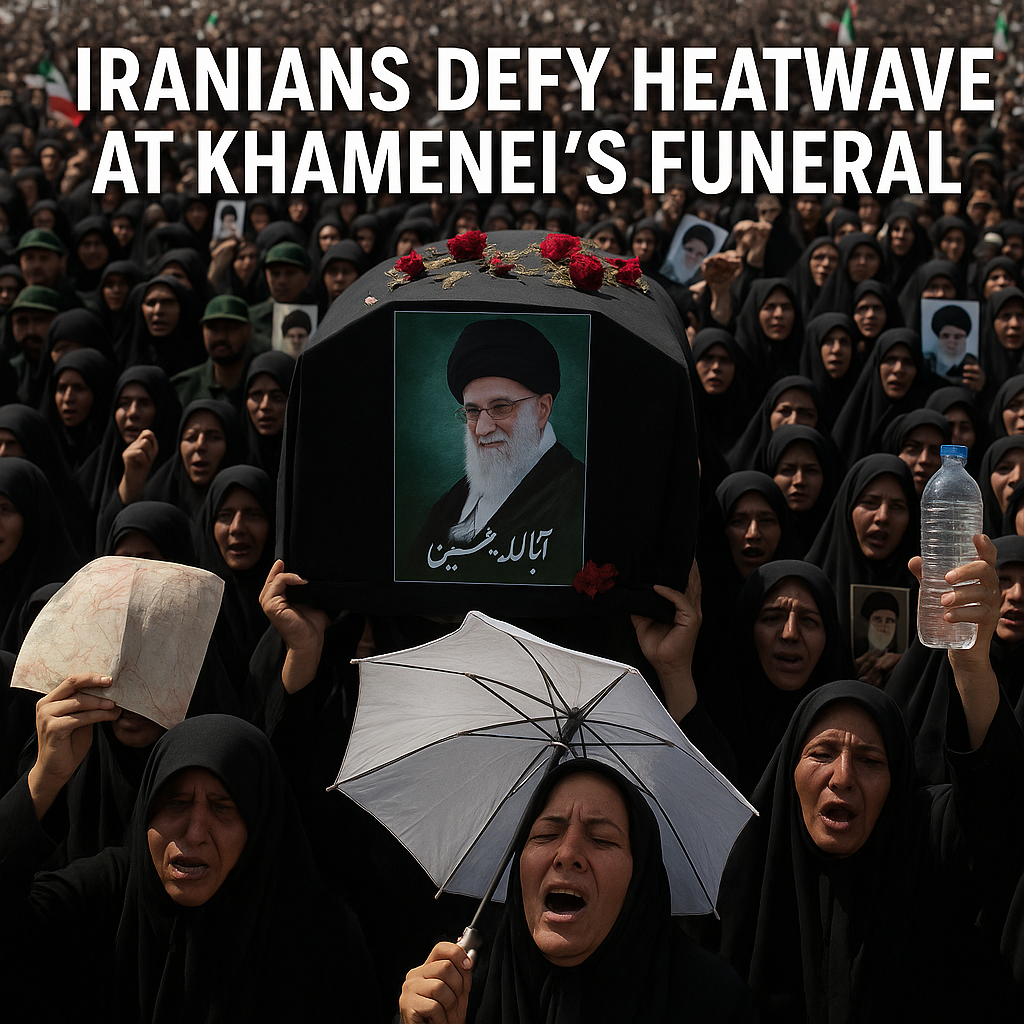
The funeral of Khamenei was marked by unparalleled turnout despite soaring temperatures, which reportedly exceeded 40 degrees Celsius (104 degrees Fahrenheit). The gathering served as a testament to Khamenei’s influence and the sentiments of his supporters. Many mourners viewed the event as essential, expressing their grief and allegiance to the values he embodied over his long leadership tenure.


Khamenei, who passed away recently, was Iran’s Supreme Leader and a major architect of its foreign and domestic policies. His death has sparked a flurry of public mourning, with many Iranians choosing to participate in the funeral rites as an affirmation of their ideological commitment to the state. Videos circulating on various news platforms captured enormous crowds bracing the heat, with people chanting slogans that echoed support for the regime and its policies.


Diverse Perspectives on the Public Response
While the massive turnout is a clear demonstration of loyalty among some sectors of Iranian society, it also elicited contrasting reactions from different factions within the nation. Some analysts emphasize that this gathering reflects a relentless public devotion to the ideals that Khamenei promoted, particularly around nationalism and Islamic governance. Al Jazeera noted that the numbers were bolstered by state-organized mobilization efforts, indicating how the government actively encouraged participation to showcase a facade of unity.
Conversely, critics argue that while the channeling of support for Khamenei might seem overwhelming, it masks underlying dissent and frustration among the population. In recent years, Iran has faced significant economic challenges and widespread protests, suggesting that not everyone engaging in the mourning ritual subscribes to the government’s narratives. Reports from RT underscore that significant portions of the youth population feel disillusioned, labeling the event as more of a state propaganda exercise than a spontaneous act of mourning.
The Effects of Heat on Mourners and Security Forces
Adding to the challenge of the funeral was the intense heat, which posed health risks to participants and security personnel alike. Many mourners succumbed to exhaustion, while medical units were deployed to assist those who became ill from the unbearable conditions. The Iranian government made logistical arrangements to mitigate the heat’s impact, including providing water and medical assistance to attendees.
Reports highlighted that despite the discomfort, the overwhelming presence of mourners was viewed as a significant show of solidarity, with many stating that their personal beliefs and reverence for Khamenei motivated them to endure the elements. However, questions linger regarding how this moment of seeming unity will evolve into the future, particularly in a nation wrestling with substantial internal divisions.
Concluding Thoughts: The Future of Iranian Sentiment
The layers behind the public sentiment demonstrated during Khamenei’s funeral reveal complexities that transcend a simple narrative of loyalty versus dissent. While the heatwave and the state’s mobilization may have influenced turnout, they do not capture the full spectrum of emotions within Iran. The participation of thousands can indeed be seen as a tribute, but it can also serve as a reflection of the broader struggles facing the populace.
As the dust settles on this significant event, the divergences in opinion may reflect a pivotal moment in Iran’s history. There remains uncertainty about how the intertwining sentiments of solidarity, disillusionment, and frustration will play out in Iran’s sociopolitical climate moving forward. The impact of Khamenei’s legacy will likely continue to shape the narrative of the nation, but it may also catalyze critical discussions around governance, economic hardship, and civil rights among Iranians.