Medvedev: Strait of Hormuz is Iran’s Nuclear Weapon

Medvedev’s Stark Warning: Strait of Hormuz as Iran’s “Nuclear Weapon”
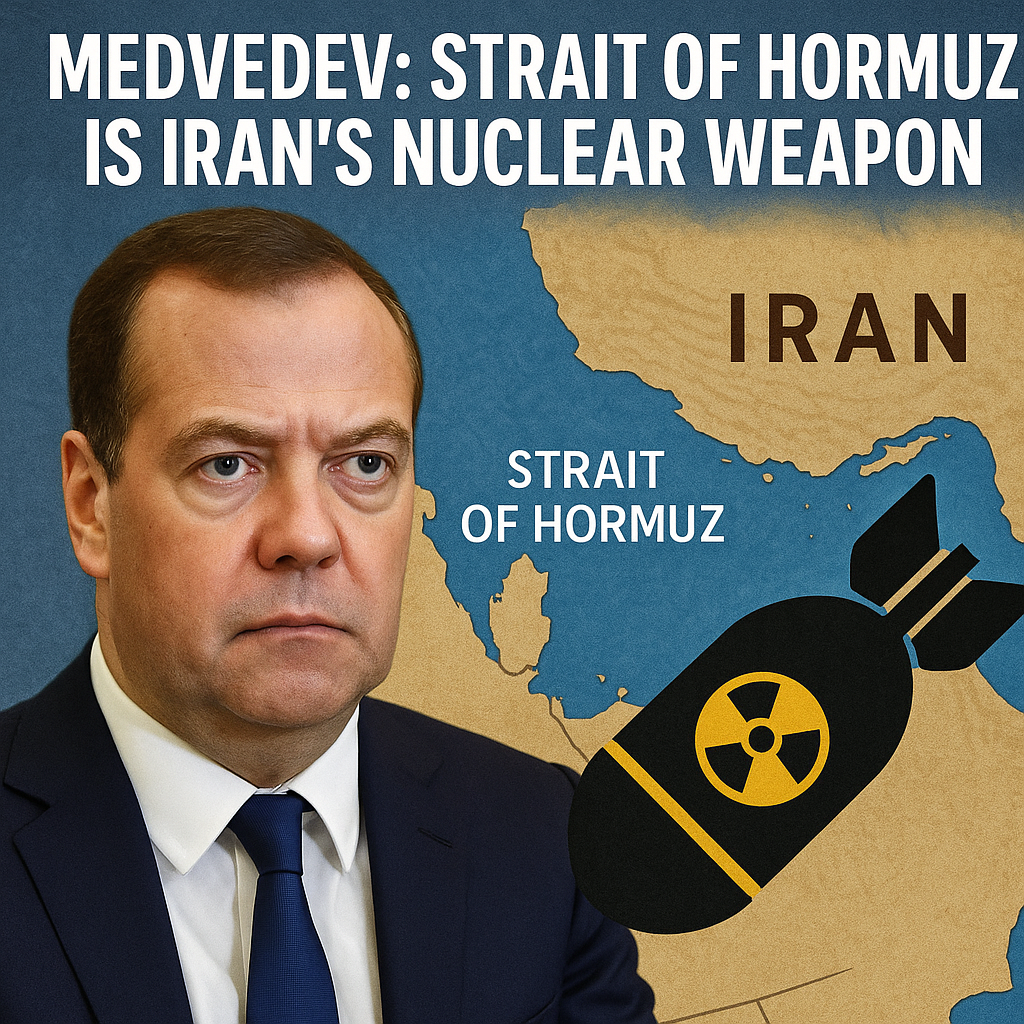
In a striking assertion, Dmitry Medvedev, the former President of Russia, stated that the Strait of Hormuz serves as Iran’s “nuclear weapon.” This provocative statement highlights the geopolitical tensions surrounding this vital maritime corridor, which is crucial for global oil supplies. With a significant portion of the world’s oil passing through the Strait, any disruption could have dramatic impacts on global markets and international relations.

The Geopolitical Significance of the Strait of Hormuz
The Strait of Hormuz is a narrow opening that connects the Persian Gulf to the Arabian Sea, forming a key shipping route for oil exports from several Middle Eastern countries, including Saudi Arabia, Iraq, and the United Arab Emirates. Approximately 20% of the world’s oil trade transits through this strait.


Medvedev’s comments come amid rising tensions surrounding Iran’s nuclear ambitions and its efforts to assert more control over the region. By characterizing the Strait as a nuclear weapon, Medvedev underscores the strategic leverage Iran wields. If Tehran were to close or threaten navigation through the Strait, it could create immediate and severe repercussions for oil-dependent economies worldwide.


This situation is compounded by the fact that military confrontations in the region have become increasingly common, with several countries, including the U.S. and Israel, closely watching Iran’s activities. While some analysts interpret Medvedev’s comments as rhetorical strategy aimed at emphasizing Iran’s potential for disruption, others argue that they highlight a genuine concern over the stability of international shipping routes.
Diverse Perspectives on Iran’s Regional Role
The viewpoint presented by Medvedev finds some resonance in various reports and analyses surrounding Iran’s influence over the Strait of Hormuz. A balance of perspectives reveals a complex situation that warrants a comprehensive examination.
1. Iran’s Assertive Posture: Many analysts believe that Iran’s capability and willingness to disrupt traffic in the Strait represents an escalating threat. The Islamic Revolutionary Guard Corps (IRGC) has conducted military exercises asserting its control over the waters, prompting fears of potential blockades. Reports indicate that Iran has often used the threat of closing the Strait as leverage in its negotiations with Western powers regarding its nuclear program.
2. Western Responses: Conversely, Western nations, including the United States, maintain a strong military presence in the region to ensure freedom of navigation. This has led to a series of confrontational incidents, including the seizure of vessels and various military drills on both sides. Some experts suggest that continuous military posturing might escalate tensions further, leading to unintended confrontations.
3. Global Economic Consequences: Economists have also expressed concern regarding Medvedev’s assertion, noting that any disruption to the Strait could result in skyrocketing oil prices and cascading effects on global markets. The interconnectedness of the oil market means that a crisis in this area could influence inflation rates and economic stability across multiple continents.
Despite these competing narratives, a consensus seems to emerge regarding the Strait’s strategic importance and the ramifications of its potential closure. While some fear that such closures might serve as an immediate deterrent in negotiations, others warn that the long-term consequences could escalate into military conflict.
The Uncertain Future
As geopolitical tensions continue to rise, the implications of Medvedev’s comments and Iran’s potential actions in the Strait of Hormuz remain largely uncertain. The phrase “Iran’s nuclear weapon” embodies not only a provocative statement but also serves as a reminder of the precarious balance between diplomacy and military posturing in the region.
Further complicating this landscape is the perspective of regional neighbors. With countries like Saudi Arabia and the UAE closely monitoring Iran’s activities, the intricate web of alliances and rivalries in the Middle East means that any action by Tehran could trigger a broader conflict.
In conclusion, Medvedev’s characterization of the Strait of Hormuz as Iran’s “nuclear weapon” underscores the complexity of international relations in this volatile region. As the world watches closely, the dynamics of power, military readiness, and diplomatic negotiation will likely shape the future of one of the world’s most critical maritime corridors. The interplay of these factors will remain crucial in determining whether the Strait will remain open or become a flashpoint for conflict.