
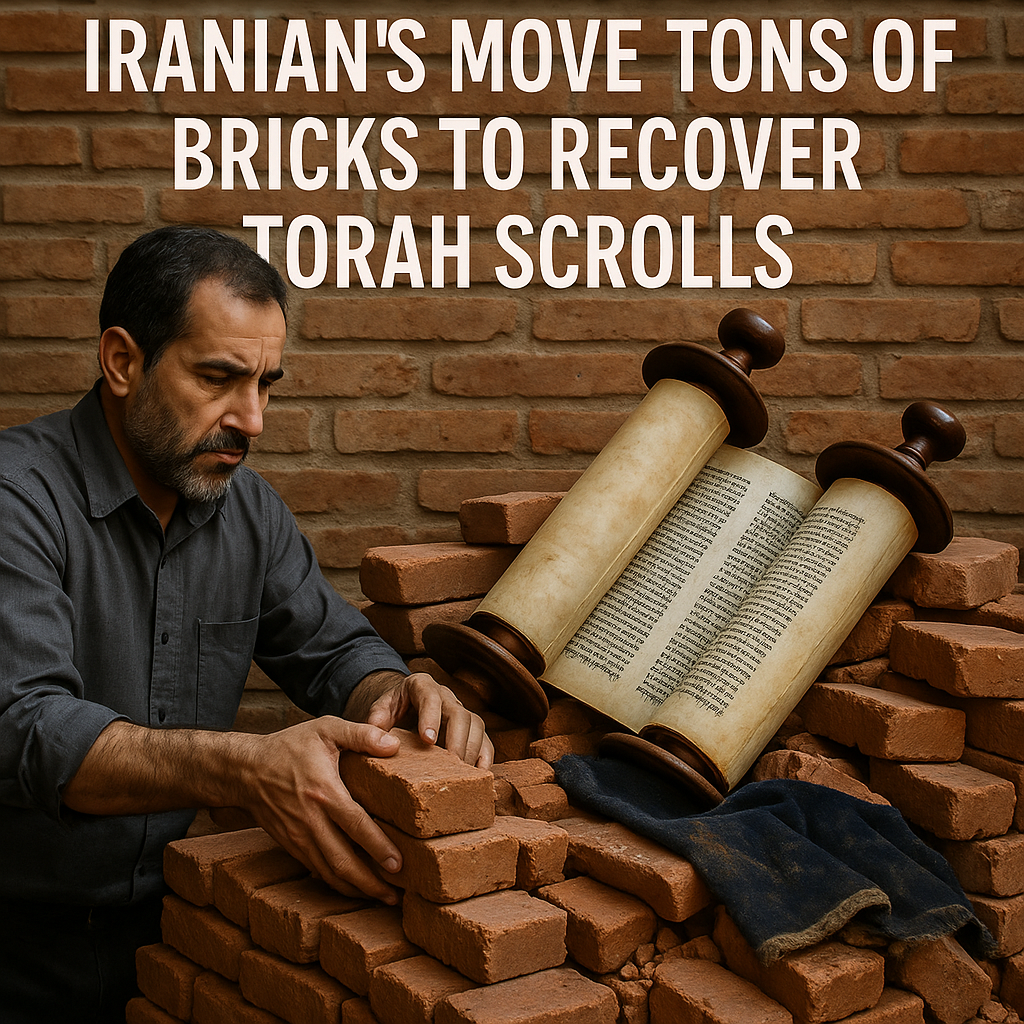
Iranians Move Tons of Bricks to Recover Torah Scrolls

Iranians Move Tons of Bricks to Recover Torah Scrolls
In a heartwarming act of cultural preservation and resilience, Iranians have come together to retrieve ancient Torah scrolls thought to be buried beneath tons of bricks. This effort reflects not only a commitment to their heritage but also a nuanced relationship with Jewish history in Iran. This article delves into the complexity of these events, considering different viewpoints on their significance and implications.

The Historical Context
The Torah scrolls in question have deep historical roots related to Iran’s once-vibrant Jewish community. For centuries, Iranian Jews, primarily concentrated in cities like Isfahan and Tehran, have been pivotal to the cultural tapestry of the nation. However, political changes over the decades have complicated this demographic’s economic and social standing.


The efforts to recover these sacred texts resonate with broader themes of cultural identity and religious pluralism. According to a report from RT, a vocal advocate for the recovery, Rabbi Yehuda Goudblat, explained how these scrolls symbolize both the perseverance of Jewish faith and the multicultural identity of Iran. Rabbi Goudblat highlighted that the scrolls could serve as a bridge for dialogue within a society that has often oscillated between acceptance and hostility towards its minorities.


Conversely, some critics express caution about the motivations behind such initiatives. In an article on Al Jazeera, individuals within the Jewish community raised concerns that these events might be leveraged politically. They argue that the Iranian government sometimes appropriates such cultural heritage efforts to bolster its international image, especially in the context of engagement with Western nations that often view Iran’s treatment of minorities with skepticism.
Community Involvement in Recovery Efforts
The recovery initiative has enlisted community involvement, demonstrating a united front in the face of adversity. Volunteers have moved significant amounts of bricks and debris to uncover this significant piece of their religious heritage. As local activists rally around this cause, the effort signifies a reclamation not only of physical artifacts but also of identity.
Responses on social media reflect a mixed bag of sentiments. Some users praised the initiative as a testament to cultural solidarity, while others expressed cautious optimism, questioning whether this gesture would translate into deeper, systemic change concerning minority rights within Iran.
The Broader Implications
Recovering the Torah scrolls may seem straightforward, but the implications stretch far beyond the immediate task at hand. Those involved in the recovery link it to a broader conversation about religious tolerance and minority rights in a nation where such issues often remain unaddressed. The Jewish community in Iran, though historically significant, comprises a tiny fraction of the population today, estimated at around 9,000. Their rights and expression often come under scrutiny, raising questions about how Iranian society—and the government—will respond to this cultural initiative.
While some view these recovery efforts as an opportunity for reconciliation, others see them as a mere façade. The nuanced realities of modern Iran complicate such a simplistic interpretation. The historical rollercoaster that the Iranian Jewish community has experienced—from thriving under the Persian Empire to facing opposition during various regimes—indicates the need for an ongoing dialogue about identity, belonging, and resilience.
Reactions from International Observers
International observers have taken note of the events unfolding in Iran. Theories and discussions surrounding the movement of bricks to recover these sacred texts have sparked interest across social platforms and news outlets. The spectrum of opinions ranges from commendation for cultural revival initiatives to skepticism regarding governmental motives.
The community’s effort to recover the Torah scrolls may be perceived as a litmus test for Iran’s readiness to embrace its diverse heritage. While many hope this can serve as a precedent for recognizing and supporting minority rights, others worry that meaningful change may remain elusive.
In the confluence of local efforts and broader international discourse, the gravity of this simple act of recovery is underscored. It signifies much more than the unearthing of historical texts; it embodies aspirations for acceptance, reconciliation, and a more inclusive society.
Conclusion: A Complex Path Forward
As the dust settles and the Torah scrolls are finally recovered, it becomes evident that the process has initiated conversations that transcend the immediate community involved. While this event may foster a sense of communal identity and pride, broader questions about the treatment of minority groups in Iran loom large.
The successful recovery of these scrolls may serve as a beacon of hope, signaling that even in tumultuous times, acts of solidarity and preservation can flourish. Yet, as Iran navigates its own political landscape, the future of its religious minorities remains a topic deserving of careful consideration and ongoing dialogue.
In conclusion, while the bricks removed represent a barrier overcome, they also raise persistent inquiries about the genuine value placed on diversity within Iranian society. The collective endeavor showcases that while history can be buried, the commitment to honor and reclaim it can lead to transformative dialogues—and perhaps, a more inclusive future.















