
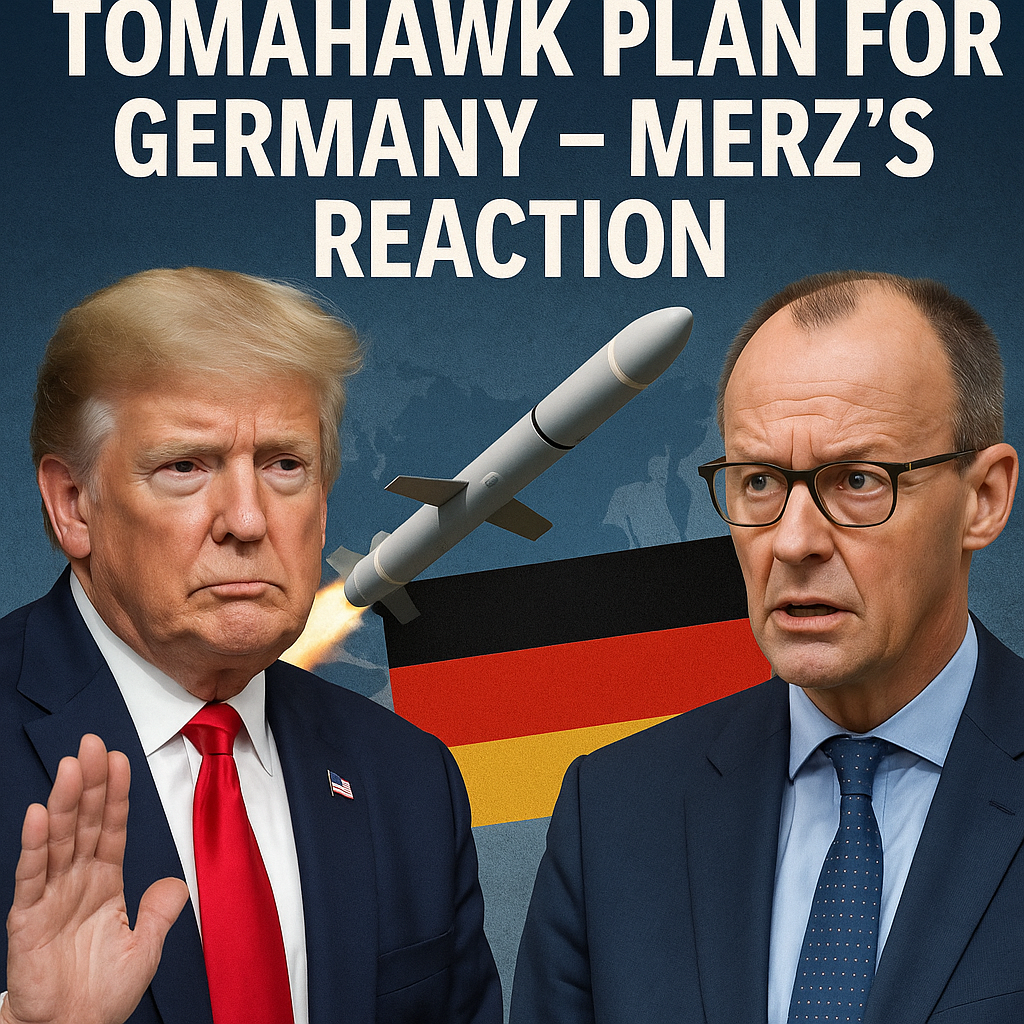
Trump Cancels Tomahawk Plan for Germany – Merz’s Reaction

Trump Cancels Tomahawk Plan for Germany – Merz’s Reaction
The recent announcement regarding the cancellation of the Tomahawk missile deployment plan in Germany has stirred various reactions across political platforms. This decision by former President Donald Trump marked a pivotal moment in U.S.-Germany relations, drawing both praise and criticism from various factions in the political landscape.

The Decision: A New Direction in Military Strategy
In a statement issued by Trump, he indicated that the decision to halt the Tomahawk deployment was influenced by a re-evaluation of strategic necessities in Europe. Trump’s administration had previously pushed for a significant reallocation of U.S. military resources, emphasizing a need for cost-saving measures and a reassessment of NATO obligations. This shift in military planning illustrates a broader trend in U.S. foreign policy that prioritizes a more isolated approach, particularly concerning European commitments.


The decision is rooted not just in a financial perspective but also reflects a growing sentiment among some political factions that American military presence in Europe needs to be reconsidered. While some argue that such a reduction could embolden adversaries, others contend it may prompt European nations to enhance their own defense capabilities.


Merz’s Critique: A Call for Commitment
In response to Trump’s announcement, German political figure Friedrich Merz voiced his discontent. As a leading member of the opposition party, the Christian Democratic Union (CDU), Merz expressed concerns that the cancellation could lead to a vacuum in security that might be exploited by adversarial nations. He emphasized the need for a robust transatlantic partnership and argued that strong American engagement is vital for European stability.
Merz’s response is emblematic of a broader fear in European political circles—that diminishing American military presence could lead to increased geopolitical instability in the region. His critique serves as a rallying cry for those who advocate a more integrated approach to European defense, suggesting that shared responsibilities should be prioritized rather than diminished.
Diverging Perspectives on U.S. Military Presence in Europe
While Merz’s reaction underscores a significant concern, opinions on U.S. military presence vary widely. Some commentators believe this move may lead to a newfound resilience among European nations, pushing them to take more responsibility for their own defense. Others warn, however, that such shifts may embolden hostile actors, thereby destabilizing the security landscape in Europe.
The Balance of Power
The cancellation of the Tomahawk plan raises questions about the balance of power within NATO. Advocates for strong U.S. presence argue that the historical deterrent effect of American military assets has helped maintain peace during critical times. Trump’s decision, conversely, might be perceived as a departure from this stalwart presence, inviting a range of implications for European nations, particularly those bordering more aggressive states.
Trump’s administration had previously indicated that allies should contribute more significantly to defense budgets, which aligns with a broader trend advocating for increased European self-reliance. Critics, however, question whether individual nations possess the capability to fill the gap left by a reduced U.S. presence without compromising collective security efforts.
Uncertainties Going Forward
With the evolving geopolitical landscape, the long-term impacts of Trump’s cancellation remain to be seen. The varying reactions—from Merz’s insistence on a strong U.S. role in Europe to more nationalist stances advocating for a withdrawal—highlight the complexities of international relations today.
In the face of growing uncertainties, it’s imperative to consider the implications for not just military tactics, but also diplomatic relations. The sentiment flowing through the political spheres indicates a strong need for dialogue to address differing perceptions and responsibilities towards mutual defense commitments.
Conclusion: A Complex and Ambiguous Future
The decision to cancel the Tomahawk missile plan in Germany illuminates a pivotal moment in U.S. foreign policy and its intricate relationship with European allies. While some advocate for a reduction in U.S. military presence, others, like Merz, call for renewed commitment and collaboration. As these viewpoints engage in the broader conversation about transatlantic security, it remains clear that navigating these waters will require thoughtful, nuanced, and responsive strategies that can adapt to changes in both policy and global dynamics.
The future of U.S.-Germany relations and NATO’s collective security strategy hangs in the balance, and understanding the perspectives on this issue is vital for assessing potential outcomes.















